
Historian Ana Velasco: 'Vikings possessed brutal maritime knowledge and advanced shipyards with incredibly fast vessels'
Key Takeaways
- The term 'Viking' was not an ethnic label but a descriptor for an activity or expedition.
- Viking navigation was so advanced they reached North America by 1021 without modern compasses.
- The 'Bluetooth' wireless standard is named after King Harald Gormsson, who unified Scandinavian tribes.
Art historian and expert Ana Velasco recently appeared on the 'Herrera en COPE' radio program to debunk common myths surrounding the Scandinavian civilizations of Norway, Sweden, and Denmark. Velasco clarified that the term 'Viking' was never an ethnic identifier, but rather a description of a specific activity or expedition. By analyzing the technological prowess of these northern peoples, she highlighted how they successfully transitioned from agrarian societies to dominant maritime powers that reshaped the map of medieval Europe through both trade and territorial expansion.
During her analysis, Velasco emphasized the sophisticated nature of Viking naval architecture, noting that their ability to construct high-speed, durable ships was unparalleled for the era. She stated, 'They were people with brutal maritime knowledge, possessing large shipbuilding workshops that produced incredibly fast vessels.' Furthermore, she drew a fascinating parallel between the 10th-century King Harald Gormsson, known as 'Bluetooth,' and modern wireless technology. She explained that just as the king unified disparate Scandinavian tribes, the technology named in his honor serves to connect modern devices, bridging the gap between ancient history and our digital age.
Historically, the Viking era was defined by a unique combination of farming and long-distance commerce. Their reach was truly global for the time, as evidenced by the discovery of Arabic dirhams in various Viking settlements. These findings prove that their trade networks extended far beyond the North Sea, reaching as far as the Iberian Peninsula, England, France, and even Constantinople. This commercial spirit was the primary driver of their expansion, allowing them to establish complex economic relationships across diverse cultures and continents long before the modern era.
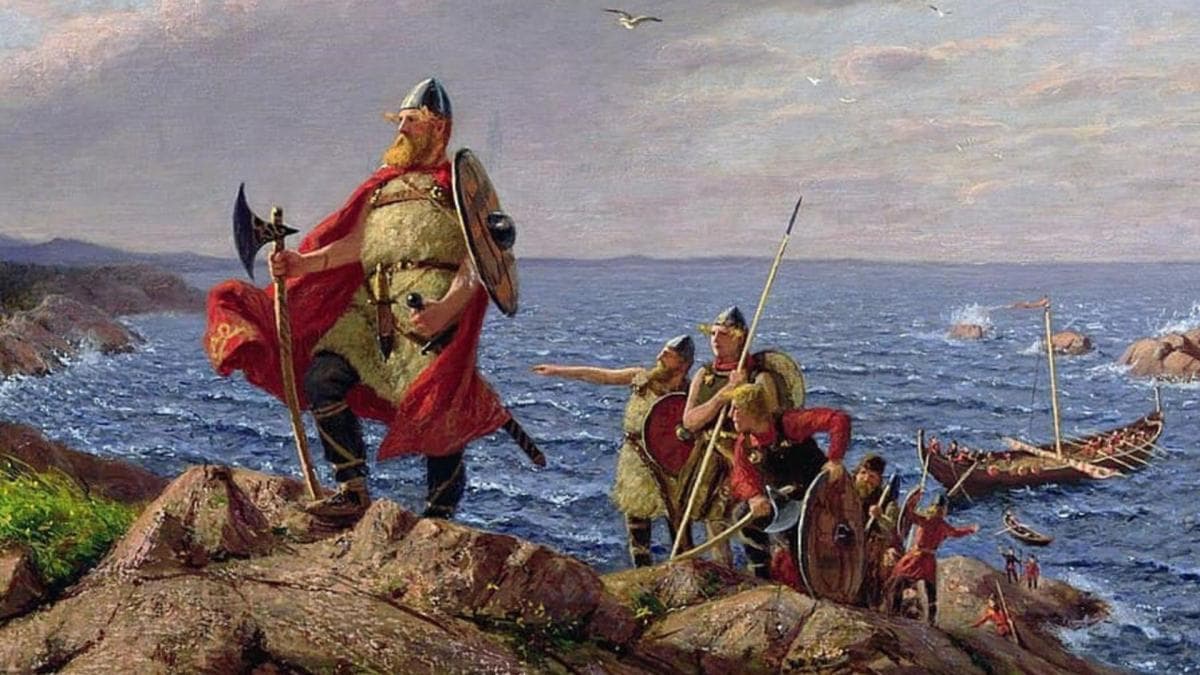
One of the most remarkable feats discussed by Velasco was the Vikings' ability to navigate the open ocean without the aid of modern instruments. She noted that they were master navigators who could traverse vast distances for days without sight of land, relying on their deep understanding of the sea and stars. This maritime expertise allowed them to reach North America centuries before Columbus, with archaeological evidence confirming a settlement at L'Anse aux Meadows in modern-day Canada, dated to approximately 1021, which they referred to as Vinland.
Looking ahead, Velasco’s insights remind us that the Viking legacy is far more complex than the stereotypical image of raiders. Their contributions to shipbuilding, navigation, and international trade laid the groundwork for the integration of Northern Europe into the broader medieval world. As historians continue to uncover new evidence, the narrative of the Vikings shifts from one of mere violence to one of innovation and global connectivity. Their ability to adapt to harsh environments and master the seas remains a testament to human ingenuity that continues to influence modern technological and historical discourse.
Reader Discussion
Leave a Comment
0 Comments
Owner
Editorial Oversight & Machine-Assisted Reporting
Human-in-the-Loop VerifiedEditorial Oversight & Machine-Assisted Reporting: This dispatch was synthesized and localized via OPA automated intelligence under continuous human editorial supervision.
Wire Source
This report was synthesized from Mundo Deportivo under journalistic fair use.