
'Blindspot Berlin' revisits 2016 Christmas market attack
Key Takeaways
- The series 'Blindspot Berlin' exposes how institutional failures and bureaucratic incompetence allowed Anis Amri to carry out the 2016 attack.
- Parliamentary inquiries revealed that security agencies were severely understaffed and failed to coordinate critical intelligence regarding Amri.
- Producers warn against the political misuse of the series, emphasizing that extremism stems from social marginalization rather than simplistic immigration policies.
A decade after the deadliest jihadist attack in German history, the new six-part television series 'Blindspot Berlin' examines the systemic institutional failures that allowed the 2016 Breitscheidplatz tragedy to occur. The series, which premiered at the Toronto International Film Festival, chronicles the year-long investigation into Anis Amri, a Tunisian national whose asylum claims had been rejected but who remained in Germany despite being known to security services. On December 19, 2016, Amri hijacked a truck, killed its driver, and drove into a crowded Christmas market, resulting in 12 immediate deaths and dozens of injuries, with a 13th victim succumbing to wounds years later.
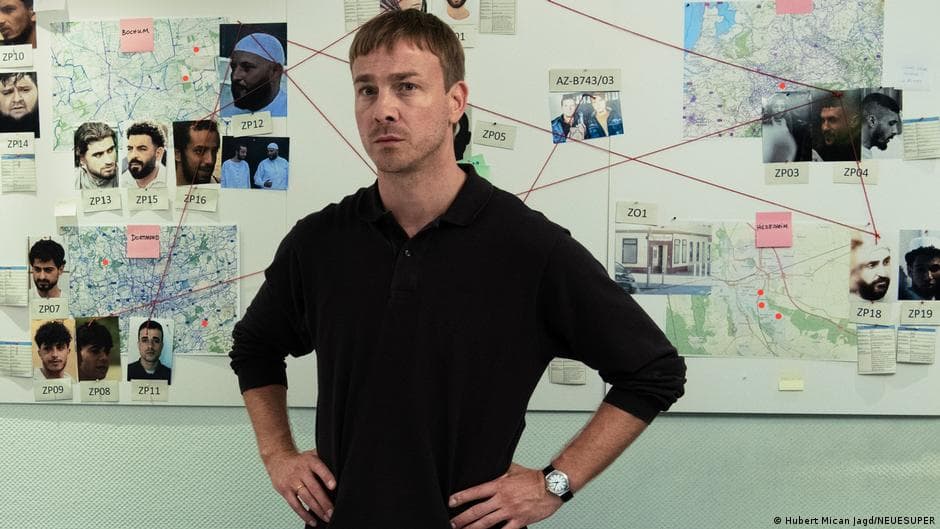
Director David Nawrath describes the series as a portrait of overwhelmed institutions and a staggering blindness to developing threats. The narrative follows fictionalized investigators Frank Laudin and Isra Al-Husseini as they attempt to infiltrate the Salafist network of Iraqi preacher Abu Walaa. Despite the informants' warnings, authorities repeatedly dismissed Amri as a threat, largely because his involvement in drug dealing led them to believe he could not be a radical Islamist. This bureaucratic negligence, coupled with severe understaffing in criminal divisions, created the perfect conditions for the attack to proceed unchecked.
Based on years of parliamentary inquiry, the series meticulously reconstructs the events leading to the attack. Producers emphasize that while the main characters are fictionalized, the underlying facts remain grounded in the official record. The inquiry revealed that agencies failed to coordinate information, and in a bizarre bureaucratic twist, Amri was actually prevented from leaving Germany because he lacked proper documentation, forcing the state to issue him a temporary residence permit while awaiting deportation, which never materialized.
Beyond the German context, the series highlights how the Breitscheidplatz attack fits into a broader European pattern of violence, including the Paris and Brussels attacks. The ramifications of these events continue to shape modern security policy, with authorities now installing barriers at public markets. However, the series also explores the tension between maintaining a free democratic society and the increasing demand for security, raising difficult questions about how much liberty citizens are willing to sacrifice in the face of persistent, evolving threats.
Looking ahead, producers express concern that the series could be misused by populist political factions to push anti-immigrant agendas. They argue that the true lesson is not about stopping immigration, but about understanding how extremism flourishes in marginalized, isolated, and powerless groups. As the series prepares for its October premiere on Germany's ARD, it serves as a sobering reminder that institutional blindness remains a critical vulnerability, even as the nation continues to grapple with the legacy of the 2016 attack and more recent incidents of public violence.
Reader Discussion
Leave a Comment
0 Comments
Owner
Editorial Oversight & Machine-Assisted Reporting
Human-in-the-Loop VerifiedEditorial Oversight & Machine-Assisted Reporting: This dispatch was synthesized and localized via OPA automated intelligence under continuous human editorial supervision.
Wire Source
This report was synthesized from DW English under journalistic fair use.