
Following decades of negotiations, Greece returns remains of Czar Samuel to Bulgaria
Key Takeaways
- Czar Samuel ruled the First Bulgarian Empire from 997 to 1014 and remains a central figure in Bulgarian national identity.
- The repatriation involves a reciprocal exchange where Greece receives 48 artifacts taken during World War I.
- The event highlights ongoing regional historical disputes, particularly with North Macedonia, regarding the legacy of the medieval ruler.
The remains of Czar Samuel, a pivotal medieval ruler of the First Bulgarian Empire, are set to arrive in Sofia this Saturday, marking the conclusion of decades of complex diplomatic negotiations between Bulgaria and Greece. The repatriation of these historical remains represents a significant milestone in Balkan relations, as the bones were discovered in a Greek border region six decades ago. The Bulgarian government has planned a solemn state reception, including a military aircraft transport, a fighter jet escort, and a 21-gun salute, culminating in a procession to the Church of St. Sophia where the public will be invited to pay their respects.
Bulgarian Prime Minister Rumen Radev, speaking at the Museum of Byzantine Civilization in Thessaloniki, emphasized the unifying power of this gesture, stating, "If, in the past, Czar Samuel divided us, I can say that today he unites us." The handover is part of a reciprocal cultural exchange, with Greece receiving 48 sentimental artifacts that were pillaged by Bulgarian troops during the First World War. Greek Prime Minister Kyriakos Mitsotakis highlighted the emotional and cultural weight of the event, noting that the global community is increasingly re-evaluating its stance on the protection and return of cultural heritage.
Czar Samuel’s historical legacy is deeply intertwined with the rise and fall of the First Bulgarian Empire, which he ruled from 997 to 1014. His reign was defined by intense conflict with the Byzantine Empire, leading to the catastrophic Battle of Kleidion in 1014. Legend holds that Samuel died of shock after witnessing his soldiers, who had been blinded by the Byzantine Emperor Basil II, returning home. Following his death, the Bulgarian lands fell under Byzantine control, yet Samuel remains a potent symbol of Bulgarian national identity and historical resilience.
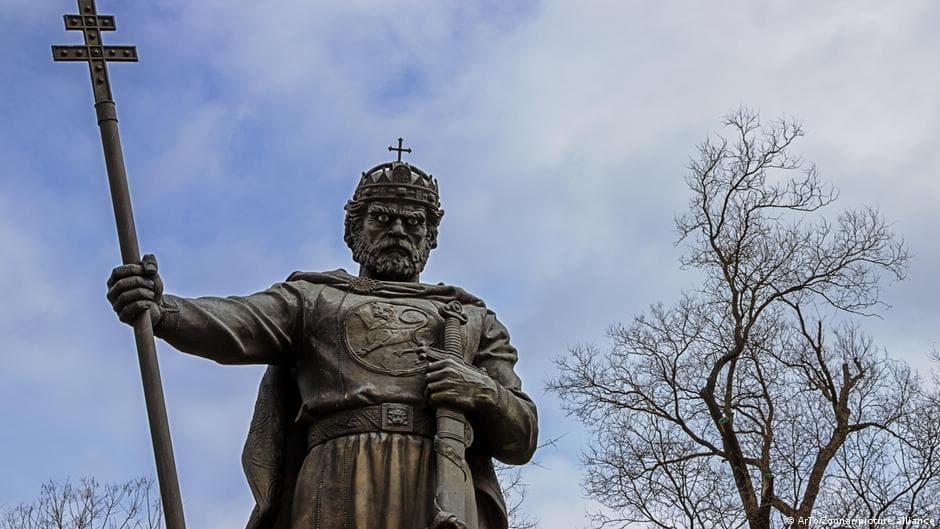
The repatriation has sparked broader regional debates, particularly regarding the historical claims of North Macedonia, where Samuel is also celebrated with a prominent statue in Skopje. Media outlets in the region have characterized the event as a continuation of the "battle over history," reflecting ongoing tensions over national narratives. While a 2022 bilateral commission recommended presenting Samuel as the leader of the state most historians identify as the Bulgarian Empire, the issue remains a sensitive point of contention in regional politics and identity formation.
Looking ahead, analysts suggest that the return of the remains serves both cultural and political purposes. Dimitar Bechev, a researcher at Carnegie Europe, notes that the event allows the Bulgarian leadership to appeal to a patriotic electorate while reinforcing the historical narrative of the Slavic population. As Greece uses this momentum to bolster its international campaign for the return of the Parthenon Marbles, the event underscores a shifting global perspective on historical artifacts, moving away from viewing them as spoils of war toward recognizing them as essential components of national heritage.
Reader Discussion
Leave a Comment
0 Comments
Owner
Editorial Oversight & Machine-Assisted Reporting
Human-in-the-Loop VerifiedEditorial Oversight & Machine-Assisted Reporting: This dispatch was synthesized and localized via OPA automated intelligence under continuous human editorial supervision.
Wire Source
This report was synthesized from DW English under journalistic fair use.