
Disputed $135 Million Malevich Masterpieces Found Under Bed Spark Global Art Controversy
Key Takeaways
- Three newly surfaced paintings attributed to Kazimir Malevich and valued up to $190 million are facing heavy scrutiny over lack of historical provenance.
- Prominent art historians and auction houses have disputed the credentials and claims of the expert authenticating the collection.
- Laboratory pigment tests verified the period of the materials but refused to attribute the works directly to Malevich himself.
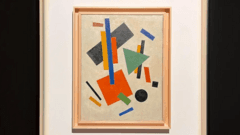
Three previously unrecorded oil paintings attributed to avant-garde pioneer Kazimir Malevich have gone on display at Romania's National Museum of Contemporary Art in Bucharest, igniting intense skepticism among international art scholars. The collection, estimated to be worth between $160 million and $190 million, was allegedly found beneath the bed mattress of an Israeli retiree in 2023. The museum showcasing the works declined to certify their authenticity, while owner Yaniv Cohen, a Bucharest-based Israeli businessman, sponsored the exhibition through his dental clinic.
Prominent art historian Konstantin Akinsha strongly questioned the provenance of the artworks, noting that the three paintings were neither documented, photographed, nor exhibited during the artist's lifetime. "There is no evidence that Malevich's works were bought and sold on Russian or Ukrainian art markets in the late 1920s and early 1930s," Akinsha told the BBC, emphasizing that Malevich's own writings contain no references to private sales after 1917. Malevich, whose 1918 masterpiece sold for a record $85 million in 2018, remains one of the world's most scrutinized modern artists.
According to Cohen, the artworks were inherited by his wife's grandmother, Eva Levando, from her father, an accountant in Soviet-era Odesa who reportedly accepted two paintings as payment for professional services. Cohen attributed the lack of official documentation to the severe suppression of modernist art under Joseph Stalin, explaining that Levando transported the canvases when emigrating to Israel in 1990. To substantiate his claims, Cohen cited certificates from Kyiv-based art historian Dmytro Horbachov, who claimed affiliations with Sotheby's and Christie's that both auction houses explicitly denied.
Technical examinations conducted by specialized laboratories in Paris and Germany confirmed that the pigments date to Malevich's era, but researchers explicitly avoided validating their authorship. Scientists noted that material age alone cannot determine artistic authenticity, pointing out that similar lab reports previously featured in prominent art forgery scandals. While Cohen maintains he has no plans to sell the paintings, documented correspondence suggests the high-value collection was previously offered as loan collateral, ensuring ongoing scrutiny across the global art market.
Reader Discussion
Leave a Comment
0 Comments
Owner
Editorial Oversight & Machine-Assisted Reporting
Human-in-the-Loop VerifiedEditorial Oversight & Machine-Assisted Reporting: This dispatch was synthesized and localized via OPA automated intelligence under continuous human editorial supervision.
Wire Source
This report was synthesized from BBC Persian under journalistic fair use.