
Racing Santander players defied Franco regime with 1975 protest
Key Takeaways
- Aitor Aguirre and Sergio Manzanera wore black laces as armbands to protest the execution of five anti-Franco militants in 1975.
- The players were detained and threatened with five-year prison sentences under the Anti-Terrorist Law.
- The legal case against the players was abandoned following the death of Francisco Franco two months later.
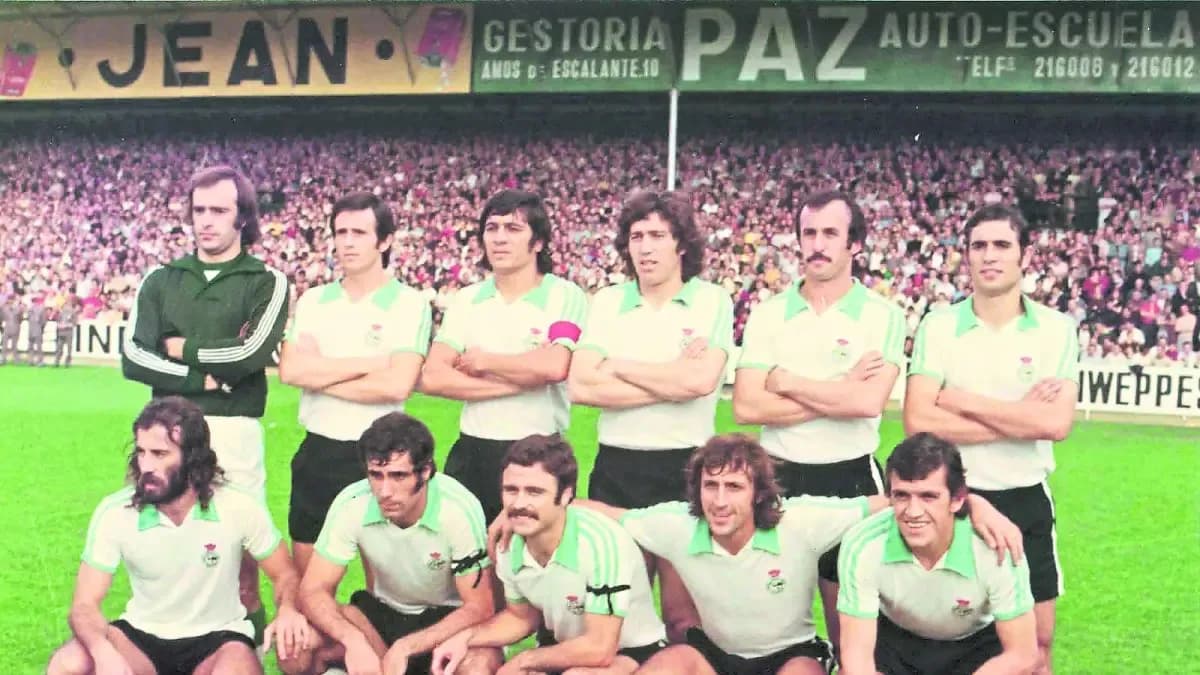
OPA WIRE, Oct 24 (OPA) — On Sept. 18, 1975, Aitor Aguirre and Sergio Manzanera took the field at the Sardinero stadium wearing black boot laces tied around their arms. The protest followed the execution of five militants from the FRAP and ETA groups, who were shot at dawn in Hoyo de Manzanares, Barcelona, and Burgos. The executions, authorized by the government of Carlos Arias Navarro, drew international condemnation and sparked protests across Europe, yet the Spanish sporting establishment remained largely silent.
Aguirre and Manzanera, who had been listening to the clandestine Radio Pirenaica at their hotel, decided to act as a public statement against the regime. During the match against Elche, which Racing won 2-1 with two goals from Aguirre, the players were confronted by plainclothes police in the tunnel at halftime. They were ordered to remove the makeshift armbands and summoned to a police station the following morning under the Anti-Terrorist Law.
While the club president, José Manuel López-Alonso, initially attempted to shield the players by claiming the mourning was for a former club official, the incident led to legal proceedings. Prosecutors sought five-year prison sentences, and the players faced fines of 300,000 pesetas, later reduced to 100,000. The case was eventually dropped following the death of Francisco Franco in November 1975.
Reflecting on the event in 2025, Aguirre noted that their status as public figures likely prevented more severe physical retaliation from authorities. The protest remains a significant historical footnote in Spanish football, contrasting with the broader institutional caution of the era. The episode is often cited alongside other political tensions of the period, such as Santiago Bernabéu’s 1973 diplomatic incident involving Israeli officials, which highlighted the regime's fragile international standing.
Subscribe to the Global Briefing
Receive our flagship executive dispatch every morning. Essential geopolitical analysis, financial benchmarks, and breaking world events delivered to your inbox.
Mohammad Karamali
Verified Wire ContributorSenior correspondent covering geopolitics, regional developments, and strategic international affairs for OPA News (Optimum Public Affairs).
Related Stories & Follow-ups
Editorial Wire


Reader Discussion
Leave a Comment
0 Comments
Owner
Editorial Oversight & Machine-Assisted Reporting
Human-in-the-Loop VerifiedEditorial Oversight & Machine-Assisted Reporting: This dispatch was synthesized and localized via OPA automated intelligence under continuous human editorial supervision.
Wire Source
This report was synthesized from Mundo Deportivo under journalistic fair use.