
Researcher Analyzes Ancient Text for Potential First-Century Account of Jesus' Resurrection
Key Takeaways
- Researcher Jesús Fernández-Pedrera Correa analyzed four language versions of Flavius Josephus's 'Jewish Antiquities'.
- The study suggests the original text may have reported follower claims rather than stating the resurrection as historical fact.
- Discrepancies in Latin, Arabic, and Syriac versions indicate later Christian additions to the original AD 93-94 text.
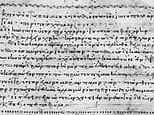
OPA WIRE, Oct 30 (OPA) — Independent researcher Jesús Fernández-Pedrera Correa has published a preprint analysis examining the 'Testimonium Flavianum,' a passage within Flavius Josephus’s 'Jewish Antiquities.' By comparing surviving Greek, Latin, Arabic, and Syriac manuscripts, the researcher argues that the text may contain an original, neutral report of what Jesus’s followers claimed to have witnessed, rather than a theological affirmation of the resurrection.
The study highlights discrepancies in how different versions describe the resurrection. While the Greek version explicitly links the event to biblical prophecy—a hallmark of Christian rhetoric—the Latin, Arabic, and Syriac versions offer variations that suggest a more detached historical observation. Fernández-Pedrera Correa posits that later Christian copyists likely expanded upon an initial report that merely documented the beliefs of early followers, a practice consistent with Josephus’s established methodology of recording religious group reports without endorsing them.
Scholars have long debated the authenticity of the 'Testimonium Flavianum,' particularly the declaration that Jesus 'was the Christ.' The researcher notes that Latin, Arabic, and Syriac versions often soften this language, suggesting that Jesus was 'believed' to be the Messiah. Furthermore, the absence of certain phrases in the Arabic text, such as the questioning of Jesus’s humanity, provides additional evidence that some segments were likely interpolated by later writers to align the text with evolving Christian doctrine.
Despite these findings, the researcher acknowledges that the surviving manuscripts cannot definitively reconstruct the original wording of Josephus. The study serves as a comparative analysis of how historical texts were altered through centuries of transcription. While the hypothesis remains unproven, it offers a framework for understanding how early historical accounts of religious figures were adapted to fit the theological requirements of subsequent generations.
Subscribe to the Global Briefing
Receive our flagship executive dispatch every morning. Essential geopolitical analysis, financial benchmarks, and breaking world events delivered to your inbox.
Mohammad Karamali
Verified Wire ContributorSenior correspondent covering geopolitics, regional developments, and strategic international affairs for OPA News (Optimum Public Affairs).
Related Stories & Follow-ups
Editorial Wire Culture & Arts
Bestselling Author and Former Conservative Politician Jeffrey Archer Dies at 86
 Culture & Arts
Patrick Stewart, Star Trek and X-Men Actor, Dies at 86
 Culture & Arts
Duane 'Keffe D' Davis Sentenced to 40 Years to Life for Tupac Shakur Murder
Reader Discussion
Leave a Comment
0 Comments
Owner
Editorial Oversight & Machine-Assisted Reporting
Human-in-the-Loop VerifiedEditorial Oversight & Machine-Assisted Reporting: This dispatch was synthesized and localized via OPA automated intelligence under continuous human editorial supervision.
Wire Source
This report was synthesized from Daily Mail under journalistic fair use.