
African leaders herald $16B Dangote oil refinery in Kenya
Key Takeaways
- The $16 billion refinery in Lamu, Kenya, is set to process 700,000 barrels of oil per day upon completion in 40 months.
- The project includes an integrated industrial complex featuring a 1,000MW power plant and fertilizer manufacturing facilities.
- Local residents and environmentalists have launched legal challenges citing threats to a UNESCO World Heritage site and ancestral land rights.
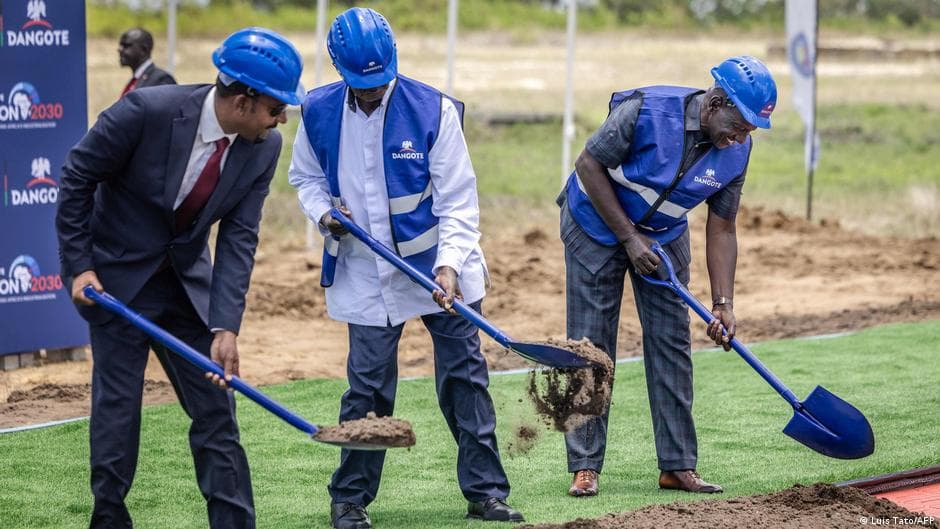
African leaders gathered on Wednesday to officially break ground on a massive $16 billion oil refinery project located off the coast of Kenya. Situated in the coastal town of Lamu, this ambitious industrial undertaking is projected to reach completion within 40 months. Once fully operational, the facility is expected to process an estimated 700,000 barrels of oil per day, marking it as the largest infrastructure project of its kind across East and Central Africa.
The groundbreaking event saw the attendance of high-profile regional figures, including Kenyan President William Ruto, Ugandan President Yoweri Museveni, and Ethiopian Prime Minister Abiy Ahmed. President Ruto emphasized the strategic importance of the refinery, noting that it will significantly strengthen regional energy security, reduce dependency on costly fuel imports, and bolster foreign exchange reserves. Beyond oil, the site is designed as an integrated industrial complex, incorporating a 1,000MW power plant, a plastic manufacturing facility, and plants for chemical and fertilizer production.
Overseeing this colossal venture is Nigerian industrialist Aliko Dangote, currently recognized as Africa's wealthiest individual. The project is rooted in a vision to transform the continent's economic landscape by shifting from a raw-material exporter to a value-added manufacturer. Historically, African nations have struggled with the paradox of being resource-rich while remaining dependent on imported refined products. Dangote argued that this cycle of exporting crude and importing finished goods effectively exports jobs and opportunities, ultimately hindering the continent's path toward lasting prosperity.
Despite the economic optimism, the project faces significant hurdles, including environmental concerns and legal challenges. Environmental campaigners have raised alarms regarding the potential impact on Lamu Old Town, a UNESCO World Heritage Site, and the surrounding fragile marine ecosystem, which serves as a habitat for dugongs, whales, and sea turtles. Furthermore, local residents have initiated a land rights lawsuit, asserting that the construction site sits on their ancestral lands. While the Kenyan High Court ruled that the groundbreaking could proceed, it confirmed that the legal proceedings regarding land ownership will continue.
Looking ahead, the success of the Dangote refinery will likely hinge on the balance between industrial advancement and environmental stewardship. Experts suggest that if the project successfully navigates these legal and ecological challenges, it could serve as a blueprint for regional self-sufficiency. However, the long-term consequences will depend on whether the promised economic benefits reach local communities and whether the environmental mitigation strategies are robust enough to protect the unique biodiversity of the Lamu coastline from the risks of large-scale industrialization.
Reader Discussion
Leave a Comment
0 Comments
Owner
Editorial Oversight & Machine-Assisted Reporting
Human-in-the-Loop VerifiedEditorial Oversight & Machine-Assisted Reporting: This dispatch was synthesized and localized via OPA automated intelligence under continuous human editorial supervision.
Wire Source
This report was synthesized from DW English under journalistic fair use.