
Agrivoltaics: Balancing Renewable Energy Goals with Agricultural Sustainability
Key Takeaways
- Europe has the potential to generate 25 times its current electricity demand through agrivoltaics.
- 86% of recent Italian government funding for agrivoltaics went to large-scale projects rather than small farms.
- Regulatory mandates in France and Italy now require 70-90% of land under solar panels to remain dedicated to agriculture.
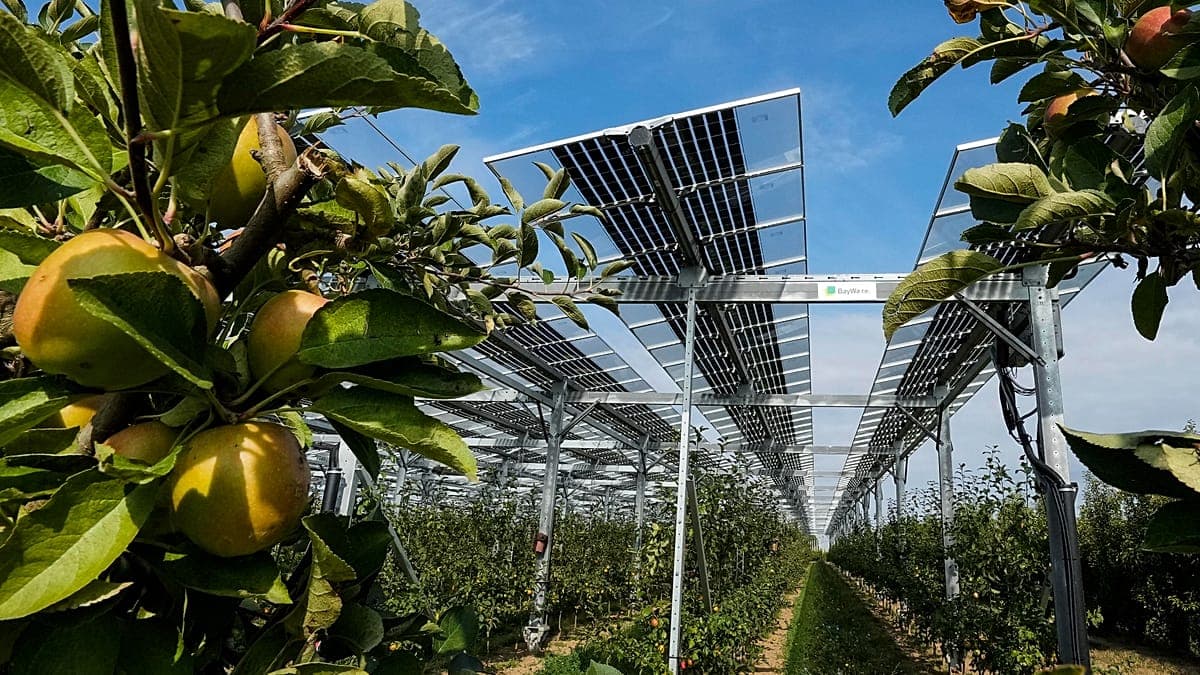
Agrivoltaics, the integration of solar panels with agricultural land, is emerging as a potential solution to Europe’s energy crisis. By installing photovoltaic systems above crops, farmers can generate electricity while protecting plants from extreme heat and water evaporation. Proponents argue this dual-use approach could help Europe meet its ambitious decarbonization targets, with studies suggesting the continent has the potential to generate 25 times its current electricity demand through these systems.
Despite the promise, the industry faces significant scrutiny regarding land use and profit distribution. While the EU and national governments are pouring billions into the sector—including €1.7 billion in Italian state aid—critics warn that large-scale projects often favor multinational corporations over local farmers. Research indicates that approximately 86 percent of recent Italian government funding for agrivoltaics was directed toward large-scale developments, raising concerns that the transition may exacerbate existing power imbalances rather than supporting small-scale agriculture.
Big Tech firms, including Amazon and Apple, have already secured power-purchase agreements to support their energy-intensive data centers, fueling the expansion of large-scale solar farms. While these corporations claim the initiatives support net-zero goals, labor unions and environmental groups argue that the focus on energy production often ignores the systemic crises facing rural communities. Experts like Silvia Tomasi of Eurac Research emphasize that without inclusive decision-making, the technology risks becoming a top-down imposition that prioritizes investors over the needs of local ecosystems.
Moving forward, the success of agrivoltaics will depend on strict regulatory frameworks that prioritize agricultural output. Countries like France and Italy have already implemented mandates requiring that a significant percentage of land remain dedicated to farming. As the sector matures, experts stress the need for a standardized classification system to ensure that solar installations genuinely benefit farmers rather than simply serving as a land-grab for energy producers. The ultimate goal remains a just transition that balances the urgent need for renewable energy with the preservation of vital food production.
Reader Discussion
Leave a Comment
0 Comments
Owner
Editorial Oversight & Machine-Assisted Reporting
Human-in-the-Loop VerifiedEditorial Oversight & Machine-Assisted Reporting: This dispatch was synthesized and localized via OPA automated intelligence under continuous human editorial supervision.
Wire Source
This report was synthesized from Euro News under journalistic fair use.