
Market Analysis Reveals Quality Discrepancies in Premium Wagyu Beef Products
Key Takeaways
- Wagyu branding is increasingly applied to cross-bred cattle rather than pure Japanese breeds.
- Mass-market Wagyu products often lack the high marbling scores required for authentic classification.
- Industry experts cite a growing disconnect between premium pricing and the actual sensory quality of supermarket and fast-food Wagyu.
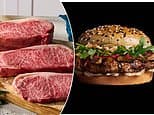
OPA WIRE, Oct 19 (OPA) — The global market for Wagyu beef has expanded significantly, moving from high-end steakhouses to supermarket shelves and fast-food chains like Burger King. While the term Wagyu refers to specific Japanese cattle breeds, industry experts note that the branding is increasingly applied to cross-bred cattle, which often lack the intense marbling and rich fat content characteristic of authentic, high-grade Japanese Wagyu.
Food critics and industry analysts have raised concerns regarding the quality of these accessible alternatives. A £11 patty from Burger King, while marketed as a premium offering, is frequently cited as an example of how the Wagyu label is utilized for marketing purposes rather than reflecting the traditional culinary experience. These products are often described as lacking the depth and tenderness associated with the original product, leading to consumer confusion over what constitutes genuine Wagyu.
Authentic Wagyu is graded based on strict criteria, including the Beef Marbling Score (BMS), which measures the distribution of intramuscular fat. Much of the mass-market beef sold under the Wagyu name is produced outside of Japan, often involving cross-breeding with Angus or other domestic cattle. This process reduces production costs and increases supply, but it fundamentally alters the chemical composition and sensory experience of the meat.
As the market continues to evolve, regulatory bodies face challenges in standardizing labeling requirements. Without clear distinctions between purebred Japanese Wagyu and cross-bred varieties, consumers remain susceptible to paying premium prices for products that do not align with traditional expectations. The industry shift toward mass-market accessibility appears to be prioritizing volume over the rigorous quality standards that originally defined the Wagyu brand.
Subscribe to the Global Briefing
Receive our flagship executive dispatch every morning. Essential geopolitical analysis, financial benchmarks, and breaking world events delivered to your inbox.
Mohammad Karamali
Verified Wire ContributorSenior correspondent covering geopolitics, regional developments, and strategic international affairs for OPA News (Optimum Public Affairs).
Related Stories & Follow-ups
Editorial WirePutin proposes summit with Trump and Xi to discuss Ukraine conflict
 Business & Economy
French Businesses Face Massive Recovery Costs Following Widespread Looting and Civil Unrest
Brent Crude Hits Five-Month High Amid Escalating Middle East Tensions
Reader Discussion
Leave a Comment
0 Comments
Owner
Editorial Oversight & Machine-Assisted Reporting
Human-in-the-Loop VerifiedEditorial Oversight & Machine-Assisted Reporting: This dispatch was synthesized and localized via OPA automated intelligence under continuous human editorial supervision.
Wire Source
This report was synthesized from Daily Mail under journalistic fair use.