
EU Council President Costa Seeks New Revenue Streams to Break Budget Deadlock
Key Takeaways
- European Council President António Costa is exploring new EU-wide taxes to fund the long-term budget.
- Parliamentary proposals for taxes on digital services and crypto assets could generate up to €25 billion annually.
- Member states remain divided over the Corporate Resource for Europe (CORE) and the diversion of ETS revenues.
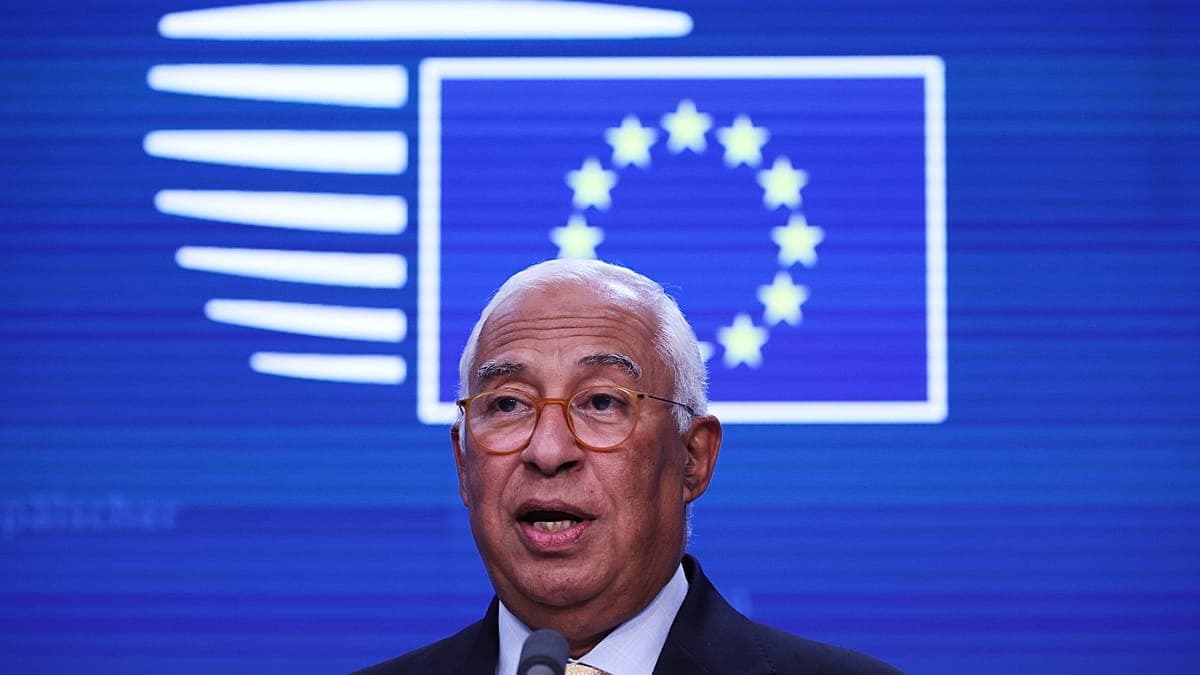
OPA WIRE, Oct 21 (OPA) — European Council President António Costa is intensifying efforts to secure new revenue streams for the EU budget after last week’s summit ended without a consensus. With national governments resisting higher direct contributions, Brussels is evaluating levies on digital services, carbon emissions, tobacco, and online gambling to bridge the funding gap. Costa maintains that these 'own resources' are necessary to balance strained national finances with the bloc’s expanding spending requirements.
Negotiations remain contentious as member states weigh the impact of various proposals. Ireland’s recent budget compromise, which included the Corporate Resource for Europe (CORE), faced criticism from the European Parliament. MEP Danuše Nerudová expressed disappointment that Parliament’s suggestions—including taxes on crypto assets and digital services capable of raising €25 billion annually—were largely ignored. The Commission is now considering whether to combine CORE with a broader digital levy, potentially targeting large foreign firms to avoid sector-specific friction with Washington.
Opposition to specific revenue measures remains high across the bloc. Poland has signaled resistance to diverting 30% of Emissions Trading System (ETS) revenues to the EU, while Luxembourg has voiced concerns over the Tobacco Excise Duty Own Resource (TEDOR) due to fears regarding black market growth. Malta continues to oppose a proposed tax on online gambling, a sector central to its domestic economy. Conversely, revenue linked to the Carbon Border Adjustment Mechanism (CBAM) and taxes on electronic waste have garnered broader support among member states.
As the January 1, 2028, deadline for new resources approaches, officials are assessing how to modulate these taxes to ensure equitable distribution. While Greece has suggested coordinating 6G spectrum auctions to generate funds, member states remain protective of their national revenue streams. An EU official stated that the presidency is currently evaluating all proposals to find a path forward, acknowledging that the current deadlock requires a more flexible approach to satisfy competing national interests.
Subscribe to the Global Briefing
Receive our flagship executive dispatch every morning. Essential geopolitical analysis, financial benchmarks, and breaking world events delivered to your inbox.
Mohammad Karamali
Verified Wire ContributorSenior correspondent covering geopolitics, regional developments, and strategic international affairs for OPA News (Optimum Public Affairs).
Related Stories & Follow-ups
Editorial WirePutin proposes summit with Trump and Xi to discuss Ukraine conflict
 Business & Economy
French Businesses Face Massive Recovery Costs Following Widespread Looting and Civil Unrest
Brent Crude Hits Five-Month High Amid Escalating Middle East Tensions
Reader Discussion
Leave a Comment
0 Comments
Owner
Editorial Oversight & Machine-Assisted Reporting
Human-in-the-Loop VerifiedEditorial Oversight & Machine-Assisted Reporting: This dispatch was synthesized and localized via OPA automated intelligence under continuous human editorial supervision.
Wire Source
This report was synthesized from Euro News under journalistic fair use.