
The Normalization of Repression: Mohammad Marandi and the Controversy of Lashes
Key Takeaways
- Mohammad Marandi described a 74-lash sentence as 'very light' and 'not like whipping a horse' during a recent interview.
- Critics argue that regime apologists use 'cultural differences' to justify human rights abuses and sanitize state violence.
- The controversy highlights a growing global rejection of the regime's attempts to normalize corporal punishment as standard judicial practice.
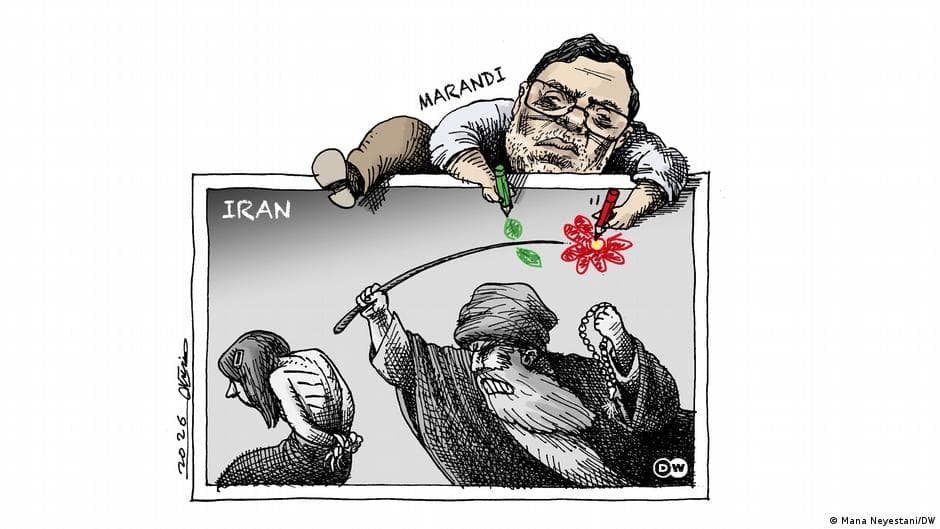
The recent comments by Mohammad Marandi, a Tehran University professor and prominent media figure for the Islamic Republic, regarding the 74-lash sentence handed down to singer Parastoo Ahmadi have ignited a firestorm of criticism. In an interview with a Lebanese-Australian podcaster, Marandi attempted to downplay the severity of the corporal punishment, claiming that the lashes are 'very light' and 'not like whipping a horse.' This trivialization of a judicial sentence involving physical violence has drawn widespread condemnation from human rights advocates and the general public, who view his remarks as a callous disregard for the dignity of the individual and the brutality of the state's punitive measures.
Marandi’s rhetoric is emblematic of a broader strategy employed by defenders of the Islamic Republic in international media. By leveraging their fluency in foreign languages and familiarity with international legal discourse, these figures often attempt to reframe state repression through the lens of 'cultural differences' or 'legal sovereignty.' During his interview, Marandi sought to sanitize the image of the Iranian judiciary, suggesting that such punishments are merely administrative procedures rather than human rights violations. Critics argue that this approach is a calculated effort to manipulate international perception, presenting a 'whitewashed' version of the regime that obscures the reality of systemic suppression and the harsh consequences faced by dissidents, artists, and activists within the country.
Historically, the use of corporal punishment in the Islamic Republic has been a subject of intense scrutiny by international human rights organizations. Such sentences are frequently applied to individuals convicted of offenses related to public morality, political dissent, or social activism. The practice is often criticized as a violation of international conventions against torture and cruel, inhuman, or degrading treatment. By framing these actions as standard judicial practice, regime apologists attempt to insulate the government from global accountability, arguing that Western critiques are based on a lack of understanding of local judicial frameworks or Islamic jurisprudence, thereby shifting the focus away from the victims of these sentences.
This controversy has profound ramifications for the discourse surrounding human rights in Iran. For many, Marandi’s comments represent an attempt to normalize violence as a tool of state control. The reaction from the public and the international community highlights a growing refusal to accept the regime's narrative of 'cultural relativism' as a justification for human rights abuses. By minimizing the pain and humiliation inflicted upon citizens like Parastoo Ahmadi, such rhetoric further alienates the regime from its own population and deepens the divide between the state and those who advocate for fundamental freedoms, civil rights, and the rule of law in Iran.
Looking ahead, analysts suggest that the 'whitewashing' of state violence will continue to be a central battleground in the information war between the Islamic Republic and its critics. As the regime faces increasing pressure, the role of media figures in shaping international opinion becomes more critical. However, the backlash against Marandi’s comments indicates that the international audience is becoming increasingly adept at identifying and rejecting these narratives. The future of this discourse will likely involve a more rigorous examination of the intersection between state-sponsored propaganda and the objective reality of human rights violations, as the global community continues to demand accountability for the treatment of Iranian citizens.
Reader Discussion
Leave a Comment
0 Comments
Owner
Editorial Oversight & Machine-Assisted Reporting
Human-in-the-Loop VerifiedEditorial Oversight & Machine-Assisted Reporting: This dispatch was synthesized and localized via OPA automated intelligence under continuous human editorial supervision.
Wire Source
This report was synthesized from DW Persian under journalistic fair use.