
Historical Account Details British SAS Operations and Policy Clashes in Afghanistan
Key Takeaways
- Operation Trent in late 2001 saw SAS assault forces eliminate 80 Al-Qaeda fighters in Helmand Province.
- SAS commanders contrasted favorable counterinsurgency legal frameworks in Iraq with strict operational limits in Afghanistan.
- Internal disputes emerged between military leadership and Whitehall policymakers regarding detention policies and night raids.
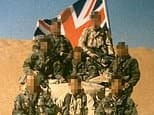
Historical accounts of British Special Air Service (SAS) deployments in Afghanistan and Iraq reveal intense operational challenges alongside emerging strategic friction with Whitehall officials. Elite units dispatched shortly after the September 11 attacks carried out decisive combat missions, including Operation Trent in late 2001, aimed at dismantling Al-Qaeda strongpoints concealed across Helmand Province.\n\nDuring Operation Trent, SAS assault forces under the command of then-officer Richard Williams engaged in fierce close-quarters combat to neutralize an Al-Qaeda stronghold located within an opium factory. Williams survived direct chest impacts deflected by equipment before his units eliminated 80 enemy combatants without taking prisoners. Reflecting on operational doctrine upon becoming Commanding Officer in 2005, Williams stressed to troops: 'Only your judgment, experience and skill will enable you to make the difference between securing a mediocre result and a breakthrough.'\n\nThe regiment's operational trajectory shifted significantly following successes against Baghdad's car-bombing networks under the US-led Joint Special Operations Command. However, subsequent planning for Task Force Helmand in Afghanistan introduced complex diplomatic constraints. Unlike Iraq's government, which permitted aggressive counterinsurgency frameworks, Afghan President Hamid Karzai resisted night raids, detentions, and intrusive property searches, prompting deep concerns among British military leaders regarding the viability of their mission parameters.\n\nThe tensions between aggressive counterinsurgency tactics and legal frameworks governed by civilian oversight highlighted an enduring divide between Whitehall policy circles and frontline military leadership. As ongoing inquiries examine the historical conduct of British special forces in Afghanistan, these early operational conditions underscore the long-standing debate over military autonomy, human rights scrutiny, and governmental accountability in modern conflict zones.
Subscribe to the Global Briefing
Receive our flagship executive dispatch every morning. Essential geopolitical analysis, financial benchmarks, and breaking world events delivered to your inbox.
Related Stories & Follow-ups
Editorial Wire Editorial & Opinion
Sudan’s New Peace Initiative Faces Skepticism Amid Protracted Civil War
 Editorial & Opinion
Kemi Badenoch Confronts Reform and Labour in Defining Conservative Conference Address
 Editorial & Opinion
UK Education Secretary Proposes Mandatory Public Speaking Assessments for GCSE Students
Reader Discussion
Leave a Comment
0 Comments
Owner
Editorial Oversight & Machine-Assisted Reporting
Human-in-the-Loop VerifiedEditorial Oversight & Machine-Assisted Reporting: This dispatch was synthesized and localized via OPA automated intelligence under continuous human editorial supervision.
Wire Source
This report was synthesized from Daily Mail under journalistic fair use.