
Balaghat, Madhya Pradesh: The children dying in India's remote tribal heartland
Key Takeaways
- At least 32 children from the vulnerable Baiga tribe have died in Balaghat since May due to measles, malaria, and malnutrition.
- Geographic isolation and traditional beliefs in a 'disease goddess' significantly delayed medical intervention and hospital access.
- A 2024 audit revealed serious irregularities in the distribution of state-provided nutritional rations for pregnant women and children.
OPA WIRE, Oct 1 (OPA) — In the remote, forested reaches of Balaghat, Madhya Pradesh, a silent tragedy has unfolded as at least 32 children have died since May. The victims, primarily from the Baiga tribe—one of India's most vulnerable groups—succumbed to a combination of measles, malaria, and severe malnutrition. The crisis, which went largely unnoticed by authorities for weeks, highlights the profound isolation and systemic neglect faced by tribal communities in India's heartland, where geography and traditional beliefs often intersect with a lack of basic medical infrastructure.
Official data indicates that measles and malaria were the primary drivers, with roughly 10 deaths attributed to each, though many cases involved overlapping infections. Local representative Sanjay Uikey noted that the scale of the mortality is unprecedented in his tenure. Medical officers, including Dr. Nimish Gautam, reported that families were initially resistant to clinical intervention, often relying on faith healers who attributed the symptoms to the arrival of a 'disease goddess,' a cultural belief that complicated early response efforts and delayed life-saving treatment.
The Baiga people live in sparse, mud-walled homes scattered across difficult terrain, where monsoon rains frequently render dirt tracks impassable. The nearest state hospital in Birsa is 70km away, a distance that proves fatal for families without vehicles or financial means. This geographical barrier is exacerbated by extreme poverty, as many parents are landless laborers earning minimal daily wages. Historically, these areas were also impacted by Maoist insurgency, which further hindered the development of consistent public health networks and infrastructure.
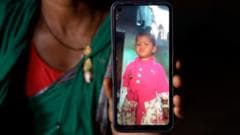
The ramifications of this outbreak have been devastating for families like the Dhurweys, who lost two children within 24 hours. The tragedy has forced a reckoning with the state's failure to provide adequate nutrition and healthcare. While mobile medical units and emergency vaccination drives were eventually deployed, the delay meant that many children were already beyond help. The incident has sparked a broader debate about the efficacy of government welfare schemes, particularly regarding the distribution of rations and the monitoring of maternal and child health in tribal regions.
Looking ahead, experts emphasize that vaccination alone is insufficient to address the root causes of these deaths. Chronic malnutrition, driven by early marriage and a lack of dietary diversity, leaves children immunocompromised and vulnerable to endemic diseases. Future interventions must prioritize long-term health education, improved road connectivity, and the rigorous auditing of public distribution systems. Without a fundamental shift in how the state engages with these vulnerable populations, the cycle of preventable child mortality in India's tribal heartland is likely to persist.
Subscribe to the Global Briefing
Receive our flagship executive dispatch every morning. Essential geopolitical analysis, financial benchmarks, and breaking world events delivered to your inbox.
Mohammad Karamali
Verified Wire ContributorSenior correspondent covering geopolitics, regional developments, and strategic international affairs for OPA News (Optimum Public Affairs).
Related Stories & Follow-ups
Editorial Wire


Reader Discussion
Leave a Comment
0 Comments
Owner
Editorial Oversight & Machine-Assisted Reporting
Human-in-the-Loop VerifiedEditorial Oversight & Machine-Assisted Reporting: This dispatch was synthesized and localized via OPA automated intelligence under continuous human editorial supervision.
Wire Source
This report was synthesized from BBC World under journalistic fair use.