
Congolese politician killed for defending Ebola efforts as mistrust complicates response
Key Takeaways
- The 17th Ebola outbreak in Congo has recorded over 8,000 cases and nearly 4,000 deaths.
- Violence against health responders is increasing as local mistrust leads to the rejection of safety protocols.
- The WHO warns this outbreak is on track to exceed the 2014-2016 West African epidemic in total fatalities.
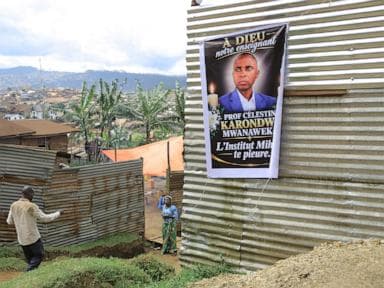
OPA WIRE, Oct 1 (OPA) — Mourners gathered in Butembo, Congo, on Wednesday to lay to rest Marie-Célestin Karondwa, a local official with the ruling Union for Democracy and Social Progress party, who was brutally murdered after publicly supporting government-led Ebola response measures. The attack, which involved assailants beating Karondwa before setting his home ablaze, underscores the lethal environment health workers face in eastern North Kivu province. This incident highlights a growing trend of violence against responders, severely hindering efforts to contain the 17th and deadliest Ebola outbreak in the nation's history, which has already claimed nearly 4,000 lives.
According to party officials, the violence was triggered by Karondwa’s appearance on a local radio program where he urged citizens to adhere to essential safety protocols, including social distancing and handwashing. Jean-Baptiste Katsongo Lwatswa, a senior party official, confirmed that these public appeals provoked the anger of local youth who remain deeply skeptical of the government. The current outbreak has recorded over 8,000 cases, with the World Health Organization warning that the disease is outpacing containment efforts and threatens to surpass the devastating 2014-2016 West African epidemic that resulted in 11,000 deaths.
This tragedy is rooted in a long history of institutional mistrust, exacerbated by decades of conflict, rebel activity, and systemic corruption within the Democratic Republic of Congo. Many residents in the eastern regions view the government with profound suspicion, often dismissing the existence of Ebola as a hoax or a political fabrication. This skepticism is further fueled by the lack of adequate medical infrastructure and the historical mismanagement of previous health crises, creating a dangerous disconnect between the state and the communities it aims to protect.
For health responders, the ramifications of this mistrust are dire. The inability to gain community cooperation means that contact tracing, safe burials, and medical intervention are frequently blocked or met with hostility. In rebel-controlled territories, the situation is even more precarious, as health workers are often viewed as outsiders or state agents, making them targets for violence. This atmosphere of fear prevents the effective deployment of resources, leaving remote hot spots vulnerable to rapid transmission as medical supplies and personnel remain in critically short supply.
Looking ahead, experts warn that the situation remains critical, particularly due to the absence of approved vaccines or treatments for the specific Bundibugyo virus strain driving this outbreak. While clinical trials are underway in the Ituri province, the epicenter, the WHO emphasizes that persistent challenges in timely case detection and access to early care continue to impede progress. Unless the government can bridge the gap of public trust and ensure the safety of its health workers, the outbreak is likely to continue its trajectory, potentially becoming the most lethal in recorded history.
Subscribe to the Global Briefing
Receive our flagship executive dispatch every morning. Essential geopolitical analysis, financial benchmarks, and breaking world events delivered to your inbox.
Mohammad Karamali
Verified Wire ContributorSenior correspondent covering geopolitics, regional developments, and strategic international affairs for OPA News (Optimum Public Affairs).
Related Stories & Follow-ups
Editorial Wire


Reader Discussion
Leave a Comment
0 Comments
Owner
Editorial Oversight & Machine-Assisted Reporting
Human-in-the-Loop VerifiedEditorial Oversight & Machine-Assisted Reporting: This dispatch was synthesized and localized via OPA automated intelligence under continuous human editorial supervision.
Wire Source
This report was synthesized from ABC under journalistic fair use.