
Zambia to Sign $3.6 Billion US Health Pact Without Disputed Data-Sharing Rules
Key Takeaways
- Zambia and the U.S. will sign a $3.6 billion, five-year health agreement on Thursday.
- Controversial clauses requiring the transfer of patient records and biological specimens to Washington were completely removed.
- The U.S. previously ended health assistance to Zimbabwe after it rejected similar data-sharing conditions.
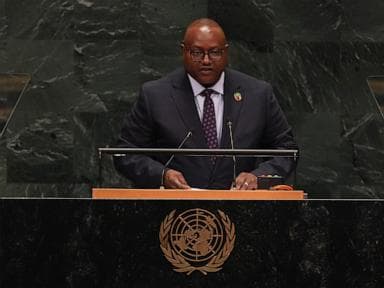
OPA WIRE, Oct 7 (OPA) — Zambia will sign a revised five-year bilateral health agreement worth $3.6 billion with the United States after negotiating the removal of contentious clauses requiring the transfer of patient data and biological specimens. Zambian Minister of Health Roma Chilengi announced Tuesday that the finalized terms exclude all mandatory specimen handovers, resolving a dispute that has caused diplomatic friction across several African capitals pursuing foreign health assistance.
Under the five-year plan, total combined spending from both nations will reach $3.6 billion, with the United States expected to contribute approximately $1.5 billion. “I want to announce here that the agreement as it stands now has no reference to any specimen sharing conditions,” Chilengi stated, emphasizing that requirements to provide individual health records were “completely removed.” He praised the U.S. as a critical partner while confirming the pact would be formally signed on Thursday.
The Trump administration has pushed these bilateral arrangements under an “America First” agenda following the dismantling of the U.S. Agency for International Development. While Washington has secured data-sharing protocols with at least nine African states—stipulating biological materials be delivered within five days for transfer to American entities—critics have expressed outrage over terms that give foreign corporations access to research materials without guaranteeing affordable access to resulting treatments.
Several regional neighbors have resisted Washington's demands, prompting punitive diplomatic and financial responses. Zimbabwe officially rejected the arrangement earlier this year, warning it would provide raw scientific data without benefiting its citizens, leading the U.S. to cut health aid entirely. Ghana and Namibia have similarly pushed back against mandatory medical record handovers, marking Zambia's revised agreement as a rare successful renegotiation under the revised framework.
Subscribe to the Global Briefing
Receive our flagship executive dispatch every morning. Essential geopolitical analysis, financial benchmarks, and breaking world events delivered to your inbox.
Mohammad Karamali
Verified Wire ContributorSenior correspondent covering geopolitics, regional developments, and strategic international affairs for OPA News (Optimum Public Affairs).
Related Stories & Follow-ups
Editorial Wire


Reader Discussion
Leave a Comment
0 Comments
Owner
Editorial Oversight & Machine-Assisted Reporting
Human-in-the-Loop VerifiedEditorial Oversight & Machine-Assisted Reporting: This dispatch was synthesized and localized via OPA automated intelligence under continuous human editorial supervision.
Wire Source
This report was synthesized from ABC under journalistic fair use.