
No, Macron can't wage war on Russia to remain in power
Key Takeaways
- The French President cannot unilaterally declare war; Article 35 requires parliamentary authorization for armed intervention.
- Article 7 of the French Constitution strictly mandates the timing of elections, leaving no room for postponement due to war.
- Article 16 provides emergency powers only under extreme public calamity and requires consultation with multiple constitutional bodies.
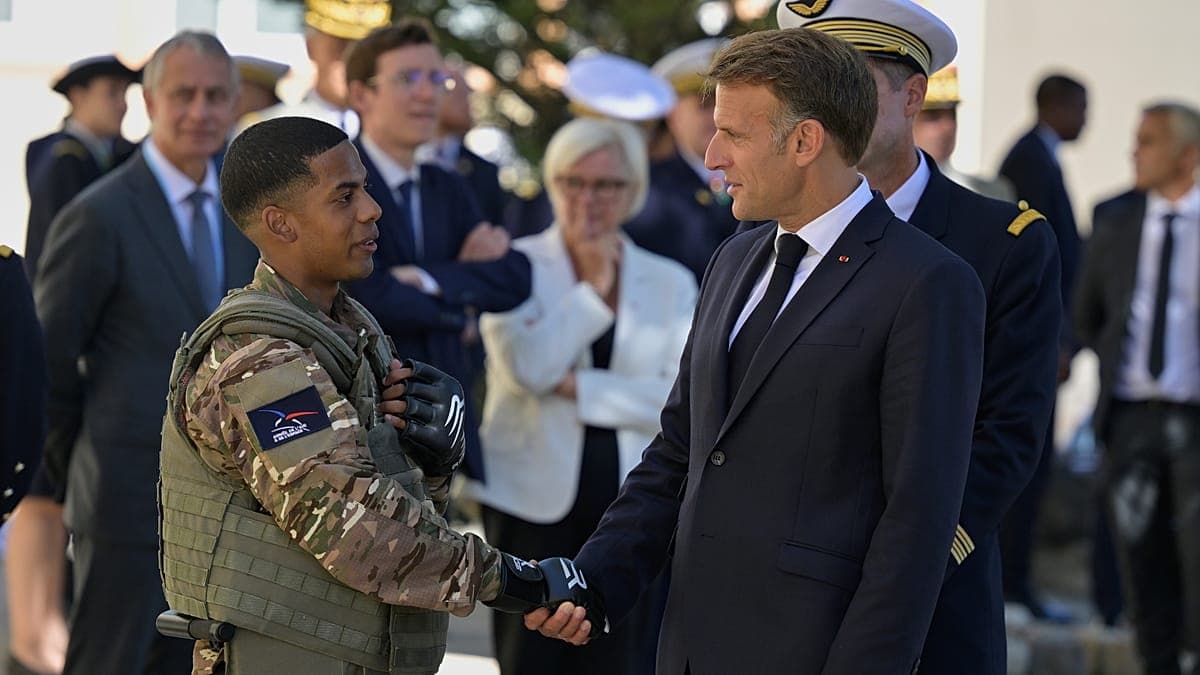
OPA WIRE, Sep 30 (OPA) — For months, European leaders and NATO have raised alarms regarding Russian hybrid threats, a sentiment echoed by French President Emmanuel Macron. However, a wave of social media speculation has emerged, alleging that Macron is not highlighting these security concerns for the public good, but rather for his own political survival. As French presidents are constitutionally limited to two consecutive terms, Macron is set to leave office following the 2027 presidential election. Critics claim he is exaggerating the threat of war with Moscow to justify a state of emergency, thereby postponing the election and maintaining his grip on power.
These claims have gained significant traction online, particularly following a mid-September security briefing Macron held with party leaders. Constitutional experts, however, dismiss these theories as legally impossible. Guillaume Tusseau, a professor at Sciences Po Law School, emphasizes that the French president cannot unilaterally declare war. Under Article 35 of the constitution, the authority to authorize armed intervention rests with the parliament, not the executive branch. Any attempt to bypass this would constitute a clear violation of the constitution, potentially triggering immediate impeachment proceedings against the president.
Historically, the French constitution was designed to prevent the concentration of power that could lead to authoritarianism. The timeline for presidential elections is strictly governed by Article 7, which mandates that elections must occur between 20 and 35 days before the incumbent's term expires. While minor adjustments are permitted in the event of a candidate's death or incapacity, there is no provision that allows for the postponement of elections due to a state of war or general security concerns. The legal framework is intentionally rigid to ensure the democratic transition of power remains uninterrupted.
Proponents of the conspiracy theory often point to Article 16, which grants the president exceptional powers during crises. However, legal experts like Baptiste Charvin note that this article requires consultation with the prime minister, heads of the assemblies, and the Constitutional Council. It is not a tool for personal power, but a mechanism for extreme public calamity, such as the 1961 Algiers putsch. Misunderstandings of this article are frequently used to fuel narratives of dictatorial ambition, despite the lack of any legal mechanism for a president to amend the constitution to extend their own term.
Looking ahead, while there is no empirical evidence supporting the idea that Macron intends to manipulate the electoral process, experts warn that the strength of democratic institutions remains the primary defense against potential abuse. The discourse surrounding these conspiracy theories highlights a broader vulnerability in modern democracies, where misinformation can easily distort public perception of constitutional law. Ultimately, the French legal system provides robust safeguards that make the alleged strategy of waging war to remain in power a practical and legal impossibility for any sitting president.
Subscribe to the Global Briefing
Receive our flagship executive dispatch every morning. Essential geopolitical analysis, financial benchmarks, and breaking world events delivered to your inbox.
Mohammad Karamali
Verified Wire ContributorSenior correspondent covering geopolitics, regional developments, and strategic international affairs for OPA News (Optimum Public Affairs).
Related Stories & Follow-ups
Editorial Wire

Reader Discussion
Leave a Comment
0 Comments
Owner
Editorial Oversight & Machine-Assisted Reporting
Human-in-the-Loop VerifiedEditorial Oversight & Machine-Assisted Reporting: This dispatch was synthesized and localized via OPA automated intelligence under continuous human editorial supervision.
Wire Source
This report was synthesized from Euro News under journalistic fair use.