
India: Cockroach Janta Party announces Delhi march for October 10, calls for election chief's resignation
Key Takeaways
- The Cockroach Janta Party has scheduled a mass march to New Delhi for October 10 to demand the resignation of Chief Election Commissioner Gyanesh Kumar.
- Over 700 demonstrators, including former Delhi Chief Minister Atishi, were detained by police on October 2 during protests at Jantar Mantar.
- The CJP movement, which began as online satire in May, previously succeeded in forcing the resignation of Education Minister Dharmendra Pradhan in July.
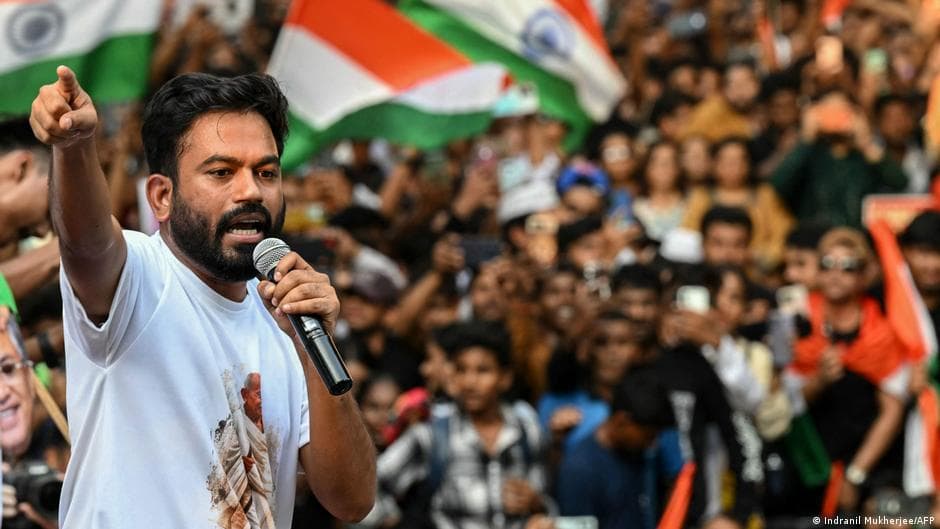
OPA WIRE, Oct 3 (OPA) — The Cockroach Janta Party (CJP) has officially declared a nationwide mobilization, calling for a mass march on New Delhi scheduled for October 10. The protest movement, which has gained significant momentum through persistent street demonstrations and online activism, demands the immediate resignation of India's Chief Election Commissioner, Gyanesh Kumar. This announcement follows a period of intense civil unrest, marked by the detention of hundreds of demonstrators in the capital during the recent Gandhi Jayanti observances, as the group continues its campaign to challenge the current electoral oversight mechanisms.
CJP founder and convener Abhijeet Dipke emphasized the gravity of the situation, stating that if the Chief Election Commissioner does not step down, supporters from across the country will converge on Jantar Mantar. The organization has explicitly framed this as a fight to preserve democratic integrity, vowing that any police attempts to block their path will only serve to expand the protest footprint. Recent data from local authorities indicates that over 700 individuals, including prominent political figures like former Delhi Chief Minister Atishi, were detained on October 2 alone, highlighting the escalating friction between the state and the protest movement.
The movement originated in May as a form of digital satire but has rapidly evolved into a potent political force capable of mobilizing thousands. This trajectory mirrors the group's previous successes, most notably the July 20 protests that eventually forced the resignation of then-Education Minister Dharmendra Pradhan. The current unrest is set against a backdrop of broader societal challenges in India, including ongoing border tensions with Pakistan and significant sporting achievements at the Asian Games, which have momentarily diverted public attention from the political volatility gripping the nation's capital.
The ramifications of this movement are profound, affecting both the stability of India's electoral institutions and the broader political landscape. By targeting the Election Commission, the CJP is effectively questioning the neutrality of the body responsible for the world's largest democratic exercises. The government's reliance on Section 163, which prohibits large assemblies, suggests a hardening stance against the protesters, raising concerns about the potential for further violent crackdowns similar to those witnessed in July. The involvement of diverse groups, including students, activists, and cultural figures, underscores the widespread nature of the discontent.
Looking ahead, political analysts suggest that the October 10 march will be a critical litmus test for both the CJP and the ruling administration. If the protest successfully draws a massive turnout despite the government's restrictive measures, it could trigger a deeper crisis of legitimacy for the Election Commission. Conversely, a failure to sustain momentum could signal a decline in the movement's influence. As the nation watches, the intersection of grassroots activism and institutional accountability remains the defining feature of India's current political climate, with the outcome likely to shape the electoral discourse for the foreseeable future.
Subscribe to the Global Briefing
Receive our flagship executive dispatch every morning. Essential geopolitical analysis, financial benchmarks, and breaking world events delivered to your inbox.
Mohammad Karamali
Verified Wire ContributorSenior correspondent covering geopolitics, regional developments, and strategic international affairs for OPA News (Optimum Public Affairs).
Related Stories & Follow-ups
Editorial Wire

Reader Discussion
Leave a Comment
0 Comments
Owner
Editorial Oversight & Machine-Assisted Reporting
Human-in-the-Loop VerifiedEditorial Oversight & Machine-Assisted Reporting: This dispatch was synthesized and localized via OPA automated intelligence under continuous human editorial supervision.
Wire Source
This report was synthesized from DW English under journalistic fair use.