
Canada Prepares War Game Scenarios for Unlikely US Military Invasion
Key Takeaways
- Canadian leadership is running strategic war game simulations addressing potential U.S. military aggression.
- A 2026 Léger poll found over 30% of Canadians view a U.S. military attack as a plausible threat.
- Bilateral security relies heavily on deep integration through NATO and NORAD, making open armed conflict unlikely.
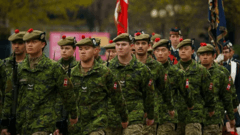
Canadian Prime Minister Mark Carney revealed that Ottawa has begun modeling strategic responses to a previously unthinkable scenario: a potential military invasion by the United States. Speaking to The New York Times, Carney characterized the preparation as fundamental risk management amid shifting bilateral ties under U.S. President Donald Trump, noting that although the probability remains minuscule, leadership must account for all contingencies.
Tensions between the North American neighbors have escalated following Trump's aggressive trade tariffs and his persistent public rhetoric suggesting Canada become the 51st U.S. state. While Trump described the use of force as "highly unlikely" in 2025 and the White House stated he has done more than anyone to protect Canadians, domestic anxiety is rising. A Léger survey conducted in early 2026 revealed that over 30 percent of Canadians consider an American military attack possible.
Military experts emphasize that cross-border warfare remains extraordinarily complicated due to deep bilateral integration. Both nations are founding NATO allies and jointly operate the North American Aerospace Defense Command (NORAD). Former Royal Canadian Air Force Lieutenant-General Christopher Coates noted that direct armed conflict was never contemplated during his 34-year career, suggesting any theoretical American aggression would more likely manifest as covert cyber warfare rather than physical troop deployments.
Historically, defending against American expansionism formed a cornerstone of Canada's founding identity, from the War of 1812 to interwar contingency planning in the 1920s. National security analysts point out that current strategic modeling highlights the profound disruption of the post-war international order. Moving forward, Canadian defense planners face complex questions regarding future intelligence sharing and collaborative operations with Washington as geopolitical boundaries continue to be tested.
Subscribe to the Global Briefing
Receive our flagship executive dispatch every morning. Essential geopolitical analysis, financial benchmarks, and breaking world events delivered to your inbox.
Related Stories & Follow-ups
Editorial WireTrump Waives New Russia Sanctions, Drawing Sharp Criticism from Zelenskyy
 Politics
Zelenskyy Urges Sanctions Enforcement After Trump Pauses Measures Against Russia
 Politics
Reports Allege Elon Musk and Donald Trump Coordinated Starlink Restrictions in Ukraine
Reader Discussion
Leave a Comment
0 Comments
Owner
Editorial Oversight & Machine-Assisted Reporting
Human-in-the-Loop VerifiedEditorial Oversight & Machine-Assisted Reporting: This dispatch was synthesized and localized via OPA automated intelligence under continuous human editorial supervision.
Wire Source
This report was synthesized from BBC Persian under journalistic fair use.