
Iranian Oil Minister Resigns Amid Deepening US Sanctions and Internal Disputes
Key Takeaways
- President Masoud Pezeshkian accepted the resignation of Oil Minister Mohsen Paknejad, naming Hamid Bovard as caretaker.
- The shake-up occurs as U.S. Treasury Secretary Scott Bessent vowed to halt all maritime Iranian oil shipments.
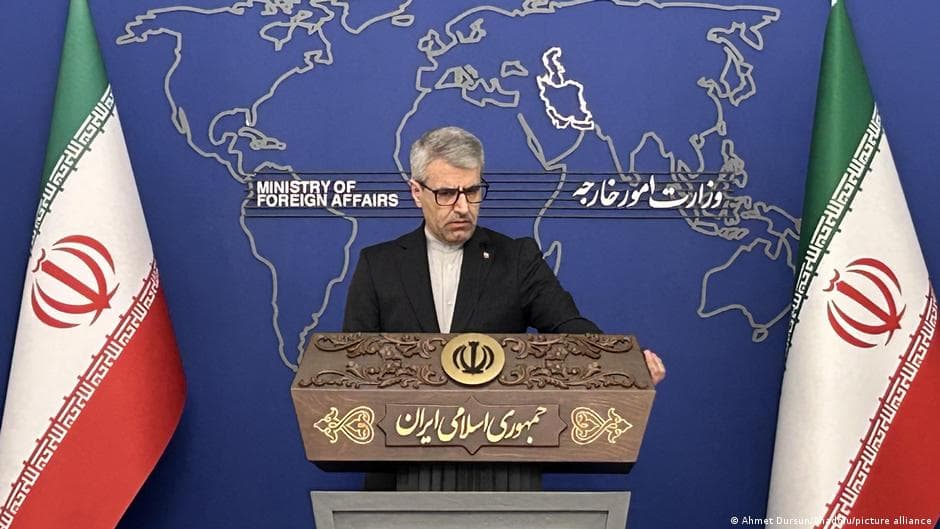
- Foreign Ministry spokesperson Esmaeil Baghaei reaffirmed that leaving the NPT remains a serious discussion in Tehran.
Iranian President Masoud Pezeshkian has accepted the resignation of Oil Minister Mohsen Paknejad, naming Hamid Bovard, head of the National Iranian Oil Company, as caretaker minister. The official confirmation was announced by Mehdi Tabatabaei, deputy head of communications in the president's office. The leadership change comes during heightened managerial disputes within Iran's energy sector and an intensifying economic campaign by Western powers aimed at cutting off Tehran's hydrocarbon revenues entirely.\n\nPaknejad's departure follows months of friction, including a public standoff over executive leadership at the Persian Gulf Petrochemical Industries Holding against its chief Mohammad Shariatmadari. Compounding domestic tensions, external pressure reached new peaks as U.S. Treasury Secretary Scott Bessent asserted that strict enforcement would eliminate Iranian oil shipments. Bessent stated on Saturday that the Islamic Republic would have \"no oil shipments on the water this week and will yield no revenue\" under updated sanction protocols.\n\nConcurrently, Iranian diplomatic rhetoric has escalated over international safeguards and regional security. Iranian Foreign Ministry spokesperson Esmaeil Baghaei addressed speculation surrounding Tehran's nuclear posture, indicating that withdrawal from the Non-Proliferation Treaty (NPT) remains an actively debated policy option. Tensions have mounted further as regional defense alignments evolve, notably the Mecca Defense Pact comprising Turkey, Saudi Arabia, and Pakistan, which scheduled strategic ministerial meetings in Riyadh to evaluate regional dynamics.\n\nIran's critical energy industry faces severe operational constraints under interim leadership as exports remain constrained by sanctions. Observers expect Bovard to confront immediate stabilization demands within the administrative ranks of the petroleum ministry. Concurrently, Tehran will gauge diplomatic fallout as regional coalitions mobilize and international surveillance over Iran's nuclear commitments enters a volatile phase.
Subscribe to the Global Briefing
Receive our flagship executive dispatch every morning. Essential geopolitical analysis, financial benchmarks, and breaking world events delivered to your inbox.
Related Stories & Follow-ups
Editorial WireTrump Waives New Russia Sanctions, Drawing Sharp Criticism from Zelenskyy
 Politics
Zelenskyy Urges Sanctions Enforcement After Trump Pauses Measures Against Russia
 Politics
Reports Allege Elon Musk and Donald Trump Coordinated Starlink Restrictions in Ukraine
Reader Discussion
Leave a Comment
0 Comments
Owner
Editorial Oversight & Machine-Assisted Reporting
Human-in-the-Loop VerifiedEditorial Oversight & Machine-Assisted Reporting: This dispatch was synthesized and localized via OPA automated intelligence under continuous human editorial supervision.
Wire Source
This report was synthesized from DW Persian under journalistic fair use.