
Indian Police Detain Opposition Lawmakers Demanding Election Chief's Resignation
Key Takeaways
- Police detained Indian opposition MPs during a march of 237 lawmakers demanding the resignation of election chief Gyanesh Kumar.
- Controversy centers on an electoral roll revision that purged over 130 million names, alongside reports that two commissioners raised 14 formal objections to unilateral decisions.
- India's Supreme Court has sought responses from the government and election body regarding the legality of decisions made without full panel approval.
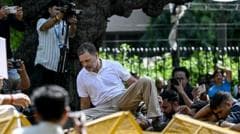
OPA WIRE, Oct 6 (OPA) — Police in New Delhi detained opposition lawmakers on Tuesday as hundreds marched toward the Election Commission headquarters demanding the resignation of Chief Election Commissioner Gyanesh Kumar. Security forces barricaded key roads between parliament and the commission's offices, transferring intercepted protesters into police buses. While authorities did not disclose the official tally of detentions, opposition leaders stated that 237 members of parliament representing multiple parties participated in the high-profile demonstration against the poll body's leadership.
The standoff follows intense backlash over the Election Commission's Special Intensive Revision of electoral rolls, which has removed over 130 million names nationwide to eliminate duplicates and ineligible voters. Opposition parties and civil groups argue the purge improperly disenfranchised legitimate citizens. Congress President Mallikarjun Kharge declared three "non-negotiable" demands: Kumar's resignation, the immediate cancellation of the revision exercise, and a return to paper ballots. Opposition leader Rahul Gandhi directly urged the chief to step down, while ruling Bharatiya Janata Party MP Sambit Patra dismissed the protest as a "sponsored attempt" to foster anarchy.
Political scrutiny intensified after an Indian Express investigation revealed that election commissioners Sukhbir Singh Sandhu and Vivek Joshi formally objected at least 14 times in ten months against decisions issued in the commission's name without their consent. These internal disputes reportedly centered on voter list alterations, database access, and data security. The Election Commission defended its governance, asserting that internal debates represent standard institutional procedure and that official rulings were ultimately settled through consensus.
The dispute has escalated to India's Supreme Court, which ordered both the federal government and the Election Commission to respond to petitions challenging Kumar's unilateral decision-making authority. The court reiterated that decisions must be made collectively or by majority vote, warning that unauthorized actions could be overturned, though it declined an immediate suspension of the chief. Meanwhile, grassroots groups, including the Gen Z-led Cockroach Janta Party, have announced renewed nationwide protests set for October 10.
Subscribe to the Global Briefing
Receive our flagship executive dispatch every morning. Essential geopolitical analysis, financial benchmarks, and breaking world events delivered to your inbox.
Mohammad Karamali
Verified Wire ContributorSenior correspondent covering geopolitics, regional developments, and strategic international affairs for OPA News (Optimum Public Affairs).
Related Stories & Follow-ups
Editorial Wire
Reader Discussion
Leave a Comment
0 Comments
Owner
Editorial Oversight & Machine-Assisted Reporting
Human-in-the-Loop VerifiedEditorial Oversight & Machine-Assisted Reporting: This dispatch was synthesized and localized via OPA automated intelligence under continuous human editorial supervision.
Wire Source
This report was synthesized from BBC World under journalistic fair use.