
President Trump Waives Key Russian Sanctions Despite Bipartisan Congressional Backlash
Key Takeaways
- President Trump blocked key sanctions against Russia, citing national interests.
- The Graham law aimed to target Russian energy, financial institutions, and the 'shadow fleet'.
- Bipartisan lawmakers and President Zelensky criticized the move as undermining efforts to end the war.
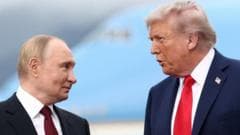
President Donald Trump has utilized executive authority to block several critical sanctions against Russia, just days before the legislation was set to take effect. The sanctions, mandated by a law signed in September, were designed to penalize Moscow for its ongoing war in Ukraine. Trump justified the decision by citing US "national interests," a move that has immediately sparked intense criticism from lawmakers across the political spectrum who argue the administration is undermining its own legislative efforts to curb Russian aggression.
The legislation, named after the late Senator Lindsey Graham, granted the administration broad powers to impose tariffs of up to 100% on major purchasers of Russian energy, including China and India. It also targeted President Vladimir Putin, senior government officials, key financial institutions, and Russia’s "shadow fleet" of oil tankers. A bipartisan group of 20 lawmakers recently urged the President to ensure "full and faithful implementation" of the law, asserting that these measures are essential to forcing Moscow to engage in serious peace negotiations.
This executive action follows a controversial announcement that the US would begin importing Russian diesel to lower domestic energy prices ahead of the November midterm elections. The decision to purchase fuel from Moscow has drawn sharp condemnation from international allies and Ukrainian President Volodymyr Zelensky, who characterized the deal as a direct "investment in a war that must be ended." Critics fear the move provides a financial lifeline to the Kremlin, effectively softening the impact of existing international pressure.
As the October 18 implementation deadline passes, the administration faces a growing rift with Congress over foreign policy priorities. While the White House maintains that domestic energy costs are a primary concern, the decision to waive sanctions signals a significant shift in the US approach to the conflict. The standoff leaves the future of the Graham law in doubt, raising questions about the consistency of US sanctions policy and the potential for further legislative challenges as lawmakers seek to reassert control over the executive's foreign policy agenda.
Subscribe to the Global Briefing
Receive our flagship executive dispatch every morning. Essential geopolitical analysis, financial benchmarks, and breaking world events delivered to your inbox.
Related Stories & Follow-ups
Editorial Wire Politics
US Midterm Elections: A Critical Test for the Trump Administration and Congressional Control
Trump Waives New Russia Sanctions, Drawing Sharp Criticism from Zelenskyy
 Politics
Zelenskyy Urges Sanctions Enforcement After Trump Pauses Measures Against Russia
Reader Discussion
Leave a Comment
0 Comments
Owner
Editorial Oversight & Machine-Assisted Reporting
Human-in-the-Loop VerifiedEditorial Oversight & Machine-Assisted Reporting: This dispatch was synthesized and localized via OPA automated intelligence under continuous human editorial supervision.
Wire Source
This report was synthesized from BBC World under journalistic fair use.