
Violent Cost-of-Living Protests Erupt Across Italy Leading to Mass Detentions
Key Takeaways
- 50 people detained in Milan, with additional arrests in Turin and Bologna.
- 25 people injured in Milan, including 10 police officers, during violent clashes.
- Prime Minister Meloni demanded the opposition condemn the violence, citing the need for political clarity.
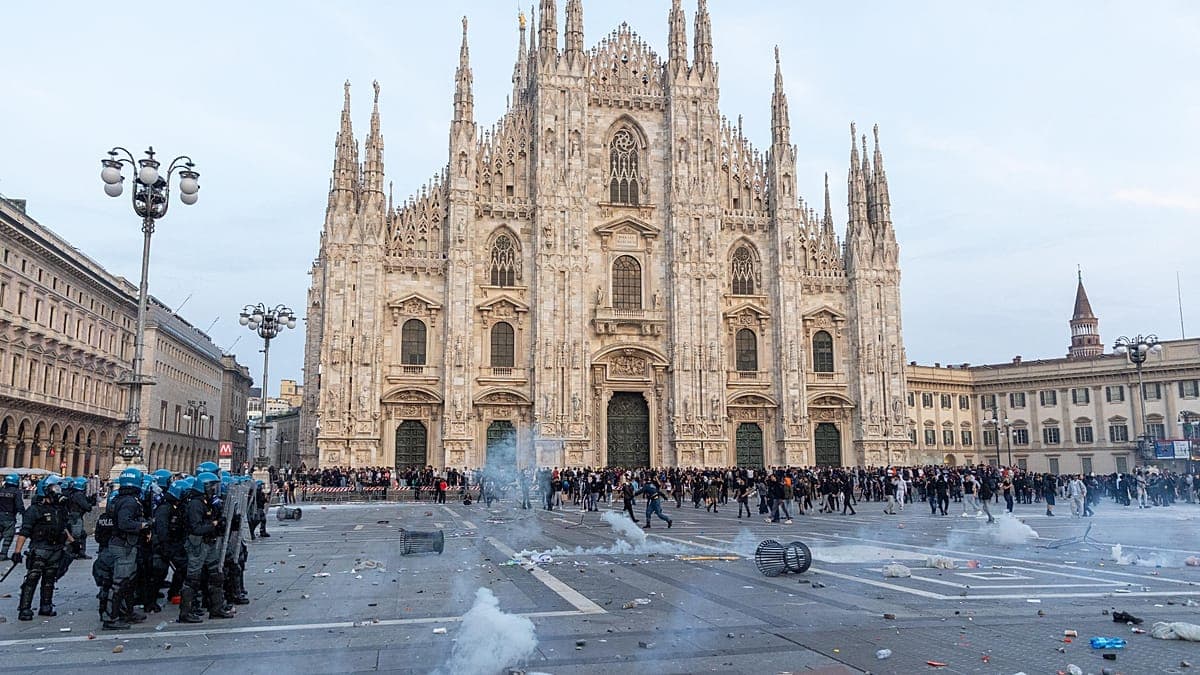
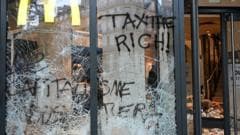
Violent demonstrations against the rising cost of living have swept across major Italian cities, resulting in widespread property damage, injuries, and dozens of arrests. The unrest, which mirrors recent protests in France, saw intense clashes between police and demonstrators in Milan, Turin, and Bologna. In Milan, the situation escalated into urban guerrilla warfare, with protesters attacking shops, setting fire to public infrastructure, and hurling debris at law enforcement. Police responded with tear gas and water cannons to disperse the crowds, leading to the temporary closure of key transport hubs, including the M1 and M3 underground stations.
The human toll of the unrest is significant, with 25 people injured in Milan alone, including ten police officers. Authorities confirmed that 50 individuals were detained in Milan, half of whom were minors. In Turin, police apprehended 12 people—ten of them minors—who were found in possession of petrol bombs, cobblestones, and emergency tools. A further seven individuals were detained in Bologna following clashes near the railway station. Officials reported that protesters utilized street furniture, including benches and tables, as barricades while launching fireworks and smoke bombs at security forces.
Italian Prime Minister Giorgia Meloni has strongly condemned the violence, calling on the political opposition to abandon any ambiguity regarding the unrest. Meloni emphasized that while the right to protest is fundamental, the destruction of property and attacks on police are unacceptable. Deputy Prime Minister Matteo Salvini echoed these sentiments, blaming the violence on radical elements, while Milan Mayor Giuseppe Sala acknowledged that while the economic grievances behind the protests are understandable, the resulting criminal behavior is entirely unjustifiable.
The political fallout continues as the opposition faces pressure to address the underlying causes of the unrest without appearing to condone the violence. While some political leaders have called for a firm stance against the rioters, others, such as Democratic Party group leader Pierfrancesco Majorino, have urged authorities not to criminalize students who are peacefully advocating for housing and education rights. As the government assesses the damage, the incident highlights the growing social tension in Italy driven by economic instability and the widening gap between public frustration and political discourse.
Subscribe to the Global Briefing
Receive our flagship executive dispatch every morning. Essential geopolitical analysis, financial benchmarks, and breaking world events delivered to your inbox.
Related Stories & Follow-ups
Editorial Wire
Reader Discussion
Leave a Comment
0 Comments
Owner
Editorial Oversight & Machine-Assisted Reporting
Human-in-the-Loop VerifiedEditorial Oversight & Machine-Assisted Reporting: This dispatch was synthesized and localized via OPA automated intelligence under continuous human editorial supervision.
Wire Source
This report was synthesized from Euro News under journalistic fair use.