
Off-Grid Solar Power Drives Drought Resilience Across Remote Amazon Communities
Key Takeaways
- Off-grid installations in the Brazilian Amazon surged from 105 in 2020 to over 100,000 by 2026, driven largely by solar adoption.
- Decentralized solar pumps and battery kits now provide reliable drinking water and continuous refrigeration across isolated riverine villages.
- Renewable energy investments strengthen local economies and support Indigenous territories, which maintain zero-deforestation rates above 80%.
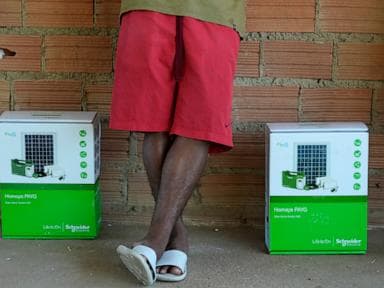
OPA WIRE, Oct 6 (OPA) — Deep within Brazil's Amazon rainforest, remote riverine and Indigenous communities are deploying decentralized solar energy to break their dependence on expensive fossil fuels and fortify against severe climate shocks. In the village of Nova Sociedade along the Arapiuns River, where severe droughts previously forced families to trek up to 20 kilometers for water, newly installed solar panels now run automated water pumps that fill centralized storage tanks. The community-wide initiative guarantees clean water for 36 families while replacing polluting, limited-capacity diesel generators with dedicated home photovoltaic kits.
Nonprofit organizations and local governments are scaling these off-grid installations across the basin ahead of projected El Niño-induced dry spells. Caetano Scannavino, manager of the nonprofit Saúde e Alegria, emphasized the environmental stakes: "This technology uses the power of the sun and can replace other ways of generating electricity that often require clearing the forest or burning fuel, the very practices driving global warming." Beyond residential lighting, the transition has silenced deafening generator noise at local institutions like the São Benedito School, allowing continuous refrigeration for fresh food and critical medical clinics.
While more than 99% of Brazil’s 214 million residents have electricity, approximately 1 million people—primarily isolated Amazonians—remain without reliable power due to exorbitant grid-expansion costs. Securing fuel often demands treacherous, multi-hour boat journeys to urban hubs like Santarém, only to yield power that shuts off by late evening. Official data shows a dramatic surge in off-grid decentralized energy across the region, skyrocketing from merely 105 systems in 2020 to over 100,000 by 2026, virtually all utilizing solar generation and battery storage.
Expanding clean electrification is also proving crucial for local bioeconomies and broader conservation efforts. In Amazonas state, solar-powered refrigeration at açaí processing hubs in Bela Conquista prevents spoilage, with international partners preparing 20 additional pilot programs to support sustainable agroforestry and fisheries. Because protected Indigenous lands show over 80% zero-deforestation rates according to MapBiomas, bolstering local resilience directly safeguards the rainforest's critical carbon sinks.
Subscribe to the Global Briefing
Receive our flagship executive dispatch every morning. Essential geopolitical analysis, financial benchmarks, and breaking world events delivered to your inbox.
Mohammad Karamali
Verified Wire ContributorSenior correspondent covering geopolitics, regional developments, and strategic international affairs for OPA News (Optimum Public Affairs).
Related Stories & Follow-ups
Editorial Wire

Reader Discussion
Leave a Comment
0 Comments
Owner
Editorial Oversight & Machine-Assisted Reporting
Human-in-the-Loop VerifiedEditorial Oversight & Machine-Assisted Reporting: This dispatch was synthesized and localized via OPA automated intelligence under continuous human editorial supervision.
Wire Source
This report was synthesized from ABC under journalistic fair use.