
Physicist Francis Halzen Wins 2026 Nobel Prize for IceCube Neutrino Discoveries
Key Takeaways
- Francis Halzen awarded 2026 Nobel Prize in Physics for developing the IceCube Neutrino Observatory.
- IceCube detected the first high-energy neutrinos originating from outside our galaxy.
- The discovery solidifies multimessenger astronomy alongside gravitational waves and electromagnetic surveys.
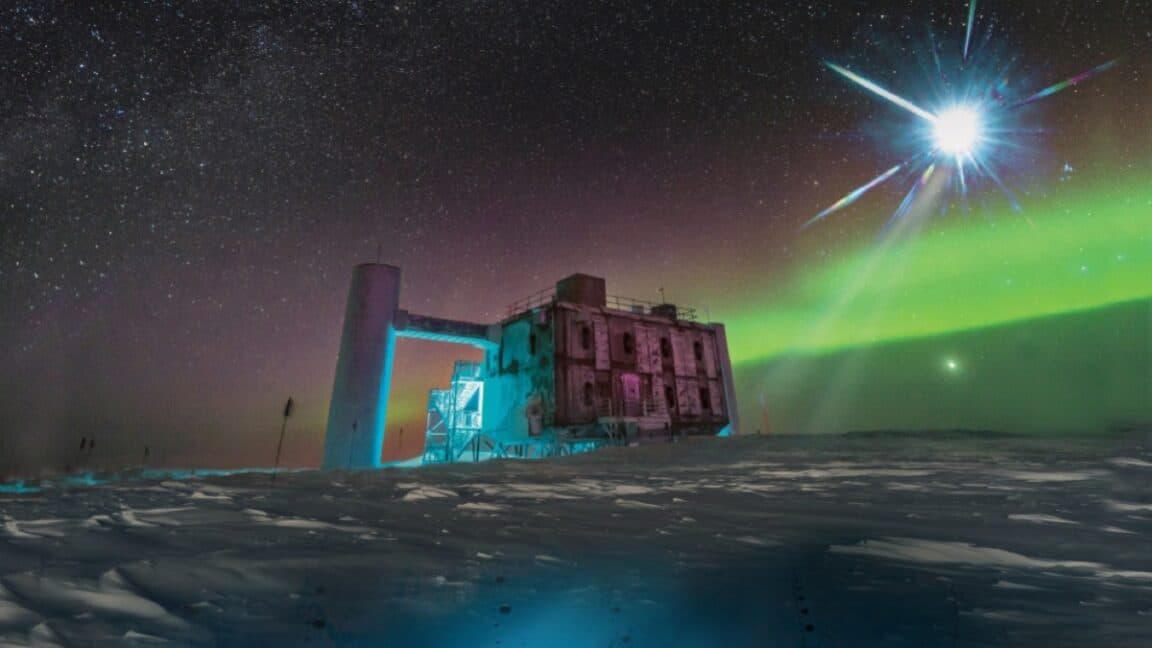
OPA WIRE, Oct 6 (OPA) — Francis Halzen, a theoretical physicist at the University of Wisconsin–Madison, has been awarded the 2026 Nobel Prize in Physics for his foundational role in establishing the IceCube Neutrino Observatory in Antarctica. The Royal Swedish Academy of Sciences recognized Halzen for decisive contributions to the detector's development and the landmark identification of high-energy neutrinos originating from distant astrophysical sources, ushering in a transformative era of cosmic observation.
Halzen expressed genuine shock upon receiving the news, emphasizing that the multi-decade effort relied on extensive international teamwork rather than solitary endeavor. "It was a great surprise, and I obviously didn't expect it," Halzen stated, dedicating the recognition to the "really courageous people who joined me in this project when really no respectable conservative physicist would have joined me." Particle physicist Danielle Norcini of Johns Hopkins University praised Halzen as the driving force behind IceCube, noting that the experiment opened a novel domain of neutrino astronomy through the collective work of hundreds of engineers and scientists.
Often called "ghost particles," neutrinos are the most abundant subatomic particles in the cosmos, possessing zero electrical charge and minuscule mass. Because they rarely interact with normal matter, trillions stream through Earth unimpeded every second. First theorized by Wolfgang Pauli in 1930 and experimentally detected in 1956, neutrinos historically proved exceptionally difficult to capture. Prior milestones in neutrino science earned Nobel honors in 2002, paving the way for Halzen's massive Antarctic array embedded deep within glacial ice.
Because high-energy neutrinos travel vast distances across space without being absorbed or deflected, they serve as unique cosmic messengers. By bypassing the barriers that impede electromagnetic waves, the IceCube Observatory now enables researchers to examine violent astrophysical events, including supermassive black holes and distant active galactic nuclei. Halzen’s recognition solidifies multimessenger astronomy, combining neutrino observations with electromagnetic radiation and gravitational wave data to unlock longstanding mysteries of the high-energy universe.
Subscribe to the Global Briefing
Receive our flagship executive dispatch every morning. Essential geopolitical analysis, financial benchmarks, and breaking world events delivered to your inbox.
Mohammad Karamali
Verified Wire ContributorSenior correspondent covering geopolitics, regional developments, and strategic international affairs for OPA News (Optimum Public Affairs).
Related Stories & Follow-ups
Editorial Wire

Reader Discussion
Leave a Comment
0 Comments
Owner
Editorial Oversight & Machine-Assisted Reporting
Human-in-the-Loop VerifiedEditorial Oversight & Machine-Assisted Reporting: This dispatch was synthesized and localized via OPA automated intelligence under continuous human editorial supervision.
Wire Source
This report was synthesized from Ars Technica under journalistic fair use.