
French and Japanese Scientists Win Chemistry Nobel for Solving Molecular Chirality Mystery
Key Takeaways
- Henri Kagan and Kenzo Soai won the 2026 Nobel Prize in Chemistry for solving the puzzle of molecular chirality.
- Living organisms exclusively rely on specific mirror-image molecules, such as left-handed amino acids and right-handed DNA sugars.
- The laureates' work enables targeted synthesis of specific molecular forms, vastly improving pharmaceutical manufacturing and drug safety.
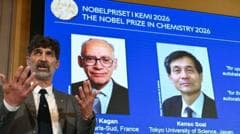
OPA WIRE, Oct 7 (OPA) — The Royal Swedish Academy of Sciences has awarded the 2026 Nobel Prize in Chemistry to French scientist Henri Kagan and Japanese researcher Kenzo Soai. The duo was recognized for resolving a century-old mystery regarding why life selectively relies on asymmetric mirror-image molecules, a property known as chirality. Their foundational work deciphers how biological systems break symmetry to favor specific molecular orientations essential for organic function.
According to the Nobel Committee, foundational molecules used by living organisms—including amino acids that form proteins—exist as mirror images, termed right-handed or left-handed forms. While laboratory syntheses typically produce an equal 50-50 mix of both orientations, nature operates with extreme selectivity: living organisms exclusively utilize left-handed amino acids for proteins and right-handed sugars for DNA. Kagan and Soai unlocked the chemical mechanisms underlying this preference and devised reactions that predominantly generate the single required orientation.
Understanding and manipulating molecular handedness carries critical real-world implications, particularly within pharmacology and drug design. In medicinal chemistry, one mirror-image form of a compound may contain curative therapeutic properties, while its counterpart might be inactive or potentially hazardous. By discovering how to steer chemical reactions toward creating significantly higher concentrations of the desired target enantiomer, the laureates provided pharmaceutical manufacturers with essential tools to synthesize safer and more effective medications.
The announcement follows the awarding of the 2026 Nobel Prize in Physiology or Medicine earlier this week to Karl Deisseroth, Peter Hegemann, and Georg Nagel for pioneering developments in optogenetics. The Chemistry Prize highlights decades of progressive advances in asymmetric synthesis, offering profound insights into the prebiotic origins of life while enabling sophisticated synthetic processes across contemporary biochemistry and modern industrial applications.
Subscribe to the Global Briefing
Receive our flagship executive dispatch every morning. Essential geopolitical analysis, financial benchmarks, and breaking world events delivered to your inbox.
Mohammad Karamali
Verified Wire ContributorSenior correspondent covering geopolitics, regional developments, and strategic international affairs for OPA News (Optimum Public Affairs).
Related Stories & Follow-ups
Editorial Wire


Reader Discussion
Leave a Comment
0 Comments
Owner
Editorial Oversight & Machine-Assisted Reporting
Human-in-the-Loop VerifiedEditorial Oversight & Machine-Assisted Reporting: This dispatch was synthesized and localized via OPA automated intelligence under continuous human editorial supervision.
Wire Source
This report was synthesized from BBC Persian under journalistic fair use.