
Italian Farmer Pioneers Rewilding Strategy to Combat Rice Crop Drought
Key Takeaways
- An Italian farmer has rewilded one-third of his land to combat drought and extreme heat.
- The restoration of wetlands and native forests helps stabilize water tables and soil temperatures for rice crops.
- The project successfully promotes biodiversity, providing a habitat for rare animal species.
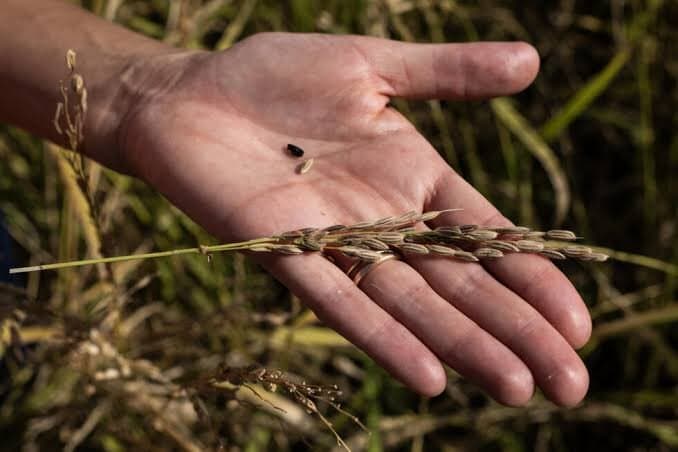
TEHRAN, Oct 14 (OPA) — An innovative Italian farmer is challenging traditional agricultural practices by rewilding one-third of his land to combat the escalating threats of extreme heat and drought. By restoring native wetlands and forests, the project aims to create a more resilient ecosystem capable of supporting rice cultivation despite the increasingly harsh climatic conditions currently plaguing Southern Europe.
This ecological intervention serves as a practical experiment in climate adaptation. By integrating natural water retention systems through restored wetlands, the farm has successfully mitigated the impact of water scarcity. While specific yield metrics are still being analyzed, the project has already documented a significant return of rare animal species, demonstrating that biodiversity and agricultural productivity can coexist as a unified defense mechanism against environmental degradation.
Rewilding, once considered a radical approach in commercial farming, is gaining traction as a viable strategy for long-term sustainability. The Italian initiative highlights the critical role of native vegetation in stabilizing soil temperatures and maintaining local water tables. By prioritizing the restoration of indigenous flora, the farm reduces its reliance on intensive irrigation, which has historically been the primary method for sustaining rice paddies in the region.
Looking ahead, this model offers a scalable blueprint for farmers facing similar climate-driven challenges globally. As drought conditions become more frequent, the transition from purely extractive agriculture to regenerative, nature-based solutions is becoming an economic and environmental necessity. Experts suggest that such localized efforts, when scaled, could significantly bolster food security while simultaneously addressing the broader global biodiversity crisis.
Subscribe to the Global Briefing
Receive our flagship executive dispatch every morning. Essential geopolitical analysis, financial benchmarks, and breaking world events delivered to your inbox.
Mohammad Karamali
Verified Wire ContributorSenior correspondent covering geopolitics, regional developments, and strategic international affairs for OPA News (Optimum Public Affairs).
Related Stories & Follow-ups
Editorial Wire Science
Nobel Prize in Chemistry Awarded to Henri B. Kagan and Kenso Soai
 Science
Nobel Physics Prize Awarded to Francis Halzen for Astrophysical Neutrino Breakthrough
 Science
Colossal Biosciences Unveils AI Platform GenoMorph to Accelerate Dodo De-Extinction Efforts
Reader Discussion
Leave a Comment
0 Comments
Owner
Editorial Oversight & Machine-Assisted Reporting
Human-in-the-Loop VerifiedEditorial Oversight & Machine-Assisted Reporting: This dispatch was synthesized and localized via OPA automated intelligence under continuous human editorial supervision.
Wire Source
This report was synthesized from ISNA under journalistic fair use.