
Google AI Model Advances Mathematical Modeling for Fusion Energy Research

Key Takeaways
- Google's Gemini 4 Argon model identified new mathematical solutions for magnetic field configurations in fusion reactors.
- The research expands upon work by Matt Landreman and others by removing previous geometric symmetry constraints.
- AI-generated results require human verification to ensure mathematical consistency and validity.
ANKARA, Oct 20 (OPA) — Google’s Gemini 4 Argon model has successfully identified new mathematical solutions for magnetic field equations used in experimental fusion reactors. By utilizing the company’s Antigravity environment, researchers generated complex configurations that address limitations in previous models, specifically regarding magnetic confinement processes. The AI-driven approach produced viable mathematical candidates within hours, significantly reducing the time required for manual computational analysis.
The research builds upon a 1967 hypothesis by physicist Harold Grad, which long dictated the study of plasma equilibrium. In September 2026, University of Maryland researcher Matt Landreman, supported by OpenAI’s GPT-6 Astra Pro, published solutions that challenged Grad’s assumptions. However, those solutions relied on specific geometric symmetries. A subsequent team—comprising Opal Issan, Jonathan Citrin, Matt Landreman, and Brendan Tracey—utilized Gemini 4 Argon to introduce a parameter that breaks this symmetry, providing a broader set of precise mathematical examples for testing confinement software.
While the AI accelerated the discovery of these configurations, the process required rigorous human oversight. Researchers were responsible for verifying the mathematical consistency of the AI-generated derivations and ensuring the results were valid. The team integrated computational verification throughout the drafting process, maintaining full responsibility for the final scientific output. This development provides a more comprehensive toolkit for scientists modeling plasma behavior, though it does not represent a direct breakthrough in the commercialization of fusion energy.
This application of artificial intelligence demonstrates a capacity to handle complex, interconnected mathematical conditions that typically bottleneck scientific research. By automating the generation of potential solutions, the model allows scientists to focus on the validation and practical application of these theories. The study confirms that while AI serves as a powerful tool for navigating intricate datasets, the fundamental engineering and physical hurdles of nuclear fusion remain subject to traditional scientific verification and development.
Subscribe to the Global Briefing
Receive our flagship executive dispatch every morning. Essential geopolitical analysis, financial benchmarks, and breaking world events delivered to your inbox.
Mohammad Karamali
Verified Wire ContributorSenior correspondent covering geopolitics, regional developments, and strategic international affairs for OPA News (Optimum Public Affairs).
Related Stories & Follow-ups
Editorial Wire Science
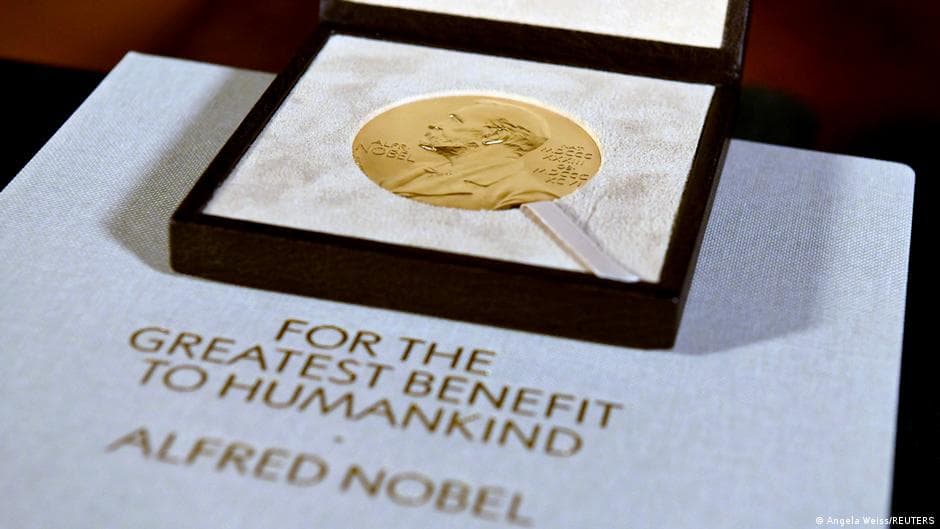
Nobel Prize in Chemistry Awarded to Henri B. Kagan and Kenso Soai
 Science
Nobel Physics Prize Awarded to Francis Halzen for Astrophysical Neutrino Breakthrough
 Science
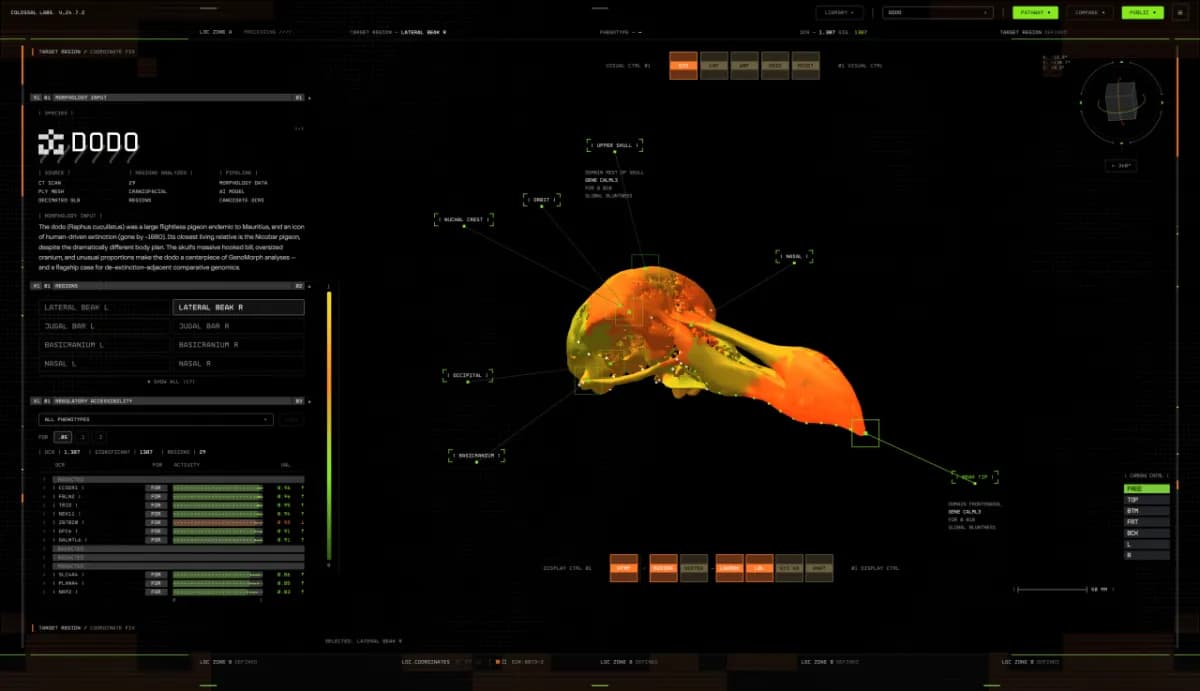
Colossal Biosciences Unveils AI Platform GenoMorph to Accelerate Dodo De-Extinction Efforts
Reader Discussion
Leave a Comment
0 Comments
Owner
Editorial Oversight & Machine-Assisted Reporting
Human-in-the-Loop VerifiedEditorial Oversight & Machine-Assisted Reporting: This dispatch was synthesized and localized via OPA automated intelligence under continuous human editorial supervision.
Wire Source
This report was synthesized from ShiftDelete under journalistic fair use.