
Psychologists Explain Why Humans Perceive Ghosts and Invisible Presences

Key Takeaways
- Sleep paralysis affects approximately 7.6 percent of the general population, according to a 2011 study.
- Infrasound, frequencies below 20 Hz, can increase stress hormones and irritability, potentially triggering unease.
- Pareidolia causes the human brain to misinterpret random visual patterns as recognizable shapes like faces.
OPA WIRE, Nov 1 (OPA) — Scientific inquiry into paranormal experiences suggests that phenomena such as sleep paralysis and hypnagogia—the transitional state between wakefulness and sleep—play a significant role in reported sightings. During these states, the brain may experience vivid hallucinations while the body remains immobilized, leading to the intense sensation of an unseen presence in the room. A 2011 study published in Sleep Medicine Reviews estimated that approximately 7.6 percent of the general population has experienced sleep paralysis.
Beyond sleep-related states, cognitive biases like pareidolia contribute to these perceptions. Professor Rodney Schmaltz of MacEwan University notes that the human visual system is predisposed to identify patterns, such as faces, in random data, particularly when an individual is under stress. Similarly, the psychological concept of dissociation—where a person feels detached from their own identity—can lead individuals to perceive parts of their own consciousness as an external, autonomous entity.
Environmental factors also influence the likelihood of reporting paranormal activity. Professor Chris French of Goldsmiths, University of London, observes that lighting and architectural scale can induce anxiety, priming the brain for heightened vigilance. Furthermore, infrasound—sound frequencies below 20 Hz generated by machinery or heating systems—has been linked to increased cortisol levels and irritability, potentially creating a physical environment that fosters feelings of unease or the perception of a haunting.
Researchers also point to a personality trait known as 'transliminality,' which describes individuals whose minds allow for a more fluid exchange between the unconscious and conscious states. Those scoring high in this trait often possess vivid imaginations and are more susceptible to synesthesia, where sensory inputs overlap. While these psychological and environmental explanations provide a framework for understanding such reports, the study of these experiences continues to evolve as researchers distinguish between subjective mental states and objective reality.
Subscribe to the Global Briefing
Receive our flagship executive dispatch every morning. Essential geopolitical analysis, financial benchmarks, and breaking world events delivered to your inbox.
Mohammad Karamali
Verified Wire ContributorSenior correspondent covering geopolitics, regional developments, and strategic international affairs for OPA News (Optimum Public Affairs).
Related Stories & Follow-ups
Editorial Wire Science
Nobel Prize in Chemistry Awarded to Henri B. Kagan and Kenso Soai
 Science
Nobel Physics Prize Awarded to Francis Halzen for Astrophysical Neutrino Breakthrough
 Science
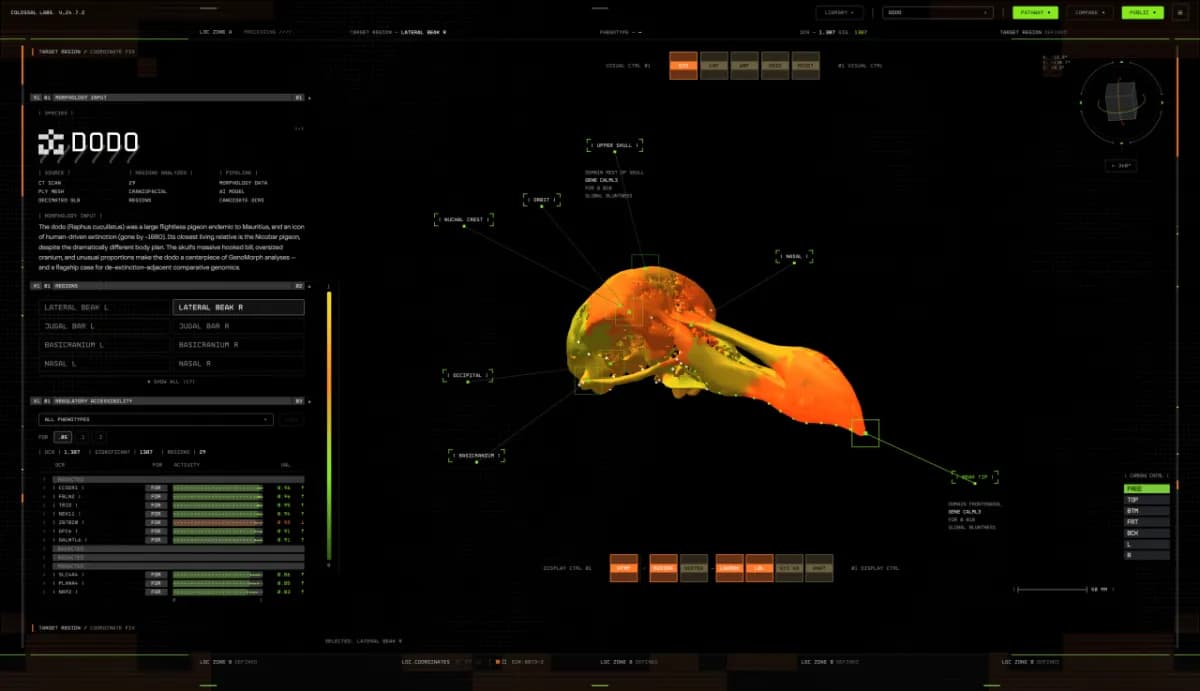
Colossal Biosciences Unveils AI Platform GenoMorph to Accelerate Dodo De-Extinction Efforts
Reader Discussion
Leave a Comment
0 Comments
Owner
Editorial Oversight & Machine-Assisted Reporting
Human-in-the-Loop VerifiedEditorial Oversight & Machine-Assisted Reporting: This dispatch was synthesized and localized via OPA automated intelligence under continuous human editorial supervision.
Wire Source
This report was synthesized from BBC Persian under journalistic fair use.