
Astronomers Detect Mysterious Narrowband Radio Signal Near Distant Star System

Key Takeaways
- A Chinese-led team detected a mysterious narrowband radio signal using data from the FAST telescope.
- The signal originated from observations of K2-155, a star system 238 light-years from Earth hosting three super-Earths.
- Researchers emphasize that further verification is required to rule out human-generated radio interference.
OPA WIRE, Nov 3 (OPA) — A Chinese-led team identified the steady radio tone while testing new software on existing data collected in 2021 by the FAST facility, the world's largest single-dish radio telescope. The signal appeared exclusively in the telescope beam aimed at the K2-155 system, with no corresponding detections recorded in the instrument's other 18 simultaneous beams. Natural cosmic phenomena rarely produce narrowly focused signals, making artificial transmitters a primary focus for researchers investigating such anomalies.
During the observations, the signal's frequency shifted steadily downward over time, displaying a drifting pattern that scientists frequently examine when searching for transmissions from distant technology. The signal appeared strongly in the telescope's YY polarization channel with a signal-to-noise ratio of approximately 23, while remaining absent from the opposing XX channel. When combined, the signal-to-noise ratio measured approximately 15.
The observation took place as part of a September 10, 2021, sequence that also surveyed the stars K2-18, GJ-9066, and Ross 128. While researchers identified other narrow radio features during those checks, their characteristics varied significantly from the K2-155 anomaly. The K2-18 feature was extremely weak, the GJ-9066 feature displayed minimal frequency shift, and the Ross 128 feature appeared at a distinct frequency band.
Authors of the study, published in The Astronomical Journal, emphasized that identifying an unusual signal remains distinct from confirming its precise origin. The team noted that candidate generation and interpretation must remain separate procedures. Future technical upgrades will involve comparing original recordings across all 19 telescope beams to better distinguish genuine space transmissions from terrestrial radio frequency interference.
Subscribe to the Global Briefing
Receive our flagship executive dispatch every morning. Essential geopolitical analysis, financial benchmarks, and breaking world events delivered to your inbox.
Mohammad Karamali
Verified Wire ContributorSenior correspondent covering geopolitics, regional developments, and strategic international affairs for OPA News (Optimum Public Affairs).
Related Stories & Follow-ups
Editorial Wire Science
Nobel Prize in Chemistry Awarded to Henri B. Kagan and Kenso Soai
 Science
Nobel Physics Prize Awarded to Francis Halzen for Astrophysical Neutrino Breakthrough
 Science
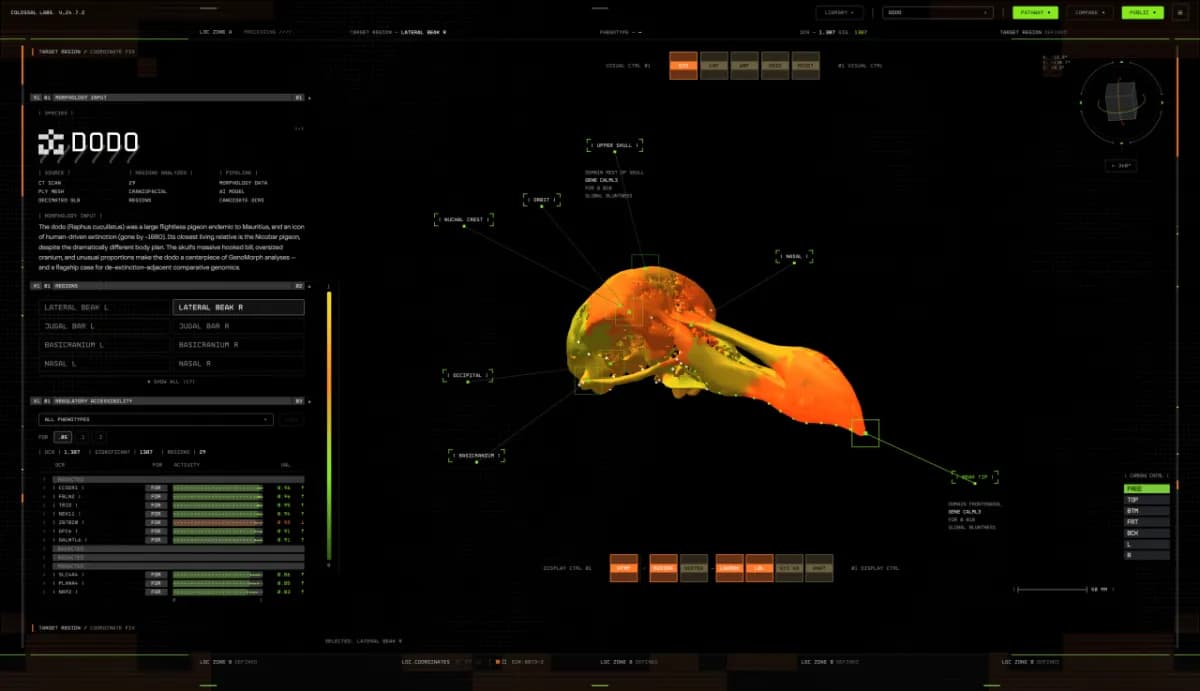
Colossal Biosciences Unveils AI Platform GenoMorph to Accelerate Dodo De-Extinction Efforts
Reader Discussion
Leave a Comment
0 Comments
Owner
Editorial Oversight & Machine-Assisted Reporting
Human-in-the-Loop VerifiedEditorial Oversight & Machine-Assisted Reporting: This dispatch was synthesized and localized via OPA automated intelligence under continuous human editorial supervision.
Wire Source
This report was synthesized from Daily Mail under journalistic fair use.