
Scientists Use Flash Heating to Transform Old Wind Blades Into Graphene
Key Takeaways
- Flash joule heating converts turbine blades to silicon carbide and graphene at 2,000°C.
- Europe's decommissioned blade waste is projected to reach 55,000 tonnes annually by 2030.
- Adding 0.3% of the recovered material increased resin tension deformation resistance by 27%.
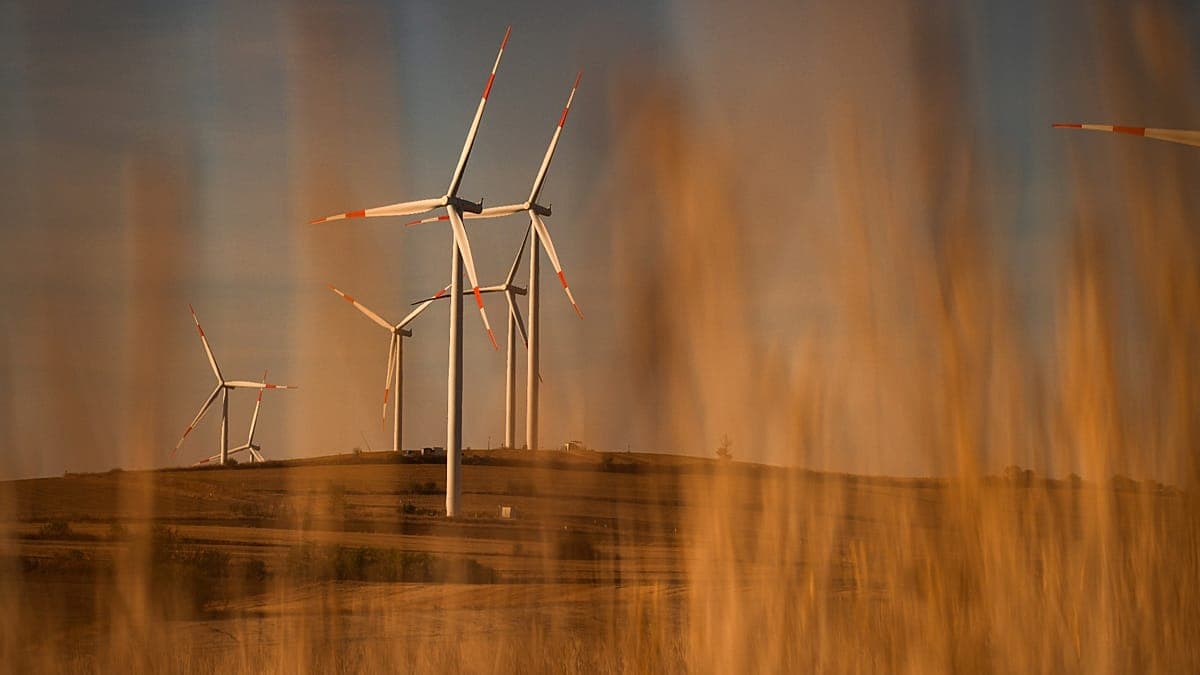
OPA WIRE, Nov 7 (OPA) — Wind turbines are engineered to withstand extreme environmental conditions, but their durable construction makes recycling difficult. Around 85 to 90 per cent of a turbine's total mass can be recycled, while the remaining composite blades often end up in landfills or are incinerated after their typical 20-year service life. Annual decommissioned blade waste in Europe is projected to increase from 20,000 tonnes in 2025 to 55,000 tonnes by 2030 as older fleets reach the end of their operational lifespan. WindEurope, the European wind industry association, implemented a voluntary landfill ban last year and is urging EU policymakers to enshrine the prohibition into formal legislation.
To address the disposal challenge, scientists subjected hard-to-recycle turbine blades to a brief burst of intense heat in a process known as flash joule heating. Published in the science journal Chem Circularity, the study demonstrated that blades made from silica-containing fiberglass and carbon-rich polymer resin can be heated to about 2,000°C in seconds. At these elevated temperatures, carbon reacts with silica to form silicon carbide, while excess carbon reorganizes into graphene. Both resulting substances are valuable industrial materials known for extreme durability, heat resistance, and electrical conductivity.
The research team found that integrating the recovered materials back into manufacturing compounds improved structural integrity significantly. Adding just 0.3 per cent by weight of the recycled material made resin stiffer and stronger, enhancing resistance to deformation by 27 per cent under tension and nine per cent when bent. Senior author and chemical and environmental engineer Bing Deng of Tsinghua University in China noted that the method exceeds traditional recycling standards. The process effectively transforms low-value waste into high-performance additives suitable for manufacturing new rotor blades.
The discovery arrives as the European wind sector faces increasing regulatory pressure regarding waste management and circular economy mandates. While the flash joule heating technique shows laboratory promise, scaling the technology to process tens of thousands of tonnes of composite material remains an industrial hurdle. Researchers are continuing to evaluate the energy costs and economic viability of scaling flash heating systems for commercial turbine dismantling facilities across global markets.
Subscribe to the Global Briefing
Receive our flagship executive dispatch every morning. Essential geopolitical analysis, financial benchmarks, and breaking world events delivered to your inbox.
Mohammad Karamali
Verified Wire ContributorSenior correspondent covering geopolitics, regional developments, and strategic international affairs for OPA News (Optimum Public Affairs).
Related Stories & Follow-ups
Editorial Wire Science
Nobel Prize in Chemistry Awarded to Henri B. Kagan and Kenso Soai
 Science
Nobel Physics Prize Awarded to Francis Halzen for Astrophysical Neutrino Breakthrough
 Science
Colossal Biosciences Unveils AI Platform GenoMorph to Accelerate Dodo De-Extinction Efforts
Reader Discussion
Leave a Comment
0 Comments
Owner
Editorial Oversight & Machine-Assisted Reporting
Human-in-the-Loop VerifiedEditorial Oversight & Machine-Assisted Reporting: This dispatch was synthesized and localized via OPA automated intelligence under continuous human editorial supervision.
Wire Source
This report was synthesized from Euro News under journalistic fair use.