
New Physics Theorem Suggests Time Travel Can Only Move Forward
Key Takeaways
- Hongsheng Zhang's research argues that traveling into the past is impossible in a broad class of theoretical universes.
- The theorem identifies two theoretical loopholes for backward time travel: spatial twisting from spinning black holes and circular universe geometries.
- Traveling to the future is already established through relativistic time dilation, as demonstrated by astronauts on the International Space Station.
OPA WIRE, Nov 8 (OPA) — Traveling into your own past remains mathematically impossible in most theoretical universes, according to recent research from the University of Jinan in China. Physicist Hongsheng Zhang demonstrated that the direction of light can never sit at right angles to an object's trajectory through time under standard conditions. Spacetime functions similarly to a staircase that only allows upward movement, preventing travelers from returning to their starting point without violating fundamental rules of relativity.
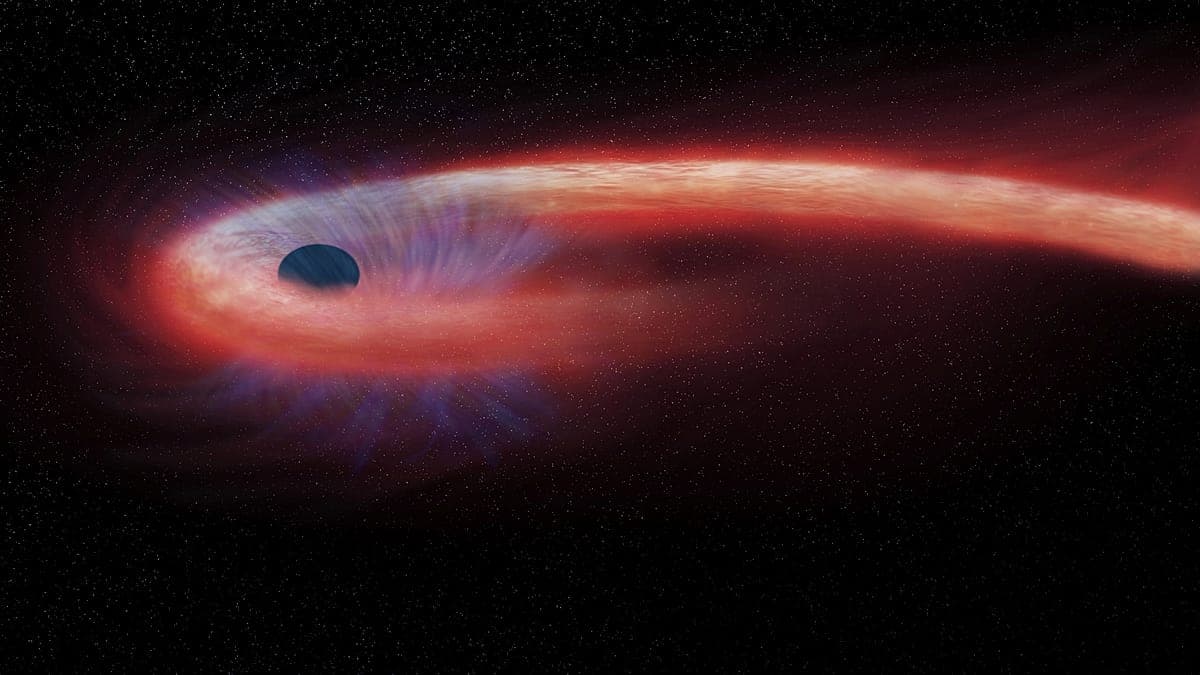
Zhang's theorem relies on geometric constraints rather than exotic matter or quantum mechanics. "The whole content is bookkeeping about directions," Zhang told ScienceAlert. The research outlines only two theoretical loopholes that could permit backward time travel: severe spatial twisting caused by massive rotating bodies like spinning black holes, or a universe shaped in a continuous loop resembling an Escher drawing.
Einstein's field equations theoretically allow closed timelike curves near the core of a spinning black hole, where extreme gravitational drag bends forward motion into a circle. Physicist Brandon Carter first demonstrated the existence of these loops inside spinning black holes in 1968. Additionally, NASA's Gravity Probe B satellite measured the frame-dragging effect around Earth in 2011, confirming that mass drags space and time along with it.
While journeys into the past remain restricted by these theoretical limitations, trips to the future are already scientifically established. Special relativity dictates that moving at high speeds or experiencing strong gravitational fields slows down a clock relative to stationary observers. Astronauts aboard the International Space Station return to Earth a few thousandths of a second younger than people remaining on the surface, according to the European Space Agency.
Subscribe to the Global Briefing
Receive our flagship executive dispatch every morning. Essential geopolitical analysis, financial benchmarks, and breaking world events delivered to your inbox.
Mohammad Karamali
Verified Wire ContributorSenior correspondent covering geopolitics, regional developments, and strategic international affairs for OPA News (Optimum Public Affairs).
Related Stories & Follow-ups
Editorial Wire Science
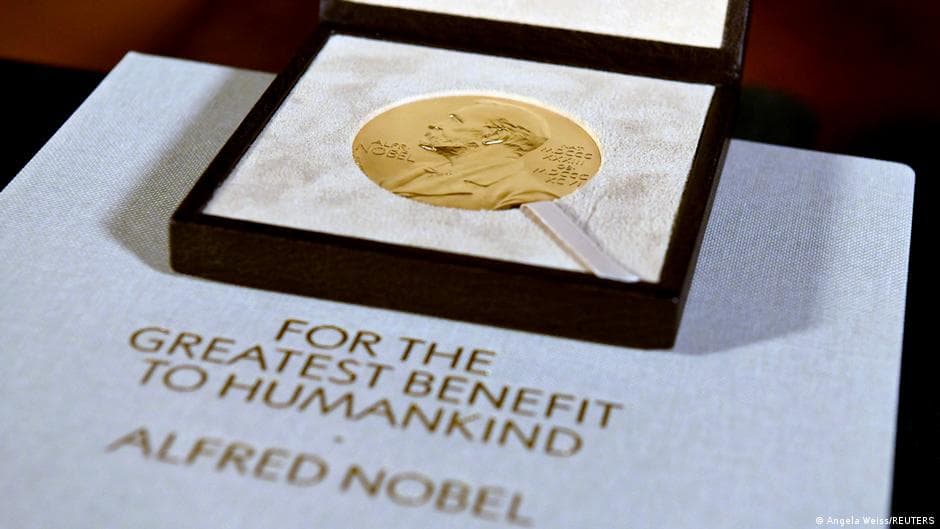
Nobel Prize in Chemistry Awarded to Henri B. Kagan and Kenso Soai
 Science
Nobel Physics Prize Awarded to Francis Halzen for Astrophysical Neutrino Breakthrough
 Science
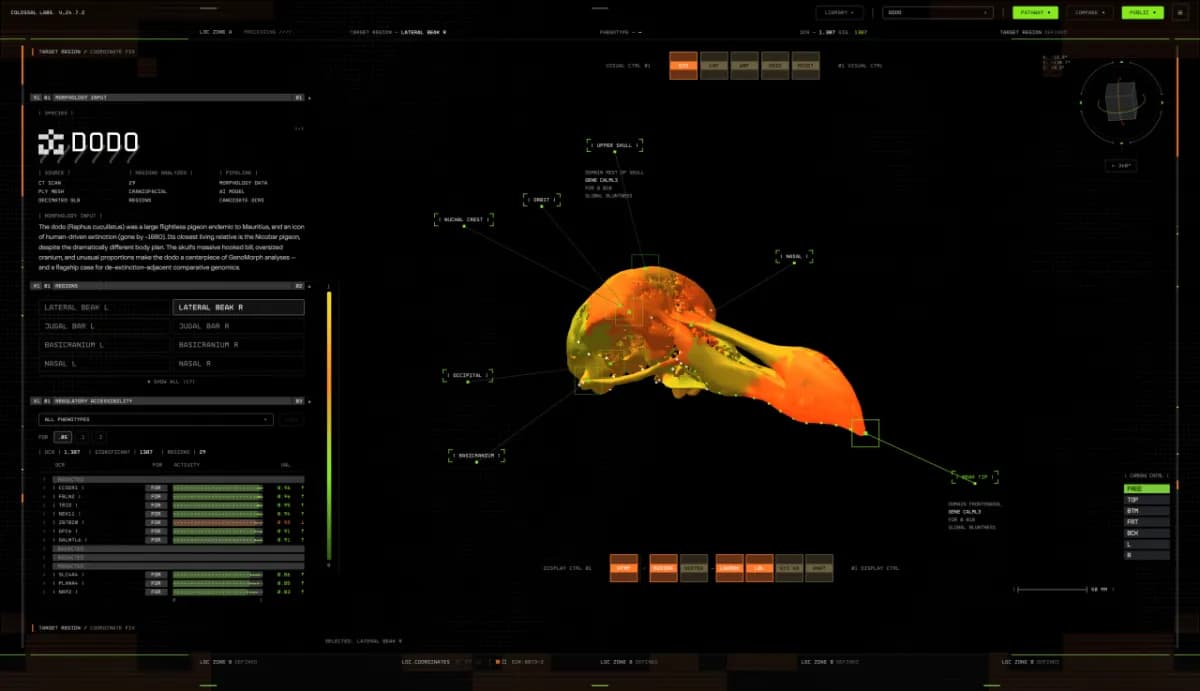
Colossal Biosciences Unveils AI Platform GenoMorph to Accelerate Dodo De-Extinction Efforts
Reader Discussion
Leave a Comment
0 Comments
Owner
Editorial Oversight & Machine-Assisted Reporting
Human-in-the-Loop VerifiedEditorial Oversight & Machine-Assisted Reporting: This dispatch was synthesized and localized via OPA automated intelligence under continuous human editorial supervision.
Wire Source
This report was synthesized from Euro News under journalistic fair use.