
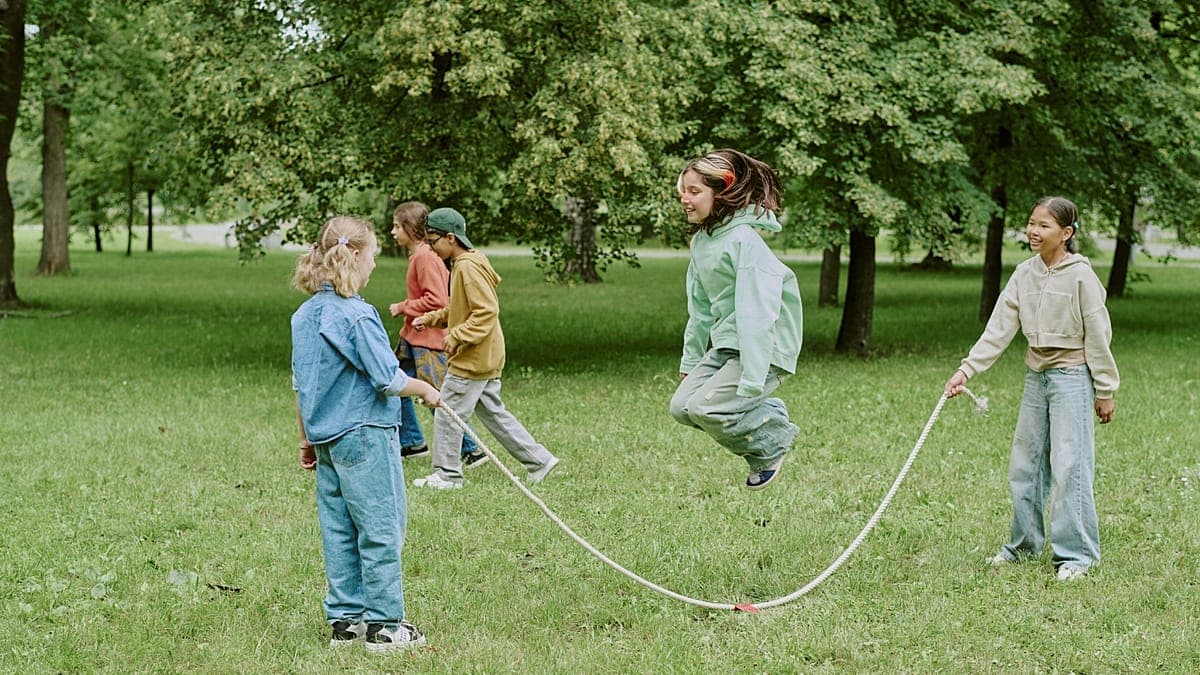
Regular park visits improve children's mental health and development, study finds
Key Takeaways
- Children visiting parks weekly scored 16.5% higher in mental health assessments.
- The study analyzed 4,219 participants from birth to age 11.
- Green spaces help reduce inequalities in child development through an equigenic effect.
OPA WIRE, Nov 12 (OPA) — Routine visits to local parks significantly boost children's mental health and social skills throughout their formative years, according to a study published in the journal Epidemiology and Community Health. Researchers tracked 4,219 participants to evaluate social-emotional development, which encompasses the skills children need to manage emotions, build relationships, and handle everyday challenges.
Children taken to the park at least once a week scored an average of 16.5% higher in mental health assessments than peers who visited less than once a week. These advantages persisted even after researchers adjusted for socioeconomic status and family hardships. The study found that frequent park attendance correlated with improvements in both internalising behaviors, such as emotional symptoms and peer problems, and externalising behaviors, including conduct issues and hyperactivity.
Lead researcher Mark Ferguson of the University of Exeter emphasized that green spaces offer vital room for physical activity, imaginative play, and independence. Parks provide more than just recreational areas, functioning instead as critical infrastructure for healthy childhood development. Strong social-emotional skills established during childhood serve as a necessary foundation for mental well-being later in life.
Investigators noted that park access varied by family background, with children from more advantaged areas visiting more frequently at a younger age while children from less advantaged households visited more often as they grew older. Because green spaces are free and universally accessible, researchers suggest they can act as an equigenic force to narrow psychological disparities, provided communities maintain safe and welcoming environments.
Subscribe to the Global Briefing
Receive our flagship executive dispatch every morning. Essential geopolitical analysis, financial benchmarks, and breaking world events delivered to your inbox.
Mohammad Karamali
Verified Wire ContributorSenior correspondent covering geopolitics, regional developments, and strategic international affairs for OPA News (Optimum Public Affairs).
Related Stories & Follow-ups
Editorial Wire Science
Nobel Prize in Chemistry Awarded to Henri B. Kagan and Kenso Soai
 Science
Nobel Physics Prize Awarded to Francis Halzen for Astrophysical Neutrino Breakthrough
 Science
Colossal Biosciences Unveils AI Platform GenoMorph to Accelerate Dodo De-Extinction Efforts
Reader Discussion
Leave a Comment
0 Comments
Owner
Editorial Oversight & Machine-Assisted Reporting
Human-in-the-Loop VerifiedEditorial Oversight & Machine-Assisted Reporting: This dispatch was synthesized and localized via OPA automated intelligence under continuous human editorial supervision.
Wire Source
This report was synthesized from Euro News under journalistic fair use.