
SpaceX Starship Booster Recovery Ends in Fireball During 15th Test Flight

Key Takeaways
- The 124-meter Starship launched from Starbase in southern Texas for its 15th test flight.
- A technical issue forced SpaceX to abort the Super Heavy booster recovery, resulting in a fireball in the Gulf of Mexico.
- The Starship spacecraft successfully reached orbit and deployed 26 Starlink satellites.
OPA WIRE, Nov 14 (OPA) — The 124-meter Starship roared into the sky from Starbase in southern Texas for its 15th test flight, marking another ambitious step in the company's development of fully reusable rocket systems. After lift-off and the mid-air separation of the two stages, an issue with the Super Heavy booster forced SpaceX to divert it to an offshore splashdown instead of executing the planned mechanical 'chopstick' arm capture. A fireball erupted as the booster fell into the Gulf of Mexico near the launch site.
'Not sure right now why we weren't able to bring it back,' SpaceX's Dan Huot told reporters following the anomaly. Meanwhile, the Starship spacecraft entered Earth's orbit, deploying 26 satellites for the Starlink constellation. SpaceX officials reported that the spacecraft and its heatshield remained healthy as the vehicle continued its trajectory, with plans to circle the globe before returning to Earth.
Clayton Swope, an aerospace expert at the Center for Strategic and International Studies, characterized the mission as a mixed bag due to the failure to secure the Super Heavy booster. Successful recoveries of both components would represent a major milestone in the commercial space industry's pursuit of fully reusable systems designed to lower operational costs and increase flight frequencies. Nasa is heavily reliant on the Starship platform to serve as a lunar lander for its Artemis program.
SpaceX continues to accelerate its manufacturing capabilities, reporting the capacity to produce a new spaceship every two weeks and a booster every four weeks. The vehicle is slated to complete its orbit and return to the launch site in Texas on Saturday. Engineers will analyze telemetry data from the booster failure to prepare for subsequent test flights and refine the descent systems required for future crewed missions to the Moon and Mars.
Subscribe to the Global Briefing
Receive our flagship executive dispatch every morning. Essential geopolitical analysis, financial benchmarks, and breaking world events delivered to your inbox.
Mohammad Karamali
Verified Wire ContributorSenior correspondent covering geopolitics, regional developments, and strategic international affairs for OPA News (Optimum Public Affairs).
Related Stories & Follow-ups
Editorial Wire Science
Nobel Prize in Chemistry Awarded to Henri B. Kagan and Kenso Soai
 Science
Nobel Physics Prize Awarded to Francis Halzen for Astrophysical Neutrino Breakthrough
 Science
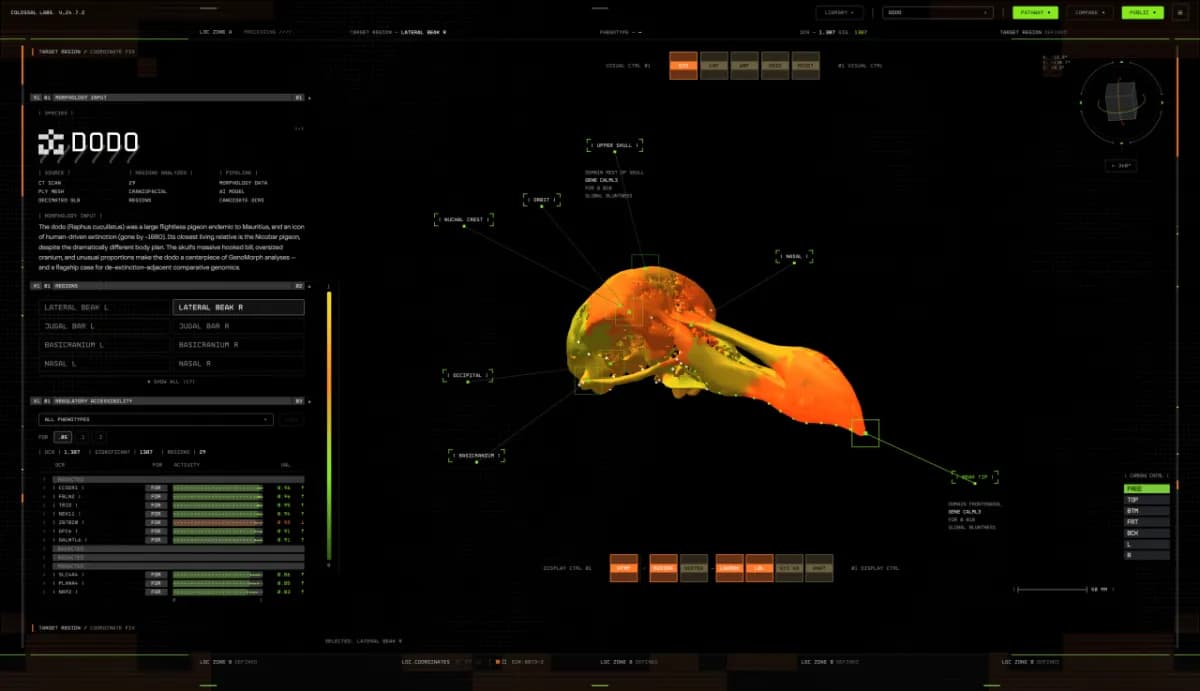
Colossal Biosciences Unveils AI Platform GenoMorph to Accelerate Dodo De-Extinction Efforts
Reader Discussion
Leave a Comment
0 Comments
Owner
Editorial Oversight & Machine-Assisted Reporting
Human-in-the-Loop VerifiedEditorial Oversight & Machine-Assisted Reporting: This dispatch was synthesized and localized via OPA automated intelligence under continuous human editorial supervision.
Wire Source
This report was synthesized from Daily Mail under journalistic fair use.