
Scientists discover unprecedented volcanic activity deep inside the Mariana Trench
Key Takeaways
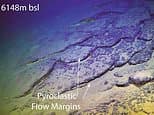
- Researchers discovered volcanic activity and pyroclastic rocks in Challenger Deep 6.8 miles below the Pacific surface.
- The findings were published in Frontiers in Earth Science by a team led by Dr. Robert Stern.
- The geological data helps explain why Challenger Deep reaches extreme depths due to tectonic plate mechanics.
OPA WIRE, Nov 23 (OPA) — Scientists utilizing a deep-sea remotely operated vehicle have documented volcanic activity near the bottom of Challenger Deep, the deepest point on Earth. The research team deployed the Jason/Medea ROV to study a 340-mile-long section of the forearc region, uncovering pyroclastic rocks at depths previously thought incapable of supporting such formations.
Dr. Robert Stern of the University of Texas at Dallas, the lead author of the study published in Frontiers in Earth Science, expressed surprise at the findings. "Explosive volcanism near trenches is unusual, so we were very surprised," Stern said, noting that these are the deepest pyroclastic rocks documented to date anywhere in the ocean.
The Mariana Trench stretches roughly 1,580 miles from near Japan's south coast down to Guam in the western Pacific. Challenger Deep is formed where the Pacific Plate sinks beneath the smaller Mariana Plate, creating a steep dip. The survey revealed that the forearc is being stretched from east to west by mechanical tectonic forces and escaping mantle magma.
Researchers suggest that semi-molten mantle material penetrating close to the trench weakens the attachment between tectonic plates, allowing the Pacific Plate to slide down at a tighter angle. While the exact eruption sites remain unlocated and much of the deepest seafloor remains out of reach, these discoveries help explain why Challenger Deep extends so far below sea level.
Subscribe to the Global Briefing
Receive our flagship executive dispatch every morning. Essential geopolitical analysis, financial benchmarks, and breaking world events delivered to your inbox.
Mohammad Karamali
Verified Wire ContributorSenior correspondent covering geopolitics, regional developments, and strategic international affairs for OPA News (Optimum Public Affairs).
Related Stories & Follow-ups
Editorial Wire

Reader Discussion
Leave a Comment
0 Comments
Owner
Editorial Oversight & Machine-Assisted Reporting
Human-in-the-Loop VerifiedEditorial Oversight & Machine-Assisted Reporting: This dispatch was synthesized and localized via OPA automated intelligence under continuous human editorial supervision.
Wire Source
This report was synthesized from Daily Mail under journalistic fair use.