
Complete Club World Cup Roll of Honor: Barcelona's Record and the Non-European Exception
Key Takeaways
- FC Barcelona holds the all-time record with 6 Club World Cup titles.
- European clubs have won 18 out of 19 editions of the tournament.
- The only non-European champion in history is Qatar's Al Sadd, who won in 2002.
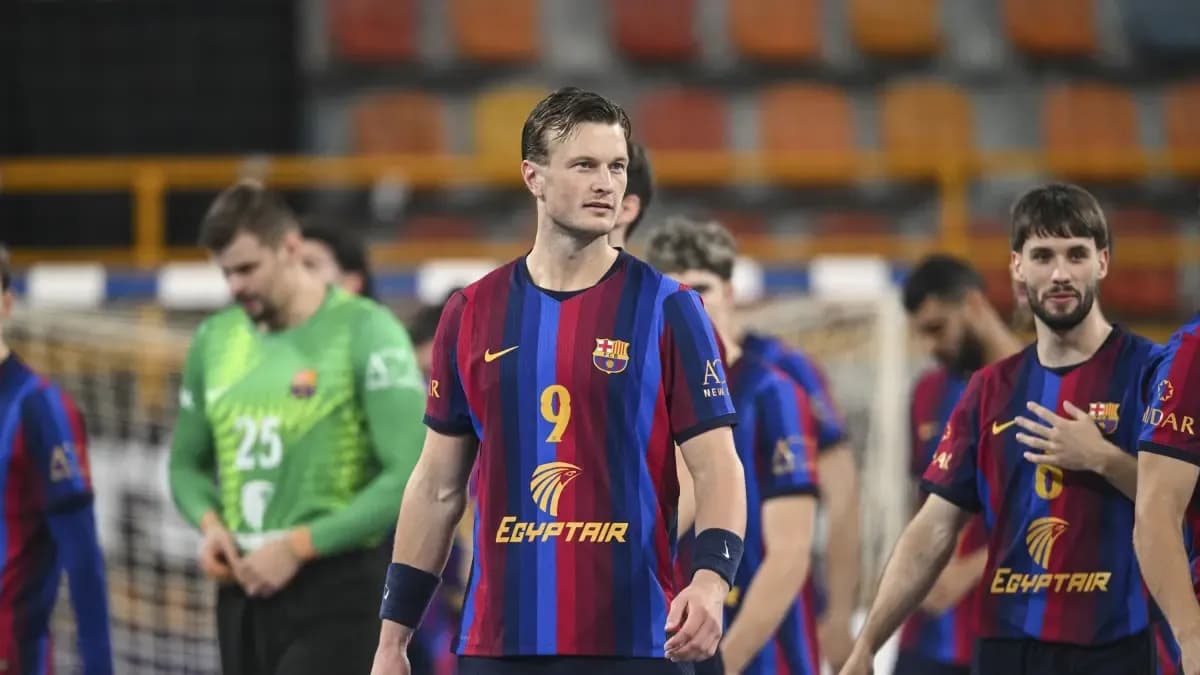
FC Barcelona and Veszprem recently concluded the 19th edition of the IHF Club World Cup at the New Administrative Capital Hall in Egypt. This venue has hosted the prestigious tournament for three consecutive years, attracting top-tier European clubs eager to bolster their international trophy cabinets while securing significant financial incentives. The event remains a cornerstone of the global handball calendar, serving as a vital platform for elite clubs to demonstrate their dominance on the world stage.
European teams have historically dominated the competition, claiming 18 of the 19 titles since its inception. The only exception occurred in 2002, when Qatar's Al Sadd shocked the handball world by defeating Magdeburg 35-32 in a round-robin format. Barcelona currently holds the record with six titles (2013, 2014, 2017, 2018, 2019, 2025). Despite a recent stumble in 2024, where they fell to Veszprem in the semifinals and Al Ahly in the bronze medal match, the Spanish giants remain the most decorated club in the tournament's history.
The tournament has undergone significant structural evolution since its early, irregular years. Initially known as the Super Globe, it struggled with consistency until 2010, when it began a nine-year residency in Doha, Qatar. Following a brief move to Dammam, Saudi Arabia, in 2019, the competition found a new home in Cairo, Egypt, in 2024. The only year the tournament was not held since 2010 was 2020, due to the global coronavirus pandemic, which forced a temporary suspension of international club activities.
The ramifications of these results are felt deeply across the handball landscape. For European clubs, the tournament is not merely about prestige but also about essential revenue streams that support their domestic operations. For non-European clubs, the challenge remains to bridge the gap created by the tactical and physical superiority of European handball systems. The recent success of Veszprem, securing their second title, highlights the shifting power dynamics within the elite tier of the sport.
Looking ahead, experts suggest that the Club World Cup will continue to grow in importance as the IHF seeks to globalize the sport further. While European dominance is currently unchallenged, the investment in infrastructure in regions like the Middle East and North Africa suggests that the gap may narrow in the coming decade. Future editions will likely focus on expanding the field and increasing the commercial viability of the event, ensuring that the Club World Cup remains a premier fixture for handball fans worldwide.
Related Stories



Reader Discussion
Leave a Comment
0 Comments
Owner
Editorial Oversight & Machine-Assisted Reporting
Human-in-the-Loop VerifiedEditorial Oversight & Machine-Assisted Reporting: This dispatch was synthesized and localized via OPA automated intelligence under continuous human editorial supervision.
Wire Source
This report was synthesized from Mundo Deportivo under journalistic fair use.