
An Easy Ball in Esteghlal's Court; Inquiry to FIFA Backfires on the Blues!
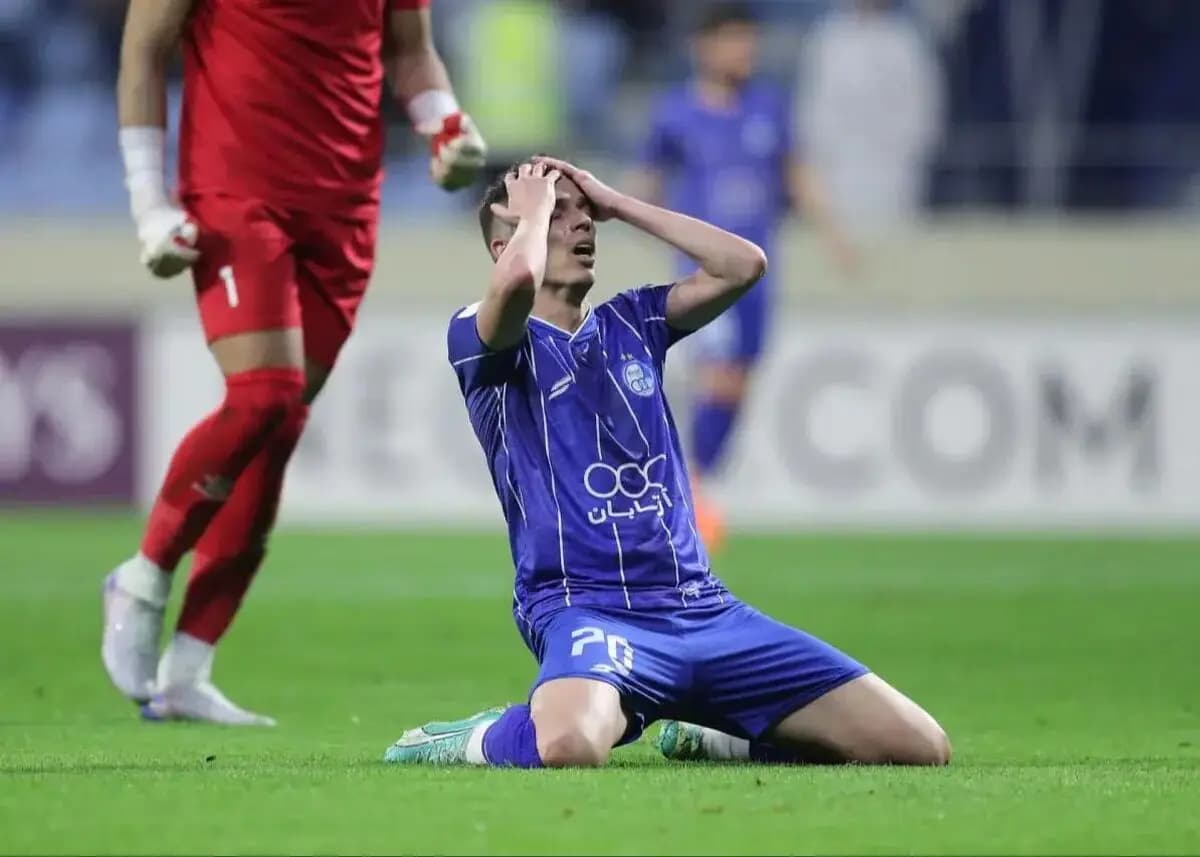
TEHRAN, Oct 18 (OPA) — The publication of Esteghlal Club's letter to FIFA, seeking an inquiry into the status of Jasir Asani following the saga of his contract termination and the signing of a new agreement before the start of the current season, has revealed new dimensions to this high-profile incident. It is a saga that has recently turned into a challenge between Esteghlal and its rivals, with Persepolis attempting to play a prominent role in bringing this case to a conclusion.
Although Ahmadreza Barati had previously stated in an interview that 'there is no problem with Jasir Asani's presence at Esteghlal,' basing his argument on the premise that Asani is not considered a new player with whom Esteghlal has signed a contract, some now believe that the manner in which Esteghlal terminated and signed the contract, along with the shifting of the new contract's date, indicates that this contract and the use of Jasir Asani contain a legal loophole.
The Jasir Asani case involves a simple yet decisive issue; during their transfer ban period, Esteghlal encountered a player who, according to the presented documents, first terminated his contract on July 14, 2026, and then a prior agreement from 24 months ago was presented as the basis for continuing the cooperation. This sequence puts the simple defense that 'he was already an Esteghlal player' to a serious question: if the previous contract was still the basis for cooperation, then what was the meaning of the termination, and what was the subsequent agreement supposed to rectify?
This question cannot be answered by the issuance of a match card. A match card shows that the domestic authority has issued a permit for the player's presence; however, the dispute is precisely about whether the contractual and registration basis required for the issuance and continuation of this permit existed or not. If the match card alone were sufficient to resolve all disputes, then examining the essence of the contract, the date of termination, the subsequent agreement, and the regulations regarding the ban would be irrelevant.
Nevertheless, there is a legal basis in this case: the fact that Jasir Asani was an Esteghlal player last season, played for the team, and is not considered a new player. However, another legal basis is that if the previous contractual relationship was truly terminated—which the Esteghlal officials have admitted—and the parties returned to cooperation under new conditions thereafter, it must be examined whether this relationship, in terms of registration regulations, was a continuation of the previous relationship (a contract extension) or a relationship that was re-established. Even in the letter Esteghlal sent to FIFA, it was acknowledged that they had registered a new contract with Jasir Asani.
Here, the sequence of events is important. Based on the provided information, the June 27 letter was a final payment warning, and the termination was announced on July 14; on July 15, Hamid Marikh was given the authority to negotiate with Persepolis, and Esteghlal speaks of an agreement on June 24, which only bears this date and was inserted to escape the consequences of the termination. This chain of events at the very least shows that one cannot assume Asani's status throughout this period was a fixed and unchanging contractual situation without examining the documents.
Esteghlal's defense these days is summarized by the fact that Asani's name was not removed from the League Organization's system, and therefore no new registration took place. Even if we assume this defense is admissible, it is not the end of the argument. The question is whether the rules regarding the ban only prohibit a new technical registration, or do they also encompass actions that, in practice, lead to the creation or revival of a new employment relationship and the utilization of a player during the prohibition period?
Assuming the effectiveness of the termination on July 14 and the establishment of a new relationship based on the subsequent agreement, is Asani considered a new player or not? The answer could be positive, unless Esteghlal can show with documents and evidence that the governing rules recognize this situation as a continuation of the previous registration and that the agreement was merely a valid continuation of the previous relationship, i.e., a contract extension. This burden of proof cannot be brushed aside with a single sentence about the player's history, and this ball is in Esteghlal's court!
Subscribe to the Global Briefing
Receive our flagship executive dispatch every morning. Essential geopolitical analysis, financial benchmarks, and breaking world events delivered to your inbox.
Alireza Moharrami
Verified Wire ContributorSenior correspondent covering geopolitics, regional developments, and strategic international affairs for OPA News (Optimum Public Affairs).
Related Stories & Follow-ups
Editorial Wire


Reader Discussion
Leave a Comment
0 Comments
Staff Correspondent
Editorial Oversight & Machine-Assisted Reporting
Human-in-the-Loop VerifiedEditorial Oversight & Machine-Assisted Reporting: This dispatch was synthesized and localized via OPA automated intelligence under continuous human editorial supervision.
Original Reporting
This analysis was conducted and authored by OPA News editorial journalists.