
Las Vegas Grand Prix Delivers Record Overtakes in Chaotic Night Race
Key Takeaways
- The Las Vegas Grand Prix featured 352 total position changes, including 35 lead changes.
- Track temperatures reached a cold 59° F (15° C) on Saturday night in Nevada.
- Red Bull driver Isack Hadjar suffered a front wing failure on lap 25 while running in third place.
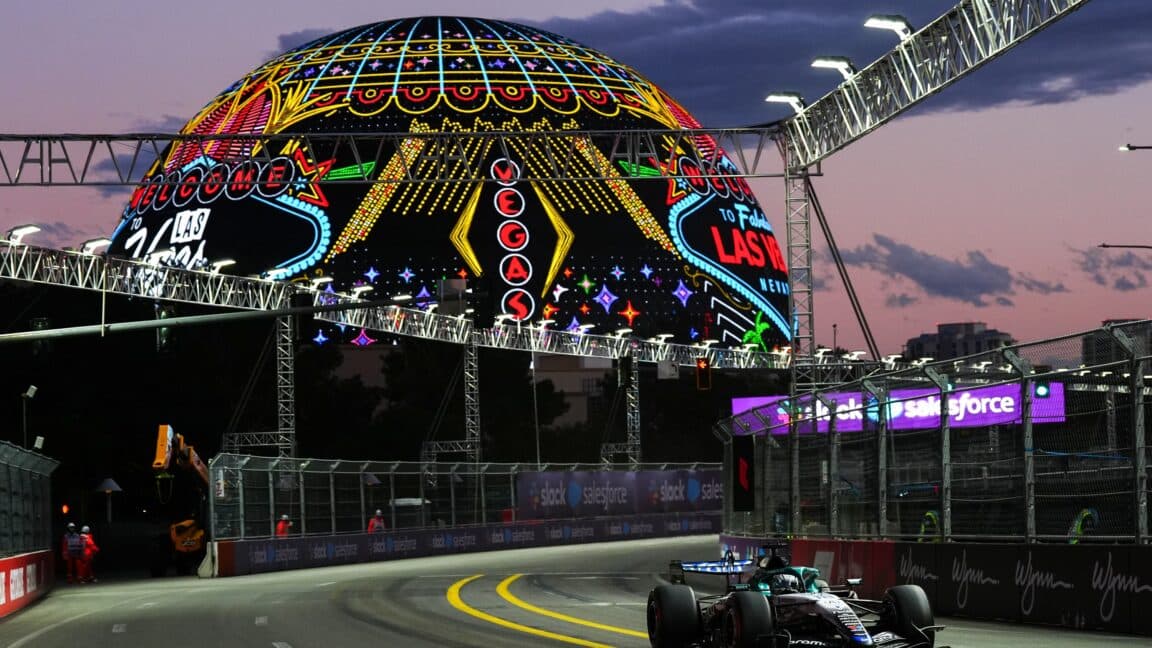
OPA WIRE, Nov 23 (OPA) — The Las Vegas Grand Prix delivered an unprecedented spectacle on the sport's calendar, recording 352 position changes, including 35 for the lead. The street circuit forced cars to operate under extreme conditions, featuring long straights that depleted the limited lithium-ion hybrid batteries and left V6 engines running at half power without electric motor assistance. Meanwhile, track temperatures plummeted to 59° F (15° C) on Saturday night in the Nevada desert, creating low-grip conditions on the concrete streets alongside virtually zero tire wear or overheating.
Qualifying on Friday night highlighted the potency of the circuit's slipstream under aerodynamic regulations, allowing Mercedes driver Kimi Antonelli to claim pole position. However, a grid penalty dropped Antonelli to sixth, elevating Red Bull's Max Verstappen to pole alongside Mercedes' George Russell. The fierce rivalry between Verstappen and Russell flared up earlier during FP3 following an on-track clash, setting the stage for a tense opening lap where Russell temporarily seized the lead.
Throughout the race, Verstappen and Russell engaged in an intense duel, with the Mercedes repeatedly passing on the straight before the Red Bull driver reclaimed the position in the corners. Red Bull's Isack Hadjar displayed competitive pace early in the event, running near the front before team orders required him to hold position. Hadjar's race effectively ended on lap 25 when his front wing structurally failed, plunging him from third to the back of the field.
The unique characteristics of the Las Vegas layout produced racing comparisons to IndyCar ovals, emphasizing strategic pack movement and tactical slipstreaming over conventional tire management. Verstappen ultimately failed to break free from a chasing pack of five to six cars separated by less than 2.5 seconds, maintaining intense competition through the closing laps of the race.
Subscribe to the Global Briefing
Receive our flagship executive dispatch every morning. Essential geopolitical analysis, financial benchmarks, and breaking world events delivered to your inbox.
Mohammad Karamali
Verified Wire ContributorSenior correspondent covering geopolitics, regional developments, and strategic international affairs for OPA News (Optimum Public Affairs).
Related Stories & Follow-ups
Editorial Wire


Reader Discussion
Leave a Comment
0 Comments
Owner
Editorial Oversight & Machine-Assisted Reporting
Human-in-the-Loop VerifiedEditorial Oversight & Machine-Assisted Reporting: This dispatch was synthesized and localized via OPA automated intelligence under continuous human editorial supervision.
Wire Source
This report was synthesized from Ars Technica under journalistic fair use.