
Volkswagen Pivots Electrification Strategy, Replacing ID.4 with All-Electric Tiguan
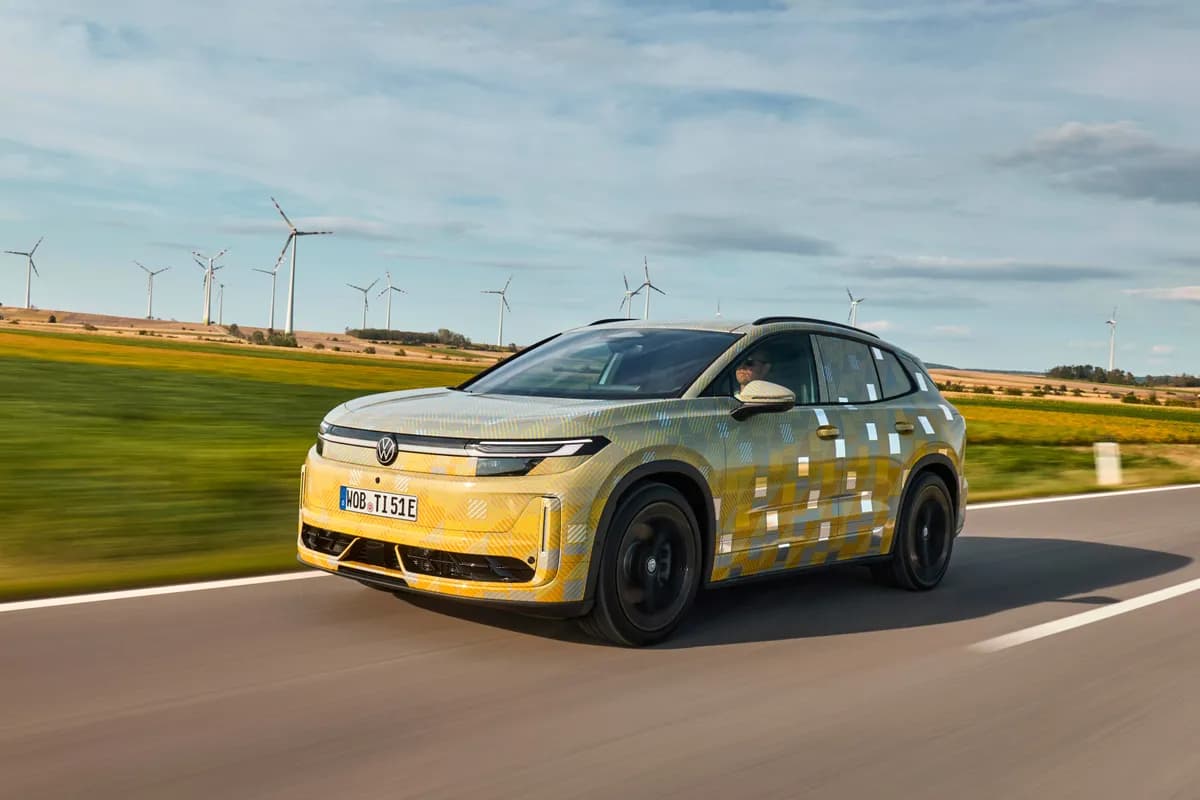
OPA WIRE, Sep 28 (OPA) — In a strategic realignment of its global zero-emission portfolio, Volkswagen AG announced on Monday that it will replace its pioneering ID.4 compact crossover with the upcoming all-electric ID.Tiguan. The decision represents a calculated shift by the German automotive giant away from sterile alphanumeric branding and back toward its most celebrated, heritage nameplates. Scheduled to launch in European showrooms in early 2027 before reaching the North American market at an unspecified later date, the ID.Tiguan will anchor an overhauled electric vehicle portfolio that also includes the ID.Polo and ID.Cross.
The phase-out marks the conclusion of the ID.4's lifecycle after an impactful yet challenging commercial run. First introduced in 2020 as the cornerstone of Volkswagen's mass-market electrification push, the vehicle was engineered to compete directly with high-volume internal combustion leaders like the Toyota RAV4 and Honda CR-V rather than solely against electric benchmarks like Tesla’s Model Y. While the crossover achieved notable commercial volume—surpassing 950,000 global deliveries since 2021 and ranking among the group's most successful battery-electric vehicles—it struggled to establish dominant segment leadership. Volkswagen formally ceased manufacturing operations for the model at its Chattanooga, Tennessee facility in April 2026.
Technically and ergonomically, the ID.Tiguan has been designed to address persistent consumer grievances that plagued its predecessor. The upcoming electric crossover will ditch controversial touch-capacitive controls in favor of traditional physical switches for climate management, audio volume, and individual window controls across all four doors, mirroring the updated cockpit layout seen in the recently refreshed ID.3 NEO and ID.Polo. The vehicle's digital interface will be driven by an Android Automotive-based operating system featuring an integrated Google Gemini-powered conversational assistant. However, company executives declined to confirm whether the model would incorporate the advanced zonal computing architecture currently being developed under Volkswagen's strategic joint venture with Rivian.
The pivot highlights a broader industry realization: legacy automakers must leverage established brand equity to accelerate consumer adoption amid slowing global EV sales growth and aggressive competition from Chinese manufacturers. By abandoning cold technical designations in favor of the globally recognizable Tiguan nameplate, Volkswagen aims to bridge the familiarity gap for hesitant mainstream buyers transitioning away from fossil fuels.
Subscribe to the Global Briefing
Receive our flagship executive dispatch every morning. Essential geopolitical analysis, financial benchmarks, and breaking world events delivered to your inbox.
Mohammad Karamali
Verified Wire ContributorSenior correspondent covering geopolitics, regional developments, and strategic international affairs for OPA News (Optimum Public Affairs).
Related Stories & Follow-ups
Editorial Wire Technology
Global Microsoft Outage Disrupts Critical Services Worldwide as 48-Hour Recovery Begins
 Technology
Nvidia Faces Global Crisis Following Shock Resignation of CEO Jensen Huang
 Technology
Nvidia CEO Jensen Huang Ousted Following Multiple Affairs and Security Scandals
Reader Discussion
Leave a Comment
0 Comments
Owner
Editorial Oversight & Machine-Assisted Reporting
Human-in-the-Loop VerifiedEditorial Oversight & Machine-Assisted Reporting: This dispatch was synthesized and localized via OPA automated intelligence under continuous human editorial supervision.
Wire Source
This report was synthesized from The Verge under journalistic fair use.