
Spanish Firm Sateliot Partners with SpaceX to Expand Global 5G Connectivity
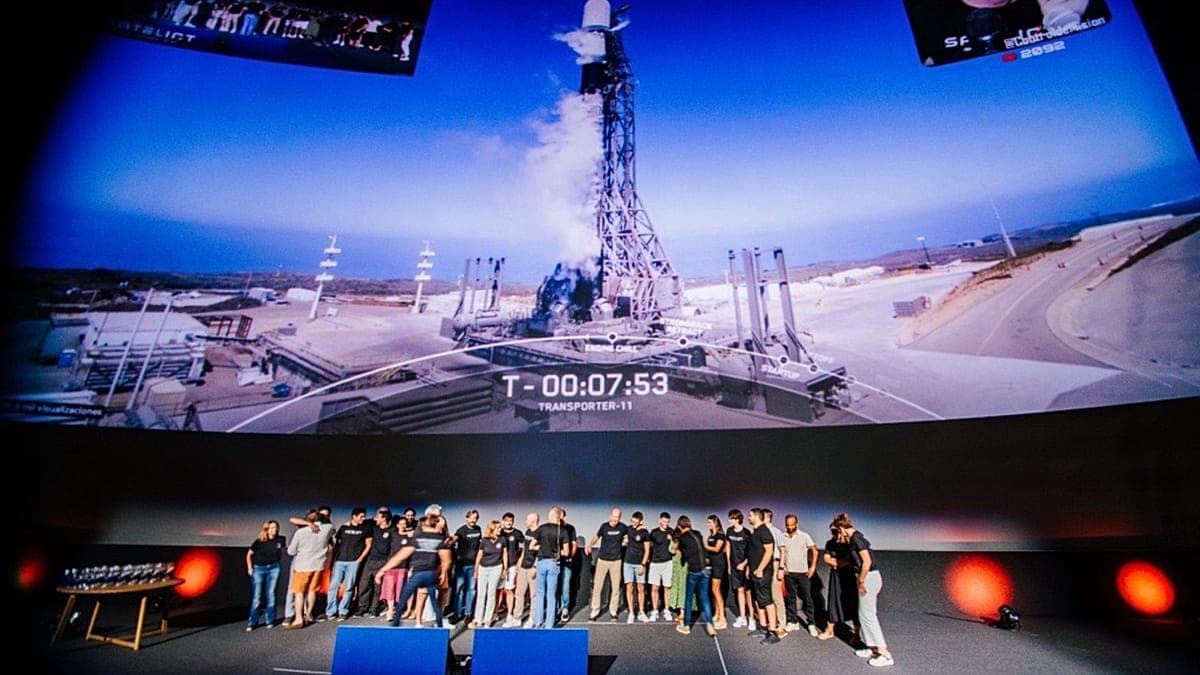
OPA WIRE, Sep 29 (OPA) — Catalan-based satellite operator Sateliot is set to launch five new satellites aboard a SpaceX Falcon 9 rocket, marking a significant milestone in the company’s mission to provide global 5G connectivity. The mission, dubbed 'Draconis,' will bring the company’s total orbital fleet to 11 units. By deploying these additional assets, Sateliot aims to double its daily pass frequency and effectively halve the latency for data retrieval over specific geographic points, significantly enhancing its service reliability for mobile operators worldwide.
The launch is scheduled for October 1 from the Vandenberg Space Force Base in California as part of SpaceX’s Transporter-18 mission. Each of the five new satellites, manufactured by Alén Space, weighs approximately 10 kilograms and measures 20x10x35 centimeters. Designed for a five-year operational lifespan at an altitude of 510 kilometers, these units feature upgraded onboard computers, improved radiation-hardened memory, and superior orientation control systems compared to their 2024 predecessors. Notably, the company has halved the production time for this batch, signaling a maturation in their manufacturing capabilities.
Sateliot’s business model functions as a 'cell tower in space,' providing wholesale connectivity to mobile operators to extend Internet of Things (IoT) coverage into remote or underserved regions. By utilizing 5G Non-Terrestrial Network (NTN) technology, the company integrates seamlessly with existing terrestrial infrastructure. The current mission involves a collaborative ecosystem, including Exolaunch for logistics, KSAT and Leaf Space for ground tracking, and Comfone for IPX connectivity, ensuring a robust link between space assets and terrestrial mobile networks.
Looking ahead, the company is preparing for its next major evolution: the 'Triton' generation. Scheduled for 2027, this phase will introduce 3GPP Release 19 standards, enabling direct-to-device (D2D) communication and advanced phased-array antennas capable of dynamic beam management. This transition is critical for Sateliot’s long-term goal of expanding its constellation to over 500 satellites, shifting from basic IoT services to high-capacity, mission-critical communications.
Financially, Sateliot is aggressively scaling its operations, currently seeking €100 million in Series C funding to complement the €100 million already secured. CEO Jaume Sanpera remains optimistic, projecting revenues of €500 million by 2030. As the company moves from technology validation to commercial scaling, the focus remains on positioning satellites as the natural extension of mobile networks, effectively eliminating connectivity dead zones on a global scale.
Subscribe to the Global Briefing
Receive our flagship executive dispatch every morning. Essential geopolitical analysis, financial benchmarks, and breaking world events delivered to your inbox.
Mohammad Karamali
Verified Wire ContributorSenior correspondent covering geopolitics, regional developments, and strategic international affairs for OPA News (Optimum Public Affairs).
Related Stories & Follow-ups
Editorial Wire Technology
FEMA Alert Test Sparks Panic Amid Widespread Tech and Banking Outages
 Technology
Global Microsoft Outage Disrupts Critical Services Worldwide as 48-Hour Recovery Begins
 Technology
Nvidia Faces Global Crisis Following Shock Resignation of CEO Jensen Huang
Reader Discussion
Leave a Comment
0 Comments
Owner
Editorial Oversight & Machine-Assisted Reporting
Human-in-the-Loop VerifiedEditorial Oversight & Machine-Assisted Reporting: This dispatch was synthesized and localized via OPA automated intelligence under continuous human editorial supervision.
Wire Source
This report was synthesized from Euro News Persian under journalistic fair use.