
AMD acquires World Labs AI startup, upping the ante against Nvidia
Key Takeaways
- AMD is acquiring World Labs for $8.2 billion to accelerate its AI world model capabilities.
- World Labs was founded in 2024 by Fei-Fei Li and specializes in 3D spatial generation tools like Marble and Atlas.
- The acquisition is a strategic move to challenge Nvidia's dominance in synthetic data and robotics training.
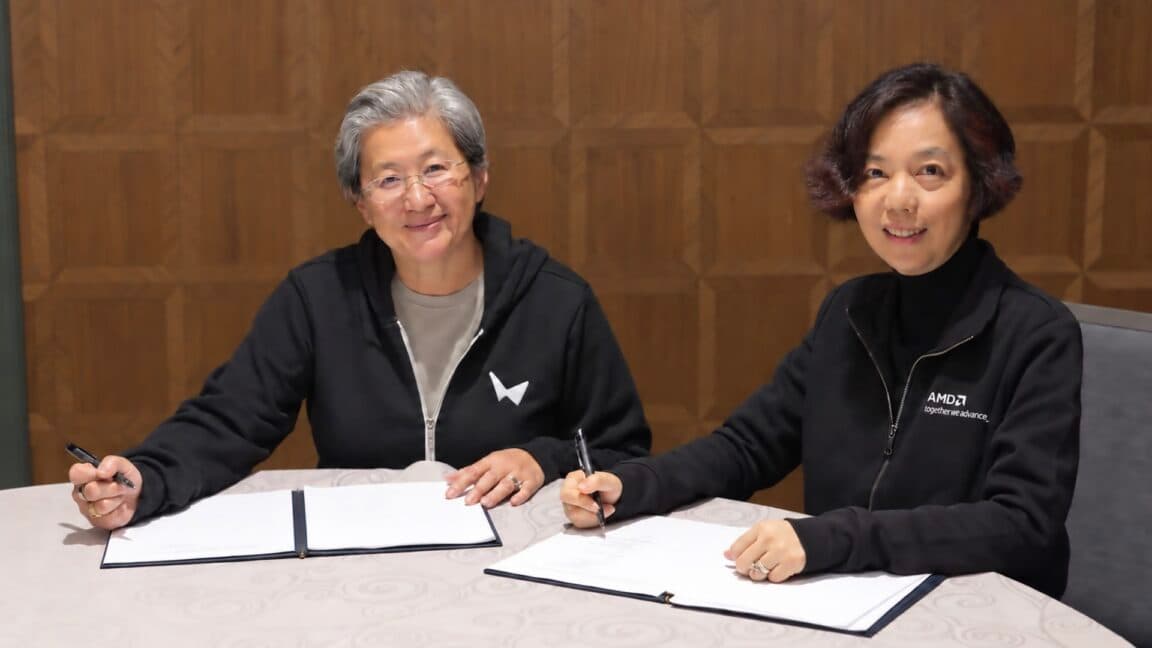
OPA WIRE, Sep 29 (OPA) — Chipmaker AMD has officially announced its intent to acquire World Labs, a pioneering AI startup focused on world models, in a transaction valued at $8.2 billion. The deal, which is expected to close by the end of the year pending standard regulatory approvals, marks a significant strategic pivot for AMD as it seeks to bolster its software and AI capabilities. By integrating World Labs, AMD aims to bridge the gap between its hardware-centric business model and the rapidly evolving landscape of predictive AI simulations that define the next generation of computing.
Founded in 2024 by renowned computer vision scientist Fei-Fei Li alongside researchers Justin Johnson, Christoph Lassner, and Ben Mildenhall, World Labs previously secured $230 million in funding, with AMD serving as an early investor. The startup has gained industry attention for its focus on world models—AI architectures designed to simulate the physical world with high predictive accuracy. While the financial terms are substantial, the acquisition is viewed as a necessary expenditure to compete with the dominant players in the AI infrastructure market.
World Labs gained prominence through the development of Marble, its first publicly accessible tool, which utilizes Gaussian splats to generate 3D spaces from video data. These assets are highly sought after for applications in film production, game development, and architectural visualization. The company has since expanded its portfolio with additional models like Atlas, further diversifying its technological footprint. This history of innovation in spatial computing provides AMD with a ready-made software stack that complements its existing GPU hardware offerings.
The primary motivation behind this acquisition is the growing demand for synthetic data, particularly for training autonomous robots. This is a critical sector where Nvidia, AMD's primary competitor, currently maintains a commanding lead through its Cosmos model ecosystem. By absorbing World Labs, AMD is attempting to neutralize Nvidia's advantage, providing developers with a robust alternative for generating the complex, physics-based simulations required to train next-generation AI agents in real-world environments.
Industry analysts suggest that the success of this acquisition will depend on AMD's ability to integrate World Labs' research into its broader AI roadmap. While AMD has previously experimented with open-source models like Micro-World, it has lacked a cohesive, high-performance stack to rival Nvidia's integrated solutions. Looking ahead, the synergy between AMD's high-performance silicon and World Labs' spatial intelligence could redefine the competitive landscape, potentially shifting the focus of the AI arms race from raw compute power to sophisticated, world-aware simulation capabilities.
Subscribe to the Global Briefing
Receive our flagship executive dispatch every morning. Essential geopolitical analysis, financial benchmarks, and breaking world events delivered to your inbox.
Mohammad Karamali
Verified Wire ContributorSenior correspondent covering geopolitics, regional developments, and strategic international affairs for OPA News (Optimum Public Affairs).
Related Stories & Follow-ups
Editorial Wire Technology
FEMA Alert Test Sparks Panic Amid Widespread Tech and Banking Outages
 Technology
Global Microsoft Outage Disrupts Critical Services Worldwide as 48-Hour Recovery Begins
 Technology
Nvidia Faces Global Crisis Following Shock Resignation of CEO Jensen Huang
Reader Discussion
Leave a Comment
0 Comments
Owner
Editorial Oversight & Machine-Assisted Reporting
Human-in-the-Loop VerifiedEditorial Oversight & Machine-Assisted Reporting: This dispatch was synthesized and localized via OPA automated intelligence under continuous human editorial supervision.
Wire Source
This report was synthesized from Ars Technica under journalistic fair use.