
NASA Faces a Critical Dragon Dilemma as SpaceX Shifts Strategic Focus
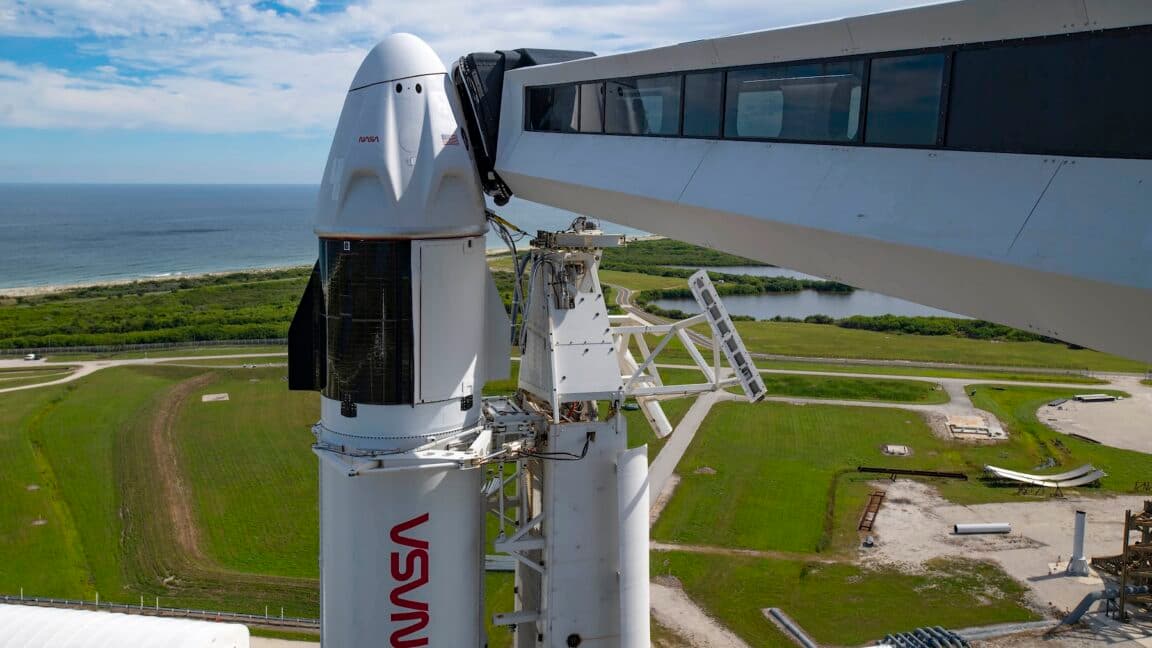
Key Takeaways
- SpaceX intends to retire the Crew Dragon spacecraft after 2030, leaving private space station operators without a primary transport provider.
- NASA has invested $5.1 billion in Boeing's Starliner, which remains the agency's only remaining option for crewed missions despite ongoing technical failures.
- SpaceX now views NASA contracts as only 1 percent of its total addressable market, shifting its focus toward Starlink and Starship development.
OPA WIRE, Sep 29 (OPA) — NASA's long-standing vision of a vibrant, commercial low-Earth orbit economy is facing a significant crisis as SpaceX signals its intent to retire the Crew Dragon spacecraft and Falcon 9 rocket after 2030. For two decades, the agency has worked to foster private sector participation in space transportation, but the shifting priorities of its primary partner have created a vacuum. With SpaceX pivoting its resources toward the Starship platform and its Starlink constellation, the future of human access to orbit is becoming increasingly uncertain, threatening the viability of planned private space stations.
Financial data underscores the shift in power dynamics between the agency and its contractor. NASA invested $3.1 billion into the Commercial Crew Program, yet SpaceX has already fulfilled its contractual obligations and is now prioritizing its own internal revenue streams. SpaceX filings indicate that NASA-related services represent only about 1 percent of its total addressable market. NASA Administrator Jared Isaacman has acknowledged this reality, noting that SpaceX intends to sunset older platforms to concentrate on next-generation capabilities, leaving the agency with limited leverage to compel continued operations.
The historical context of this dilemma lies in NASA's dual-partner strategy. While Boeing received $5.1 billion for the Starliner program, the spacecraft has yet to complete a single operational mission. NASA has committed an additional $359 million to rectify Starliner’s propulsion issues, hoping it will serve as the primary transport vehicle for the remainder of the International Space Station's lifespan. This reliance on a single, struggling provider has drawn sharp criticism from industry observers who fear a monopolistic environment will stifle innovation and drive up costs for future space exploration.
The ramifications of this situation are profound, particularly for private space station operators like Axiom, Voyager, and Vast, who have been denied access to Crew Dragon for future missions. The loss of a competitive market could effectively end the dream of a diverse, human-centric low-Earth orbit economy. With the Russian Soyuz unavailable due to geopolitical tensions and other international alternatives like India’s Gaganyaan or Europe’s Exploration Company still years away from maturity, the industry faces a potential bottleneck that could last for over a decade.
Looking ahead, experts suggest that the only viable path to lower costs and increased access is the successful adaptation of Starship for human flight. However, SpaceX has currently deprioritized this development in favor of its own payload requirements, and NASA is focused on lunar applications under the Artemis program. Unless a new competitive framework is established or Starship is incentivized for orbital human transport, the industry may be forced to accept high-cost, limited-access solutions that could significantly dampen the growth of the commercial space sector.
Subscribe to the Global Briefing
Receive our flagship executive dispatch every morning. Essential geopolitical analysis, financial benchmarks, and breaking world events delivered to your inbox.
Mohammad Karamali
Verified Wire ContributorSenior correspondent covering geopolitics, regional developments, and strategic international affairs for OPA News (Optimum Public Affairs).
Related Stories & Follow-ups
Editorial Wire Technology
FEMA Alert Test Sparks Panic Amid Widespread Tech and Banking Outages
 Technology
Global Microsoft Outage Disrupts Critical Services Worldwide as 48-Hour Recovery Begins
 Technology
Nvidia Faces Global Crisis Following Shock Resignation of CEO Jensen Huang
Reader Discussion
Leave a Comment
0 Comments
Owner
Editorial Oversight & Machine-Assisted Reporting
Human-in-the-Loop VerifiedEditorial Oversight & Machine-Assisted Reporting: This dispatch was synthesized and localized via OPA automated intelligence under continuous human editorial supervision.
Wire Source
This report was synthesized from Ars Technica under journalistic fair use.