
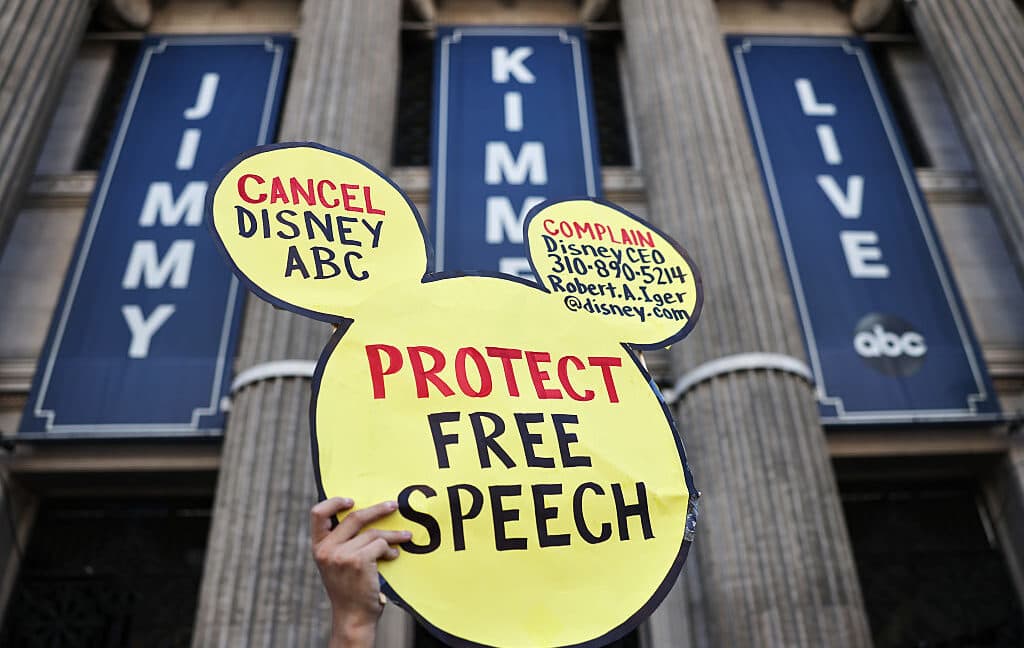
The Disney protests were a wake-up call about the risks of streaming mergers
Key Takeaways
- Disney's acquisition of Fubo in 2025 effectively neutralized a major antitrust lawsuit, highlighting how consolidation silences corporate criticism.
- Media conglomerates now control such vast ecosystems that boycotting a single entity requires abandoning a wide range of essential entertainment services.
- Industry experts predict continued streaming mergers, which threaten to increase subscription costs while reducing the diversity of available content.
OPA WIRE, Oct 1 (OPA) — The attempt to boycott Disney last year, sparked by the removal of Jimmy Kimmel Live! from the airwaves, served as a stark reminder of the challenges inherent in protesting modern media giants. While the initial impulse was to hold a corporation accountable for its editorial decisions, the ubiquity of Disney’s holdings made a clean break nearly impossible. From streaming services like Hulu and Disney+ to broadcast networks and even theme parks, the company's reach is so pervasive that a consumer boycott effectively requires a total withdrawal from a vast ecosystem of entertainment, sports, and digital content.
Financial reports suggest the boycott did exert pressure on Disney, yet the broader trend of media consolidation continues to accelerate. The acquisition of Fubo by Disney in January 2025 serves as a prime example of how antitrust concerns are often neutralized through mergers. Fubo, which had previously accused Disney, Fox, and Warner Bros. Discovery of monopolistic behavior, ultimately settled its legal battle by being absorbed into the very entity it sought to challenge. This move not only silenced a vocal critic but also highlighted the diminishing power of smaller players in the face of massive corporate integration.
Historically, media companies operated with more distinct boundaries, allowing consumers to target specific networks or platforms for protest. Today, the landscape is defined by massive conglomerates that own everything from news outlets and sports channels to gaming platforms and children’s programming. This consolidation has been driven by the intense pressure on streaming services to achieve profitability after years of unsustainable growth. As companies scramble to build larger libraries and reduce competition, the consumer is left with fewer choices and a higher barrier to entry for those wishing to vote with their wallets.
The ramifications of this trend are profound, affecting everything from subscription pricing to the diversity of available content. When a few entities control the majority of the market, they gain the leverage to increase prices and dictate terms without fear of losing their audience to competitors. Furthermore, the homogenization of content ownership threatens to stifle diverse voices, as smaller, independent platforms are either acquired or forced out of the market. This creates a suffocating environment where the ability to protest corporate actions is effectively stripped from the average viewer.
Looking ahead, experts warn that the streaming industry is headed toward even greater consolidation, with potential mergers like those involving WBD and Paramount threatening to further limit consumer options. While some argue that these unions could resolve content fragmentation, the likely outcome is higher fees and less diversity. To survive, streaming services must explore alternative revenue streams, such as licensing content or creating personalized bundles, rather than simply relying on aggressive M&A strategies that ultimately harm the consumer experience and reduce market competition.
Subscribe to the Global Briefing
Receive our flagship executive dispatch every morning. Essential geopolitical analysis, financial benchmarks, and breaking world events delivered to your inbox.
Mohammad Karamali
Verified Wire ContributorSenior correspondent covering geopolitics, regional developments, and strategic international affairs for OPA News (Optimum Public Affairs).
Related Stories & Follow-ups
Editorial Wire Technology
FEMA Alert Test Sparks Panic Amid Widespread Tech and Banking Outages
 Technology
Global Microsoft Outage Disrupts Critical Services Worldwide as 48-Hour Recovery Begins
 Technology
Nvidia Faces Global Crisis Following Shock Resignation of CEO Jensen Huang
Reader Discussion
Leave a Comment
0 Comments
Owner
Editorial Oversight & Machine-Assisted Reporting
Human-in-the-Loop VerifiedEditorial Oversight & Machine-Assisted Reporting: This dispatch was synthesized and localized via OPA automated intelligence under continuous human editorial supervision.
Wire Source
This report was synthesized from Ars Technica under journalistic fair use.