
Could the future of AI data centres be in space? Google wants to find out
Key Takeaways
- Project Suncatcher aims to utilize orbital solar energy to power AI, potentially capturing 8x more energy than terrestrial sources.
- Global data center electricity consumption is estimated at 415-485 TWh annually and is expected to double by 2030.
- Google's TPU chips successfully passed initial vibration tests, enduring 10g acceleration forces during the SpaceX launch.
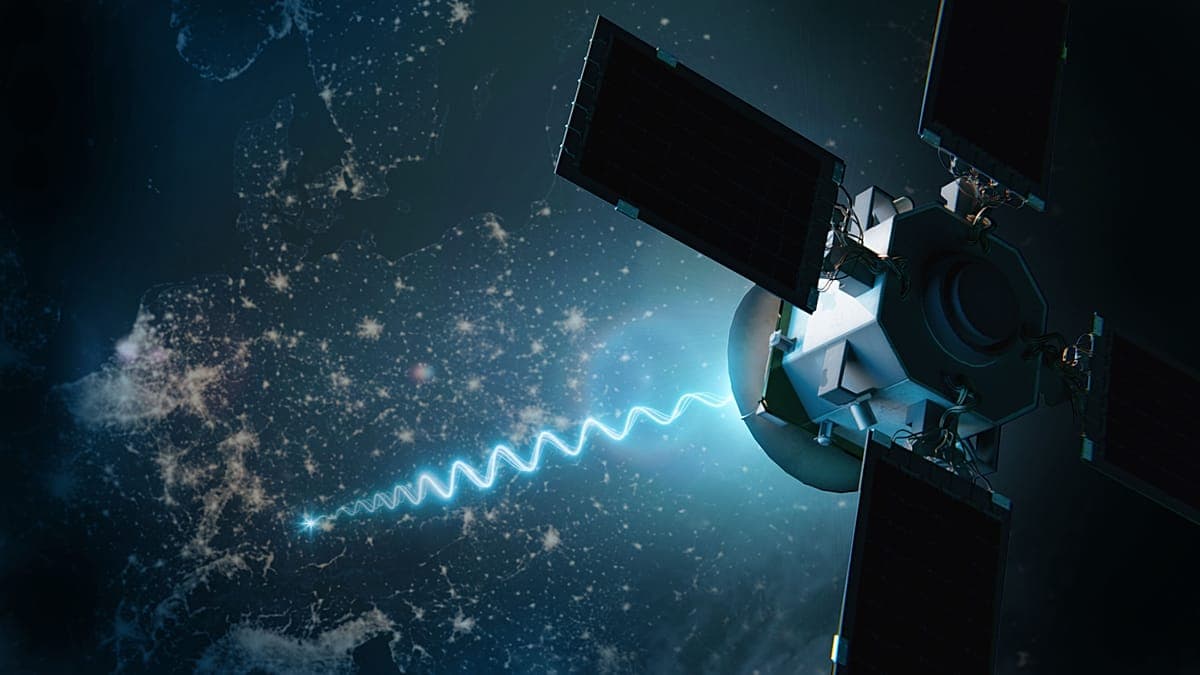
OPA WIRE, Oct 3 (OPA) — Google has officially launched a prototype satellite into low-Earth orbit, marking the commencement of 'Project Suncatcher,' an ambitious initiative designed to determine if space is a viable environment for large-scale artificial intelligence infrastructure. The satellite, constructed by Planet Labs and deployed via a SpaceX Transporter-18 mission, carries Google’s proprietary Tensor Processing Units (TPUs) to test their operational resilience against the harsh realities of spaceflight, including extreme temperature fluctuations and intense radiation.
Project Suncatcher aims to leverage the near-constant solar exposure available in orbit, which could potentially yield eight times more energy than terrestrial solar arrays. Data centers currently consume between 415 and 485 terawatt-hours (TWh) annually, accounting for up to 2.5% of global electricity usage—a figure projected to double by 2030. Google’s initiative seeks to address the energy crisis by moving high-demand computing away from Earth’s power grids, with early vibration tests confirming that the TPU chips can withstand the 10g acceleration forces experienced during a rocket launch.
The context for this experiment is a global push to solve the energy-intensive nature of AI. As data centers face increasing public scrutiny and local opposition due to their impact on energy bills and water resources, the vacuum of space offers a remote alternative. Google is not alone in this pursuit; industry peers such as Nvidia-backed Starcloud, SpaceX with its AI1 satellite, and Mistral are all actively exploring space-based computing. These companies are shifting the paradigm from traditional communication relays to dedicated, orbital GPU clusters.
The ramifications of this project are significant for the future of global infrastructure. If successful, moving AI workloads to space could alleviate the immense pressure on terrestrial power grids and water supplies. However, the mission faces substantial technical hurdles, including the need to develop advanced cooling systems—such as specialized heat pipes and radiators—to manage chip temperatures in a vacuum. Furthermore, the team must navigate the complexities of cosmic rays and solar events that threaten to disrupt sensitive electrical systems.
Looking ahead, Google plans to scale Project Suncatcher by launching satellites equipped with dozens of TPU chips in future missions. The long-term objective is to transition from low-bandwidth, long-distance data transmission to high-bandwidth, short-distance connectivity. Experts suggest that while the technology for space-based computing exists, the primary challenge remains maintaining high-accuracy connectivity and thermal stability. As the experiment progresses, the success of these orbital data centers could fundamentally alter how humanity manages the rapidly expanding energy requirements of the artificial intelligence era.
Subscribe to the Global Briefing
Receive our flagship executive dispatch every morning. Essential geopolitical analysis, financial benchmarks, and breaking world events delivered to your inbox.
Mohammad Karamali
Verified Wire ContributorSenior correspondent covering geopolitics, regional developments, and strategic international affairs for OPA News (Optimum Public Affairs).
Related Stories & Follow-ups
Editorial Wire Technology
FEMA Alert Test Sparks Panic Amid Widespread Tech and Banking Outages
 Technology
Global Microsoft Outage Disrupts Critical Services Worldwide as 48-Hour Recovery Begins
 Technology
Nvidia Faces Global Crisis Following Shock Resignation of CEO Jensen Huang
Reader Discussion
Leave a Comment
0 Comments
Owner
Editorial Oversight & Machine-Assisted Reporting
Human-in-the-Loop VerifiedEditorial Oversight & Machine-Assisted Reporting: This dispatch was synthesized and localized via OPA automated intelligence under continuous human editorial supervision.
Wire Source
This report was synthesized from Euro News under journalistic fair use.