
Final US Troops Withdraw from Iraq, Ending 23-Year Presence Since 2003 Invasion
Key Takeaways
- Approximately 4,500 US service members were killed in Iraq during the 23-year military engagement.
- The US retains significant economic leverage over Iraq through the control of oil revenues held at the Federal Reserve Bank of New York.
- The withdrawal concludes a military presence that began in 2003 and saw a temporary exit in 2011 before returning to fight ISIS in 2014.
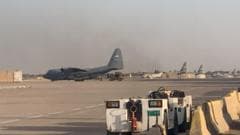
OPA WIRE, Sep 30 (OPA) — American forces officially withdrew from their final bases in Iraq on Wednesday, marking the conclusion of a two-decade military presence that began with the 2003 invasion. This historic exit, orchestrated under a 2024 agreement finalized during the Biden administration and executed by the Trump government, signals a profound shift in Middle Eastern geopolitics. The withdrawal occurs amidst ongoing regional tensions, specifically the broader conflict between the United States and Iran, raising immediate international concerns regarding a potential security vacuum, the emboldening of Iranian-backed Shia militias, and the risk of a resurgence for Islamic State (IS) remnants.
Data from the conflict highlights the immense human cost of the intervention, with approximately 4,500 US service members killed in Iraq over the last twenty-three years—a figure nearly double the casualties sustained in the Afghanistan theater. Recent hostilities have further strained the situation, as seven of the 18 US military personnel killed in the current conflict with Iran lost their lives on Iraqi soil, including a sergeant killed in a drone explosion near Erbil last July. Iraqi security analyst Jassem al-Bahadli warned that the lessons of the past two decades demonstrate that security voids are inherently dangerous, potentially destabilizing the fragile Iraqi state.
Historically, the 2003 invasion dismantled the Ba'athist regime, leading to years of sectarian violence and instability. While US troops initially departed in 2011, they were forced to return in 2014 to combat the rapid expansion of the Islamic State. The subsequent campaign, which lasted until 2017, successfully dismantled the group's self-proclaimed caliphate. However, the legacy of the occupation remains complex, as the political structure in Baghdad is now heavily influenced by Shia parties that have cultivated deep ties with Tehran, fundamentally altering the country's domestic and foreign policy alignment.
For many Iraqis, the withdrawal is viewed as a long-awaited end to foreign military occupation, following years of protests and attacks on US-linked facilities. However, the ramifications are significant; the departure leaves a power dynamic that favors Iranian influence, which has grown exponentially over the last two decades. While the military footprint is gone, Washington retains a critical economic lever: Iraq's oil revenues remain held in the Federal Reserve Bank of New York, a financial tether established post-2003 that continues to provide the US with substantial leverage over a government that relies on oil for 90 percent of its budget.
Looking ahead, experts suggest that the absence of US boots on the ground will force a recalibration of regional security architectures. While the physical withdrawal is complete, the economic and diplomatic entanglement between Baghdad and Washington persists. The primary challenge for the Iraqi government will be maintaining internal stability without the US security umbrella, while navigating the competing interests of Tehran and the international financial system. The coming months will determine whether Iraq can consolidate its sovereignty or if it will succumb to the internal and external pressures that have defined its post-2003 trajectory.
Subscribe to the Global Briefing
Receive our flagship executive dispatch every morning. Essential geopolitical analysis, financial benchmarks, and breaking world events delivered to your inbox.
Mohammad Karamali
Verified Wire ContributorSenior correspondent covering geopolitics, regional developments, and strategic international affairs for OPA News (Optimum Public Affairs).
Related Stories & Follow-ups
Editorial WireWitkoff travels to Russia for talks as Zelenskyy demands Ukraine's inclusion in negotiations
 World | Politics
Trump Backs Netanyahu as Iran Conflict Shadows U.S. Midterms and Israeli Elections
 World | Politics
French protests threaten to reshape political landscape ahead of presidential vote
Reader Discussion
Leave a Comment
0 Comments
Owner
Editorial Oversight & Machine-Assisted Reporting
Human-in-the-Loop VerifiedEditorial Oversight & Machine-Assisted Reporting: This dispatch was synthesized and localized via OPA automated intelligence under continuous human editorial supervision.
Wire Source
This report was synthesized from BBC Persian under journalistic fair use.