
North Korea denies planting mines that injured 3 South Korean soldiers, accuses Seoul of conspiracy
Key Takeaways
- Three South Korean soldiers were injured by land mine explosions on September 21 near the DMZ.
- The U.N. Command confirmed North Korea violated the 1950-53 armistice agreement through these actions.
- Kim Yo Jong threatened 'merciless retaliatory action' if South Korea fires on North Korean border units.
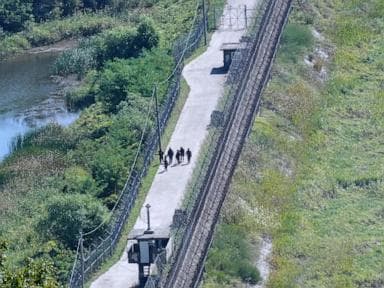
OPA WIRE, Sep 30 (OPA) — Kim Yo Jong, the influential sister of North Korean leader Kim Jong Un, has categorically rejected South Korean allegations that Pyongyang planted land mines responsible for injuring three South Korean soldiers near the border last week. The incident, which occurred on September 21 near the military demarcation line in the western section of the Demilitarized Zone (DMZ), has sparked a fresh diplomatic crisis. Pyongyang has dismissed the South Korean findings as a conspiratorial farce, claiming that Seoul is fabricating evidence to create a pretext for future provocations against the North.
Following a joint inspection with the U.S.-led United Nations Command, South Korean military officials announced a preliminary assessment confirming that the explosions were caused by North Korean mines. The U.N. Command stated that North Korea violated the 1950-53 armistice agreement, which strictly prohibits hostile acts within or across the DMZ. South Korean Joint Chiefs of Staff official Kang Hyunwoo has demanded an apology and responsible measures from the North, while Defense Minister Kang Shin-chul warned that Seoul is prepared to implement corresponding measures if a full investigation confirms North Korean culpability.
The DMZ, a 248-kilometer buffer zone, remains one of the most heavily militarized borders in the world, containing an estimated two million land mines and extensive combat fortifications. Tensions have been steadily rising as North Korea continues to expand its nuclear program and fortify its front lines with anti-tank barriers and additional mines. This latest incident mirrors the 2015 land mine crisis, which brought the two nations to the brink of conflict before marathon diplomatic talks eventually de-escalated the situation.
The ramifications of this denial are severe, as the two Koreas currently lack functioning military hotlines or emergency communication channels, making the risk of accidental escalation significantly higher. Kim Yo Jong explicitly threatened that if South Korean forces fire on North Korean troops engaged in border fortification, the North will respond with immediate and merciless retaliatory action. This rhetoric underscores the fragile nature of the current security environment, where even minor border incidents can rapidly spiral into broader military confrontations.
Looking ahead, regional security experts warn that the lack of dialogue mechanisms leaves little room for error. The continued fortification of the border by North Korea, combined with the South's commitment to holding the North accountable, suggests that the DMZ will remain a flashpoint for instability. Future consequences may include increased military posturing, the potential for further skirmishes, and a prolonged period of diplomatic silence that complicates efforts to manage the nuclear threat posed by Pyongyang on the Korean Peninsula.
Subscribe to the Global Briefing
Receive our flagship executive dispatch every morning. Essential geopolitical analysis, financial benchmarks, and breaking world events delivered to your inbox.
Mohammad Karamali
Verified Wire ContributorSenior correspondent covering geopolitics, regional developments, and strategic international affairs for OPA News (Optimum Public Affairs).
Related Stories & Follow-ups
Editorial WireWitkoff travels to Russia for talks as Zelenskyy demands Ukraine's inclusion in negotiations
 World | Politics
Trump Backs Netanyahu as Iran Conflict Shadows U.S. Midterms and Israeli Elections
 World | Politics
French protests threaten to reshape political landscape ahead of presidential vote
Reader Discussion
Leave a Comment
0 Comments
Owner
Editorial Oversight & Machine-Assisted Reporting
Human-in-the-Loop VerifiedEditorial Oversight & Machine-Assisted Reporting: This dispatch was synthesized and localized via OPA automated intelligence under continuous human editorial supervision.
Wire Source
This report was synthesized from ABC under journalistic fair use.