
Tensions Escalate: US-Iran Relations, Flight Restrictions, and Military Posturing
Key Takeaways
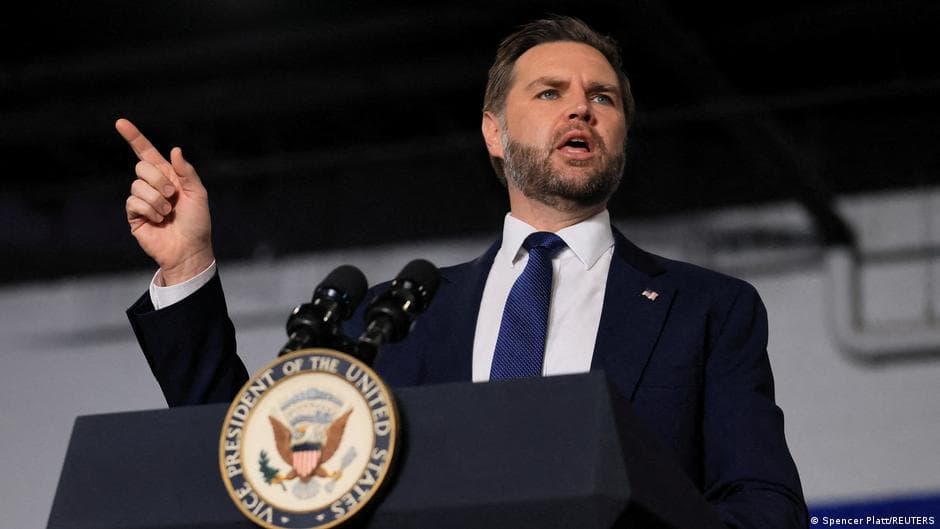
- US Vice President JD Vance conditioned future agreements on Iran ending attacks on commercial shipping.
- Iraq secured a one-month US Treasury waiver to resume flights to Iran, contingent on strict security protocols.
- The Iranian military announced financial rewards for the capture of US soldiers, further heightening regional tensions.
OPA WIRE, Sep 30 (OPA) — The geopolitical landscape surrounding Iran has intensified as US Vice President JD Vance signaled that a potential agreement remains possible only if Tehran fundamentally alters its behavior. This diplomatic stance coincides with a flurry of regional developments, including Iraq's move to resume flights to Iran under a temporary US Treasury waiver and the deployment of the USS Theodore Roosevelt to the Middle East. These events underscore a volatile period where military posturing and diplomatic maneuvering are occurring simultaneously.
US Vice President JD Vance stated that the Trump administration is focused on actions rather than rhetoric, noting that Iran's targeting of commercial vessels in regional waters derailed previous understandings. Meanwhile, Iraq’s Ministry of Transport confirmed it secured a one-month waiver from the US Treasury to resume flights to Iran, specifically targeting religious pilgrimage routes through Najaf. The Iraqi government has provided security guarantees, including passenger screening and intelligence sharing, to ensure these flights remain strictly civilian in nature.
Historically, the relationship between Washington and Tehran has been marked by cycles of sanctions and intermittent negotiations. The current friction is exacerbated by the Iranian military's recent announcement of financial rewards for the capture of US soldiers, a move that further complicates the security environment. Additionally, European Parliament member Hannah Neumann has taken a firm stance against the Iranian regime, refusing to meet with the Iranian ambassador and citing the regime's transnational repression and human rights abuses as primary reasons for her decision.
These developments have significant ramifications for regional stability and international diplomacy. The deployment of the USS Theodore Roosevelt serves as a clear signal of US military readiness, while the refusal of European officials to engage in diplomatic formalities with Iranian representatives highlights a growing isolation of the regime on the global stage. For the Iranian leadership, the combination of economic pressure, military encirclement, and diplomatic rejection creates a precarious situation that tests the limits of their current strategic doctrine.
Looking ahead, expert analysis suggests that the path to any sustainable agreement remains narrow. The US administration’s insistence on verifiable behavioral changes, particularly regarding maritime security and regional proxy activities, indicates that the status quo is unlikely to shift without significant concessions from Tehran. As the one-month flight waiver expires, the international community will be watching closely to see if these small diplomatic openings lead to broader de-escalation or if the region remains locked in a cycle of confrontation.
Subscribe to the Global Briefing
Receive our flagship executive dispatch every morning. Essential geopolitical analysis, financial benchmarks, and breaking world events delivered to your inbox.
Mohammad Karamali
Verified Wire ContributorSenior correspondent covering geopolitics, regional developments, and strategic international affairs for OPA News (Optimum Public Affairs).
Related Stories & Follow-ups
Editorial WireWitkoff travels to Russia for talks as Zelenskyy demands Ukraine's inclusion in negotiations
 World | Politics
Trump Backs Netanyahu as Iran Conflict Shadows U.S. Midterms and Israeli Elections
 World | Politics
French protests threaten to reshape political landscape ahead of presidential vote
Reader Discussion
Leave a Comment
0 Comments
Owner
Editorial Oversight & Machine-Assisted Reporting
Human-in-the-Loop VerifiedEditorial Oversight & Machine-Assisted Reporting: This dispatch was synthesized and localized via OPA automated intelligence under continuous human editorial supervision.
Wire Source
This report was synthesized from DW Persian under journalistic fair use.