
US ambassador slams 'Made in Europe’ defence push as ‘self-interest'
Key Takeaways
- US Ambassador Andrew Puzder warns that EU protectionism in defense procurement risks fragmenting the transatlantic security alliance.
- NATO commander Alexus Grynkewich cautioned that prioritizing local hardware manufacturing primarily benefits global adversaries.
- The EU is pushing for domestic arms production to reduce reliance on US imports amid political uncertainty in Washington.
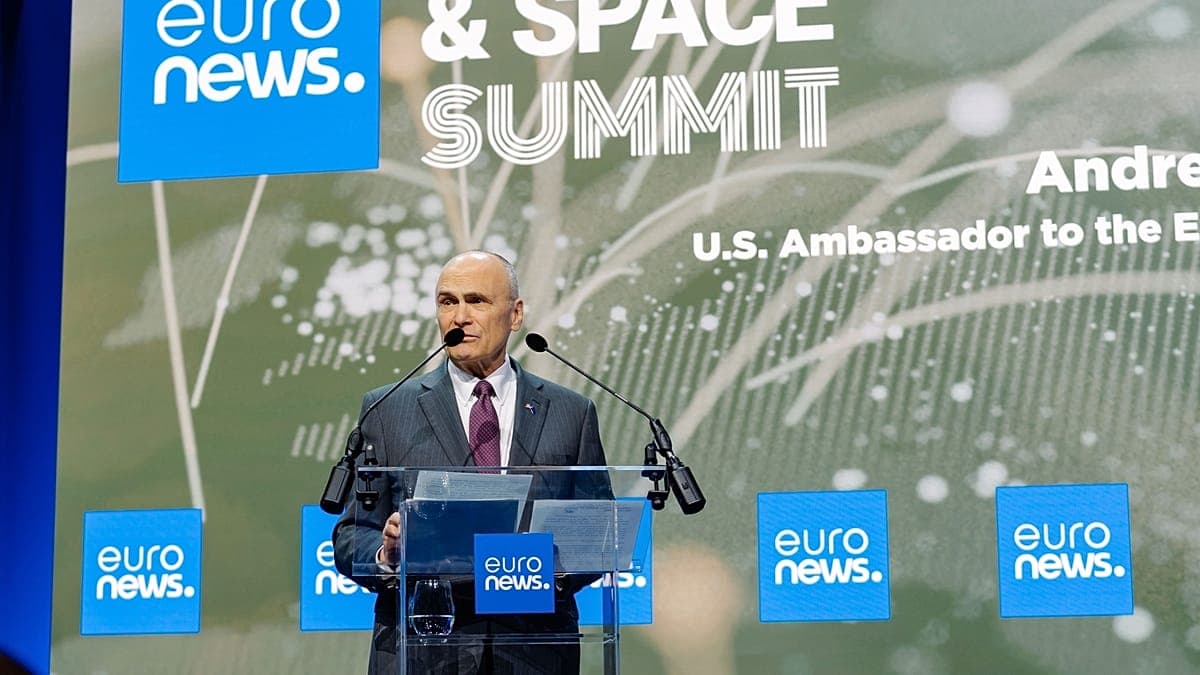
OPA WIRE, Sep 30 (OPA) — The United States Ambassador to the European Union, Andrew Puzder, has issued a sharp critique of the EU's growing initiative to prioritize domestic arms manufacturing. Speaking at the Euronews Defence and Space summit in Brussels, Puzder warned that such protectionist policies risk alienating transatlantic allies and fragmenting the shared industrial base that has long underpinned Western security. He argued that focusing on regional economic interests over weapon superiority could leave member states vulnerable in the face of powerful adversaries.
During his address, Puzder emphasized that when lives are at stake, capability and availability must remain the primary drivers of procurement decisions rather than geographical origin. He stated, 'Only our enemies benefit when we lose focus on making sure we have the most effective weapons.' The ambassador underscored that in the event of a major conflict, the alliance would rely on the sheer effectiveness of its hardware, suggesting that the current EU push for domestic prioritization is a dangerous distraction from collective defense readiness.
The tension stems from recent European Commission proposals designed to reduce reliance on US-made armaments, a move prompted by growing uncertainty regarding the reliability of the transatlantic alliance. This shift has been accelerated by political developments, including threats to seize territory and a significant reduction in military support for Ukraine. While the Pentagon has historically pressured European NATO members to increase their defense spending and autonomy, it now views the EU's specific 'Made in Europe' legislative push as a counterproductive form of protectionism.
The proposal has created deep divisions among EU member states, with some governments expressing concern that prioritizing local manufacturers could weaken the bloc's overall military posture. NATO’s top military commander, Alexus Grynkewich, echoed these concerns, warning that codifying hardware preferences only serves to benefit adversaries. Despite these frictions, Puzder noted that the EU executive has indicated no intention to block member states from using national funds to purchase US systems, providing a small window for continued cooperation.
Looking ahead, the US intends to continue lobbying for open procurement policies in upcoming European defense legislation. Puzder remains cautiously optimistic, noting that while the two sides will inevitably have candid disagreements, the core of the alliance remains intact. The future of transatlantic security will likely depend on whether the EU can balance its desire for strategic autonomy with the practical necessity of maintaining a unified, interoperable, and highly effective military industrial complex that prioritizes capability over local economic gain.
Subscribe to the Global Briefing
Receive our flagship executive dispatch every morning. Essential geopolitical analysis, financial benchmarks, and breaking world events delivered to your inbox.
Mohammad Karamali
Verified Wire ContributorSenior correspondent covering geopolitics, regional developments, and strategic international affairs for OPA News (Optimum Public Affairs).
Related Stories & Follow-ups
Editorial WireWitkoff travels to Russia for talks as Zelenskyy demands Ukraine's inclusion in negotiations
 World | Politics
Trump Backs Netanyahu as Iran Conflict Shadows U.S. Midterms and Israeli Elections
 World | Politics
French protests threaten to reshape political landscape ahead of presidential vote
Reader Discussion
Leave a Comment
0 Comments
Owner
Editorial Oversight & Machine-Assisted Reporting
Human-in-the-Loop VerifiedEditorial Oversight & Machine-Assisted Reporting: This dispatch was synthesized and localized via OPA automated intelligence under continuous human editorial supervision.
Wire Source
This report was synthesized from Euro News under journalistic fair use.