
In Fractious France, Politicians Agree on One Thing: Pope Leo Was a Hit
Key Takeaways
- Pope Leo XIV completed a four-day visit to France, receiving rare cross-party praise.
- The visit focused on social cohesion and humanitarian issues, successfully navigating French secularism.
- Analysts suggest the unity displayed is a temporary respite from ongoing domestic political polarization.
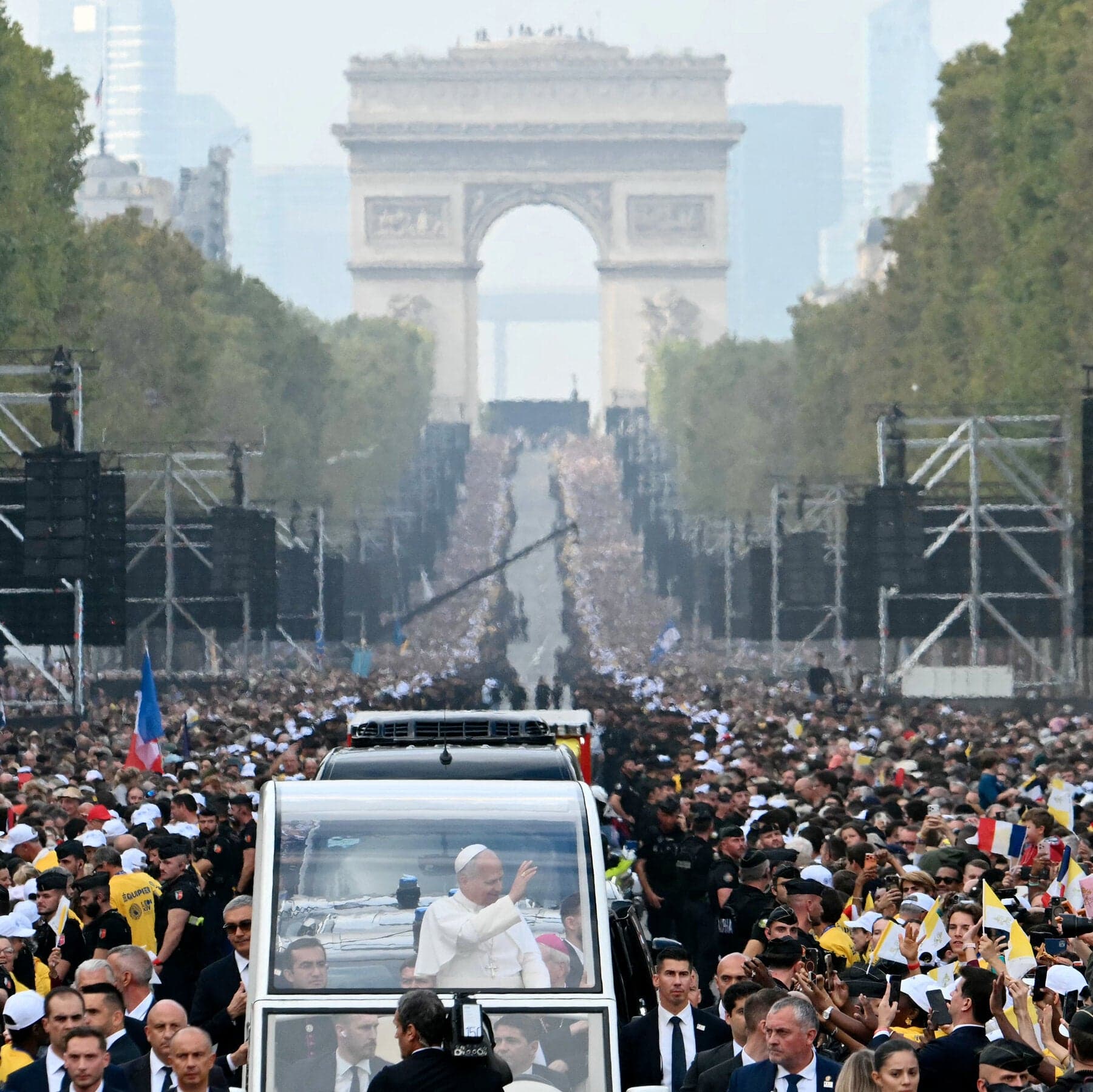
OPA WIRE, Sep 30 (OPA) — In a rare display of national unity, Pope Leo XIV concluded a four-day visit to France that left the country's notoriously divided political class in surprising agreement. From the staunchly secular left to the conservative right, leaders across the spectrum have lauded the pontiff's message of social cohesion and his diplomatic grace. The visit, which spanned major cities and historic sites, served as a brief but significant respite from the intense domestic polarization that has defined French governance for years. Observers noted that the Pope's ability to navigate the complex landscape of French secularism, known as laïcité, without causing offense was a masterclass in modern statecraft.
Official figures released by the Vatican and the French government suggest the visit was a logistical and public success, drawing millions of spectators to public squares. President Emmanuel Macron, in a formal statement, praised the Pope for his 'profound wisdom and commitment to the common good,' while opposition figures, including those from the far-left and far-right, echoed sentiments of respect. The Pope himself remarked during his final address in Paris that France remains a 'land of dialogue,' emphasizing that his mission was not to impose dogma but to encourage a renewed spirit of fraternity among all citizens regardless of their religious or political affiliations.
Historically, relations between the Holy See and the French Republic have been fraught with tension, dating back to the 1905 law on the separation of the Churches and the State. France has long prided itself on a strict secular identity that often views religious influence in public life with skepticism. However, Pope Leo XIV’s approach, which focused heavily on humanitarian issues, climate change, and the protection of refugees, resonated deeply with the contemporary French public. By sidestepping traditional theological debates, he managed to engage with a secular audience that might otherwise have been hostile to a papal visit, marking a significant evolution in Vatican-French relations.
The ramifications of this visit are expected to ripple through French domestic politics for months to come. Political analysts suggest that the consensus surrounding the Pope’s visit provides a temporary template for how leaders might approach national crises in the future. By focusing on shared values rather than ideological differences, the political establishment has demonstrated a capacity for unity that many voters thought was lost. However, critics warn that this harmony is likely ephemeral, noting that the underlying structural issues—such as economic inequality and immigration policy—remain unresolved and will soon dominate the legislative agenda again.
Looking ahead, experts believe the Pope’s visit has set a new benchmark for diplomatic engagement in secular states. The long-term consequences may include a more nuanced approach to religious discourse in French public policy, potentially softening the rigid boundaries of laïcité. As the nation returns to its usual political friction, the memory of this visit serves as a reminder that even in a deeply fractured society, common ground can be found through respectful dialogue. The challenge for French leaders now is to translate this fleeting moment of national agreement into tangible policy reforms that address the grievances of a weary electorate.
Subscribe to the Global Briefing
Receive our flagship executive dispatch every morning. Essential geopolitical analysis, financial benchmarks, and breaking world events delivered to your inbox.
Mohammad Karamali
Verified Wire ContributorSenior correspondent covering geopolitics, regional developments, and strategic international affairs for OPA News (Optimum Public Affairs).
Related Stories & Follow-ups
Editorial WireWitkoff travels to Russia for talks as Zelenskyy demands Ukraine's inclusion in negotiations
 World | Politics
Trump Backs Netanyahu as Iran Conflict Shadows U.S. Midterms and Israeli Elections
 World | Politics
French protests threaten to reshape political landscape ahead of presidential vote
Reader Discussion
Leave a Comment
0 Comments
Owner
Editorial Oversight & Machine-Assisted Reporting
Human-in-the-Loop VerifiedEditorial Oversight & Machine-Assisted Reporting: This dispatch was synthesized and localized via OPA automated intelligence under continuous human editorial supervision.
Wire Source
This report was synthesized from New York Times under journalistic fair use.