
From Podium Protests to 'Bathroom Hiding': Five Decades of Iran at the UN
Key Takeaways
- Ebrahim Yazdi was the first post-revolutionary Iranian official to address the UN General Assembly in October 1979.
- Ali-Akbar Velayati holds the record for the most appearances by an Iranian official, addressing the assembly 14 times between 1982 and 1996.
- The 'bathroom hiding' anecdote involving Mohammad Khatami is widely cited as a symbol of the complex, often avoidant, diplomatic dance between Iranian and American officials.
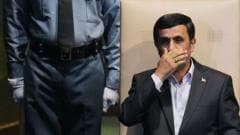
OPA WIRE, Sep 28 (OPA) — For five decades, the United Nations General Assembly in New York has served as a global stage for Iranian officials, transforming from a standard diplomatic venue into a theater of intense geopolitical friction. Since the 1979 revolution, the green podium of the UN has witnessed everything from fiery rhetoric and walkouts to clandestine maneuvers and failed attempts at reconciliation. This historical arc reflects the turbulent trajectory of Iran-US relations, moving from the initial post-revolutionary optimism to the hostage crisis, decades of sanctions, and eventually, direct military confrontation.
The diplomatic journey began with Ebrahim Yazdi in 1979, followed by Mohammad-Ali Rajai, who famously displayed his scarred feet to journalists as a symbol of resistance against the Shah. Later, figures like Ali-Akbar Velayati set records for attendance, while Ali Khamenei used the platform in 1987 to denounce US military presence in the Persian Gulf. Official statements often oscillated between calls for independence and harsh condemnations of Western powers, with incidents like the 1982 disruption of Velayati’s speech highlighting the volatile nature of these high-stakes international appearances.
Contextually, these visits were never merely about speeches; they were barometers of internal Iranian politics and external pressures. The 1980s were dominated by the Iran-Iraq war, where the UN became a battleground for legitimacy. The 1990s and 2000s saw shifts toward dialogue, most notably Mohammad Khatami’s 'Dialogue of Civilizations' initiative. However, these efforts were frequently overshadowed by rumors and anecdotes, such as the widely reported but contested story of Khatami avoiding an encounter with Bill Clinton by hiding in a restroom, a narrative later clarified by his aides as a strategic avoidance of US Secretary of State Madeleine Albright.
The ramifications of these appearances extend beyond the UN halls, impacting domestic Iranian policy and international perceptions. The constant tension between the Iranian delegation and US authorities—ranging from travel restrictions to security concerns—has solidified a narrative of defiance. For the Iranian leadership, the UN podium is a vital tool for broadcasting their ideology to the world, while for the international community, it remains a site where the complexities of the Islamic Republic’s foreign policy are laid bare, often resulting in diplomatic standoffs that define the era.
Looking ahead, the legacy of these five decades suggests that the UN will remain a critical, albeit fraught, venue for Iranian diplomacy. As global dynamics shift, the reliance on the General Assembly as a primary platform for Iran to assert its sovereignty and challenge US hegemony is unlikely to diminish. Experts suggest that while the style of engagement may evolve, the fundamental friction between Tehran and Washington will continue to dictate the nature of these visits, ensuring that the UN podium remains a focal point for future diplomatic confrontations and potential, albeit elusive, breakthroughs.
Subscribe to the Global Briefing
Receive our flagship executive dispatch every morning. Essential geopolitical analysis, financial benchmarks, and breaking world events delivered to your inbox.
Mohammad Karamali
Verified Wire ContributorSenior correspondent covering geopolitics, regional developments, and strategic international affairs for OPA News (Optimum Public Affairs).
Related Stories & Follow-ups
Editorial WireWitkoff travels to Russia for talks as Zelenskyy demands Ukraine's inclusion in negotiations
 World | Politics
Trump Backs Netanyahu as Iran Conflict Shadows U.S. Midterms and Israeli Elections
 World | Politics
French protests threaten to reshape political landscape ahead of presidential vote
Reader Discussion
Leave a Comment
0 Comments
Owner
Editorial Oversight & Machine-Assisted Reporting
Human-in-the-Loop VerifiedEditorial Oversight & Machine-Assisted Reporting: This dispatch was synthesized and localized via OPA automated intelligence under continuous human editorial supervision.
Wire Source
This report was synthesized from BBC Persian under journalistic fair use.