
South Africa to clean up high-risk areas after women's murders
Key Takeaways
- 12 women were found dead east of Johannesburg in two months, sparking national protests.
- 569 women were killed and 1,052 survived attempted murder between April and June this year.
- The government is mandating municipal safety audits to fix infrastructure like broken streetlights and abandoned buildings.
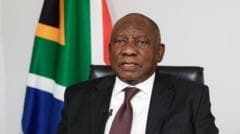
OPA WIRE, Sep 29 (OPA) — South African President Cyril Ramaphosa has announced a sweeping national initiative to secure high-risk areas following the discovery of 12 women's bodies east of Johannesburg within a two-month span. This grim development has ignited a nationwide outcry, highlighting the persistent and alarming scale of gender-based violence in a country that consistently records some of the highest rates of such crimes globally. The government’s response, described by the President as a multidisciplinary emergency effort, aims to address both the immediate security gaps and the systemic failures that have left women vulnerable.
During his address, President Ramaphosa confirmed that four arrests have been made in connection with the recent killings, though he clarified that police have yet to find evidence linking the deaths to a single perpetrator. He candidly admitted that the state has failed to adequately protect women and girls, stating that gender-based violence cannot be accepted as a normal facet of South African life. Official statistics underscore the severity of the crisis, with the South African Human Rights Commission reporting that 569 women were killed and over 1,000 survived attempted murder between April and June of this year alone.
This crisis is deeply rooted in a history of systemic inequality and social instability that has long plagued South Africa. The country’s homicide rates remain among the highest in the world, with over 5,400 people murdered in a single three-month period this year. The current situation is not merely a policing failure but a reflection of deep-seated societal attitudes. The government’s previous attempts to curb violence have often been criticized as reactive rather than preventative, leading to the current push for a more comprehensive, structural overhaul of public safety and social policy.
The ramifications of this initiative will be felt across every municipality, as the government mandates immediate safety audits. These audits are tasked with identifying environmental hazards such as broken streetlights, overgrown public spaces, and abandoned buildings that facilitate crime. Furthermore, the administration is introducing an enforcement package targeting alcohol-related violence, acknowledging that while alcohol is not the root cause of abuse, it acts as a significant aggravating factor. These measures aim to reclaim public spaces and reduce the daily risks faced by women in their communities.
Looking ahead, President Ramaphosa emphasized that legislative changes are insufficient without a fundamental shift in cultural attitudes. He argued that violence begins long before a physical assault, rooted in beliefs that view women as inferior or subject to male control. The future of South African safety depends on men and boys taking the lead in dismantling these toxic norms. Experts suggest that unless the country addresses the underlying patriarchal structures and the normalization of coercion, the cycle of violence will continue to undermine the nation's social fabric and democratic progress.
Subscribe to the Global Briefing
Receive our flagship executive dispatch every morning. Essential geopolitical analysis, financial benchmarks, and breaking world events delivered to your inbox.
Mohammad Karamali
Verified Wire ContributorSenior correspondent covering geopolitics, regional developments, and strategic international affairs for OPA News (Optimum Public Affairs).
Related Stories & Follow-ups
Editorial Wire


Reader Discussion
Leave a Comment
0 Comments
Owner
Editorial Oversight & Machine-Assisted Reporting
Human-in-the-Loop VerifiedEditorial Oversight & Machine-Assisted Reporting: This dispatch was synthesized and localized via OPA automated intelligence under continuous human editorial supervision.
Wire Source
This report was synthesized from BBC World under journalistic fair use.